Natural Selection by Clare Edge – at a glance
The School Reading Lists’ five word review: shocking dark feminist revenge thriller.
YA book title: Natural Selection.
YA author: Clare Edge.
Genre: Young adult, teen thriller.
Published by: Bloomsbury YA.
ISBN: 9781526693563.
Recommended for children aged: 14+.
First published: Paperback August 2026.
This YA novel is ideal for: older teen readers who enjoy feminist fiction with dark humour such as ‘The Honeys’ or ‘Wilder Girls’ by Ryan La Sala or Karen M. McManus’ ‘One of Us is Lying’ series.
Trigger Warning: there are themes of sexual abuse and assault, revenge, and violence.
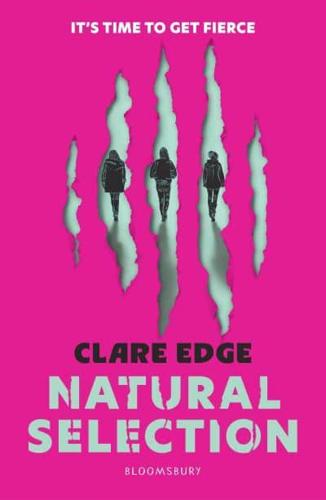
To see the latest price or order, click on the book cover image. As an Amazon Associate, schoolreadinglist.co.uk earns from qualifying purchases.
Our review:
Riverside is the small hometown of best friends Megan Lawless, fondly known as ‘Outlaw’, and Megan, daughter of Riverside’s chief of police. A classic American girl, she’s ambitious to be homecoming queen and one half of the town’s golden couple, alongside Kevin Johnson, Riverside’s ‘Golden Boy’: charming, popular and loved by all.
Then there’s Bee, recently arrived from Seattle: the outsider, awkward and tarot-obsessed.
The three girls are thrown together when each reveals the same truth: Kevin’s predatory nature. The town has its fair share of bears, but the far more dangerous predators walk on two legs. Who will believe them in a town where social power, reputation and misogyny rule unchecked? What starts as a straightforward plan for revenge quickly spirals into something far more sinister… and unexpected.
As the plot unfolds, death, survival and the girls’ growing acceptance of who they truly are collide with the all-American expectations they were raised to fit.
Our verdict:
Natural Selection is a fierce feminist thriller that holds communities to account for the ignorance that lets predators thrive and treats women as prey. Clare Edge interrogates how society looks away from harassment, assault and misogyny, excusing it all as ‘boys will be boys’. Edge cleverly embraces the darkly ironic ‘I choose the bear’ meme, carrying the tagline ‘When it comes to boys and bears, always choose the bear’, a sharp reminder that danger doesn’t lurk only in the woods, but in your own home and school.
Yet the book is far more than three girls seeking violent revenge. The story is told through the alternating perspectives of three girls, each aptly named Megan. Their evolving ambitions, desires and sexuality feel endearing and grounded, keeping the story believable even as spirituality and fantasy creep in. It is a courageous novel that meets today’s reckoning head-on.
Teaching points and book club discussion ideas:
Teaching Points
Predator v prey reversal
- Nature’s actual predator, the grizzly bear, becomes safer than social predators, i.e. men who hide in plain sight. The book cleverly inverts who the predator is.
Complicity and bystander syndrome
- The book emphasises how society looks away and subconsciously accepts misogynistic behaviour as the norm, protecting reputations over victims. The ‘boys will be boys’ excuse enables continued abuse and harassment. Being a bystander is almost the same level of delinquency.
Justice and moral ambiguity
- The revenge plotted by the three Megans shows what happens when victims feel mistreated and a system fails to deliver justice. Is taking justice into your own hands empowering, dangerous or immoral?
Identity and self-discovery
- Each of the Megans is on her own journey of understanding who she is, her values and ambitions, and her sexuality as a result of the traumas she experiences and the subsequent changes in her relationships.
Book Club Questions
- The book’s tagline is ‘When it comes to boys and bears, always choose the bear’, based on a meme that went viral online. Do you think using humour to talk about serious topics like abuse makes the message stronger, or does it make it less serious?
- Kevin is popular, charming and well-liked by everyone in town. How does the story show that being ‘well-liked’ can sometimes protect people who do bad things? Can you think of any real-life examples of this
- All three girls are named Megan, but they’re very different people: Outlaw is competitive, Megan wants to be perfect, and Bee feels like an outsider. Why do you think the author made them so different, even though they share something painful in common?
- The girls decide to get revenge instead of asking adults for help. Did you find yourself hoping they’d succeed, or did it make you uncomfortable? Why do you think they felt that this was their only option?
- The bear in the story ends up being less scary than some of the people around the girls. What do you think the author is trying to say by making an animal seem safer than certain humans?
Many thanks to Bloomsbury YA for the review copy.
To order a class set of this book, please click below to order via uk.bookshop.org, an organisation that supports local bookshops, or Amazon.co.uk.
Buy from UK.Bookshop.Org Buy from Amazon.co.uk
Disclosure: If you buy books using the buttons above, we may earn a commission from Bookshop.org, whose fees support independent bookshops; as an Amazon Associate, schoolreadinglist.co.uk earns from qualifying purchases.
Browse our Year 11 reading list.