Episode 40
Episode 40 show notes
To view or buy the books featured in this episode, please see the links below.
- Recommended children’s and YA books released in April 2026 – buy from UK Bookshop Org.
- March 2026 school book club recommendations.
Affiliate Statement
As an Amazon Associate, the School Reading List earns from qualifying purchases. Disclosure: If you buy books linked to our site, we may earn a commission from uk.bookshop.org.
This podcast is supported by its listeners. If you choose to purchase something using links on our website or podcast notes, we may earn a commission. No books were warped, dog-eared, underlined with purple pen, eaten, cursed, cancelled, burned, or otherwise harmed in the making of this podcast.
Listen and subscribe
To listen to all the episodes in this podcast and to subscribe, see the School Reading List podcast page.
Episode 40 transcript
How to spot which books will appeal to 14-16+ year olds based on social media trends
The easiest mistake is to treat phones and books as if they are fighting for the same space in a teenager’s life. They are not always rivals. Often, they are carrying the same needs in different formats. In February 2026, the National Literacy Trust reported that reading enjoyment among teenagers is at a 20 year low, with just 18.8% of boys aged 14 to 16 saying they enjoy reading and only 9.8% saying they read daily in their free time. The same report also found that many teenagers still see reading as useful, calming and worthwhile. At the same time, Ofcom says social media and messaging are central to teen life, with 72% of 13 to 17s who use those services saying they help them feel closer to friends.
That matters because it shifts the question. The real issue is not whether teenagers want stories, advice, identity, belonging or emotional release. They clearly do. The issue is where they think they can get those things fastest. Short-form social media delivers speed, punch and social proof. Ofcom’s recent work on children’s online lives even records young people describing endless scrolling as “brain-rot”, which is bleak but useful language for schools to hear. Teens know the downsides. They also know why they keep returning. The feed feels immediate, relevant and live.
So what should teachers, librarians and parents look for when choosing books for 14 to 16+ readers? Start with usefulness. In the School Reading List’s focus group feedback, the strongest pattern from recent title tracking and teen feedback was simple: young people wanted books that were useful first and fun second. The titles discussed in those focus groups support that idea. In sixth form choices, readers gravitated towards books such as Atomic Habits by James Clear, No Logo by Naomi Klein, Delia Smith’s Cookery Course and Fake Law by the Secret Barrister. In Year 10 and 11 selections, the titles that surfaced most strongly included HappyHead by Josh Silver, Last Lesson by James Goodhand, Twenty-Four Seconds from Now by Jason Reynolds, The Kill Factor by Ben Oliver, Wild East by Ashley Hickson-Lovence, Crossing the Line by Tia Fisher and Needle by Patrice Lawrence. All these books reflect social media motivations for consuming content.
“Useful” does not just mean revision guides, careers handbooks or worthy issue books. For teenagers, it usually means one of four things. A book helps me understand myself. A book helps me understand other people. A book helps me handle a situation I might actually face. A book helps me imagine a route into adult life that feels possible. Recent research fits that picture. A 2025 qualitative study on adolescent book reading found that autonomy matters in its own right. Teenagers respond better when reading feels chosen, self-directed and connected to their lives, not simply assigned. Earlier reading motivation research has made the same point in a different way: value, confidence and social meaning all shape whether young people keep reading.
That is why books that echo the emotional grammar of social media often travel well with older teens. The strongest candidates tend to have a clear premise, quick entry, high personal stakes and a strong sense of consequence. They usually deal with image, confidence, power, friendship, sex, money, status, injustice, mental health, risk or survival. They promise some kind of answer, even if the answer is messy. They feel current. They do not waste time getting going. They sound as if they matter now.
This is also why non-fiction should not be treated as a side shelf. For many teenagers, especially those who spend time online watching routines, explainers, transformations, commentary and “how to” content, non-fiction can feel more legible than a traditional school novel. It offers competence. It tells readers something they can use. It can also build cultural literacy and adult confidence. That fits broader market signals too. UK publishing data released in 2025 showed strong growth in fiction, digital reading and audiobooks, suggesting that format flexibility matters as much as subject matter.
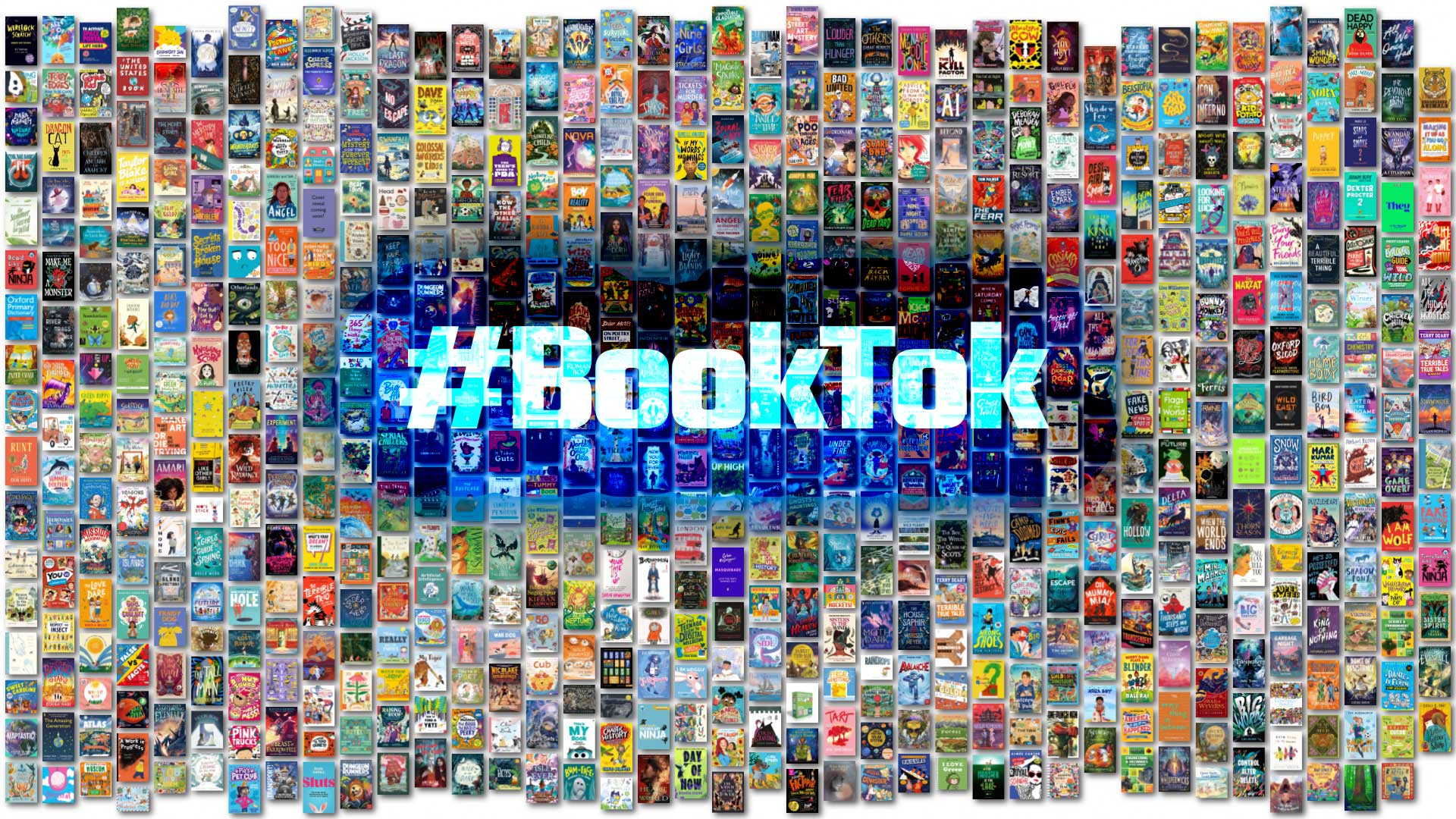
There is another clue hiding in BookTok. Social media is often blamed for hollowing out reading, yet BookTok has also become one of the clearest routes back into books. A recent narrative review of BookTok research found that it can boost reading motivation or help young people rediscover reading during adolescence. A 2024 study of young people’s BookTok narratives found that the reading practices they described were strongly social, physical and emotional, built around the book as an object as well as a text. The fact that the UK is launching an official BookTok chart in 2026 tells you the industry now treats this link between online attention and book demand as measurable, not anecdotal.
That does not mean schools should simply chase viral titles. Some social media trends reward shock, cruelty, certainty and performance. Books can answer the same anxieties in a better way. Recent studies from Edinburgh researchers suggest that adolescents see fiction as supporting empathy, connection, personal growth and wellbeing. That is the real opening for schools. A book can still deliver pace, intensity and relevance, while also giving a reader time to think, re-read, disagree, sit with discomfort and grow alongside a character. Social media is good at urgency. Books are better at depth.
That is especially important when the topic is masculinity, confidence and online influence. If teenagers are already consuming blunt content about status, attraction, power and how to live, the answer is not to pretend those questions do not exist. It is to offer better material. Alan Bissett’s LADS is explicitly framed as a guide to respect and consent for teenage boys, with confidence and positive relationships at its centre. Nathanael Lessore’s What Happens Online is presented by its publisher as a teen novel about working out who you are online and offline. BookTrust’s guidance on using fiction to discuss boyhood and masculinity makes the same wider case: reading can be a route into empathy and a counterweight to toxic online scripts.
The practical test is straightforward. When you are looking at a book for a 14 to 16+ reader, ask: does this feel relevant within a page or two? Does it offer a problem, desire or pressure a teenager recognises? Does it respect the reader’s intelligence? Does it promise some kind of usable insight, whether practical, emotional or social? Does it sound like a book a teenager might press into a friend’s hand and say, “Read this”? If the answer is yes, you are probably closer to current social media demand than you think.
The bigger point is hopeful. Teenagers have not lost interest in meaning, identity or even reading itself. The National Literacy Trust’s 2026 findings show that many still value reading, even when it slips out of their routines. The job for adults is not to sneer at the feed. It is to notice what the feed is telling us about appetite, then meet that appetite with books that are sharper, kinder and built to last.
Teenagers do respond to ideas that are explained clearly, quickly and with conviction. That is one reason influencers do so well on social media. They package identity, confidence, relationships, status and advice into short, sharp content that feels immediate and relevant. The problem is that social media moves fast. A post appears, lands, and disappears. A book can do the same work with more weight and staying power. Readers can come back to a passage, think about it, question it, read it again and sit with a character for longer. That gives books an advantage when the aim is not just to grab attention, but to build understanding and empathy.
For teachers, the lesson is practical. We need more contemporary books that deal directly with the issues teenagers are already encountering online, and we need more chances to put those books in front of them. What stood out in our focus group responses was how closely the choices for 14 to 16 year olds matched the same subjects, audiences and patterns driving attention on TikTok and Instagram. So yes, books can appeal to this age group, and yes, teenagers do still read for pleasure. There’s no lack of appetite. But for teachers, do we have enough of the right books to recommend?
Further reading endnotes:
- Teenage reading: (Re)framing the challenge – National Literacy Trust report on teenage reading habits, reading enjoyment, daily reading rates, and how teenagers describe the value of reading in their lives.
- From apps to AI search: how the UK goes online in 2025 – Ofcom report on children’s and teenagers’ online habits, including social media use, messaging, scrolling behaviour, and the place of digital media in everyday life.
- Online Nation 2025 – Ofcom’s wider dataset and analysis on UK online behaviour, including children and young people’s use of platforms, services and devices.
- Motivating book reading during adolescence – Research paper examining what helps adolescents choose to read, with attention to autonomy, value, motivation and engagement.
- BookTok: A Narrative Review of Current Literature – Review article bringing together recent research on BookTok, reading motivation, social reading culture and the role of online recommendation communities.
- Sharing Is Caring: Young People’s Narratives about BookTok and Volitional Reading – Study of how young people describe BookTok, chosen reading, and the emotional and social side of reading culture.
- Reading fiction for empathy, wellbeing and adolescent development – Research discussing fiction, empathy, connection and wellbeing, with relevance to how reading supports teenagers beyond attainment measures.
- Audiobooks and fiction drove growth in 2024 – Publishers Association summary of UK publishing market trends, including the continuing strength of fiction, digital formats and audiobooks.
- LADS – Publisher page for Alan Bissett’s guide to respect, consent, masculinity and relationships for teenage boys.
- Official BookTok chart set to launch in the UK – News report on the launch of an official UK BookTok chart, showing how strongly social media now shapes book visibility and sales.
- British teens resist Australian-style social media ban – Reuters report on how British teenagers describe social media’s place in their lives, useful for understanding the pull and perceived value of these platforms.
- It’s like a giant book club: how schools are getting children excited about reading again – Feature on school reading cultures, peer influence, and social approaches that help rebuild reading engagement.
Episode 40 chapter markers
Part 1
Part 2
Part 3
Episode 40 credits
To see full details of licensing information, Creative Commons, GNU license credits and other attributions that apply to every episode of this podcast, see our School Reading List podcast credits information page.
Credits specific to this episode
- Kevin MacLeod – Bummin on Tremelo – (purchased lifetime extended license registered to Tom Tolkien license ID FML-170359-11969).
- Listener submitted monologues from debut and self-published authors. For more details, see the podcast episode’s details page.
Ask us a question | Leave us a voicemail shout-out
Click the button below to leave us a voicemail via SpeakPipe, if you would like to ask a question for one of our listeners’ message slots, leave a shout-out or be featured in a future episode.
Buy me a coffee
If you found this free podcast useful and you would like to help, please consider a donation through the ‘Buy Me a Coffee’ service. Thanks.