Moon landings
Moon landing books for children and teens can open up the history, science and human stories behind Apollo 11 and the missions that followed. These selections range from picture-book biographies and richly illustrated accounts of the first lunar landing to engineering stories, Space Race history, Apollo 13 survival and thought-provoking fiction for older readers. They offer useful routes into space science, computing, teamwork, biography and twentieth-century history. This list features books by Chris Hadfield, Neil Armstrong, Brian Floca, Brad Meltzer, Buzz Aldrin, Margot Lee Shetterly, Sally Gardner, Maria Isabel Sánchez Vegara, David Long, and Amy Cherrix.
Moon landings – our recommendations
Moon landings picture books for 3-7 year olds
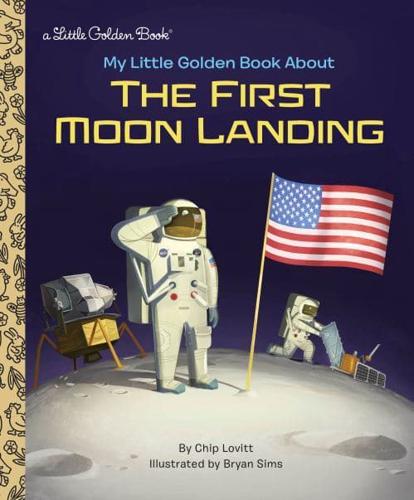
My Little Golden Book About the First Moon Landing by Charles Lovitt, illustrated by Bryan Sims
Created for 2-5 year olds, this Little Golden Book retells Apollo 11 from launch to the first human steps on the Moon. Charles Lovitt introduces Saturn V, the command module Columbia and the lunar module Eagle, explains who the astronauts were and how they were selected, and adds details about spacesuits and work in space.
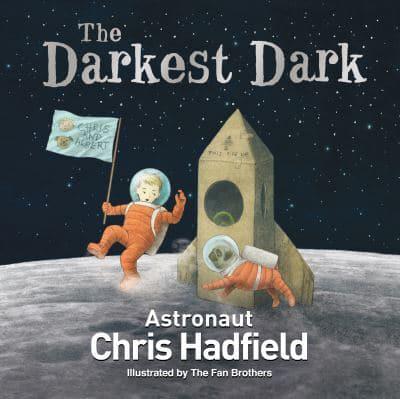
The Darkest Dark by Chris Hadfield with Kate Fillion, illustrated by The Fan Brothers
Chris Hadfield draws on his own childhood in this picture-book story for 3-7 year olds. Young Chris is fascinated by space but frightened of the dark until watching the Apollo 11 Moon landing changes the way he sees the night sky and his ambitions. The Fan Brothers’ atmospheric illustrations move between home, imagined aliens and the televised landing, linking a familiar childhood fear with the moment that helped inspire Hadfield’s later career as an astronaut.
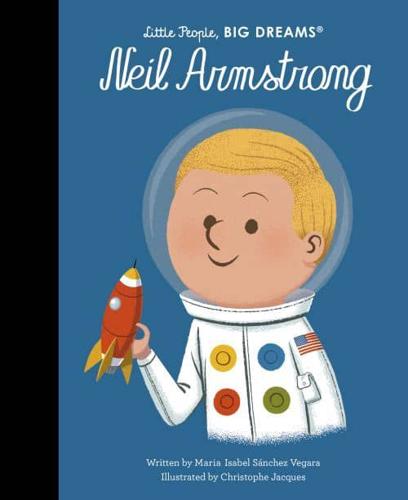
Neil Armstrong by Maria Isabel Sánchez Vegara, illustrated by Christophe Jacques
Maria Isabel Sánchez Vegara traces Neil Armstrong’s path from childhood interest in flight through aeronautical engineering, naval service, piloting and selection as an astronaut. The story reaches Apollo 11 and his first steps on the lunar surface alongside Buzz Aldrin, while Christophe Jacques’s bright illustrations keep the biography approachable for younger children. A timeline, historical photographs and a short profile at the back add factual context for a first encounter with Armstrong’s life.
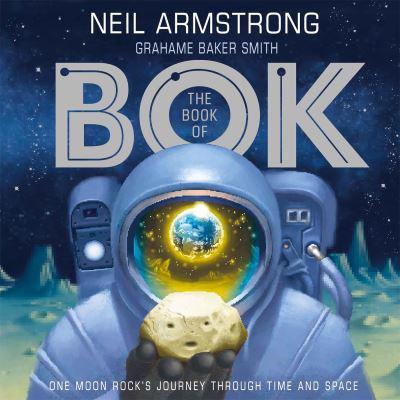
The Book of Bok: One Moon Rock’s Journey Through Time and Space by Neil Armstrong, illustrated by Grahame Baker Smith
This unusual non-fiction picture book tells the Moon’s deep history through Bok, a Moon rock that eventually meets Neil Armstrong during Apollo 11. For 6+ year olds, it connects the formation of the Moon, craters and long geological timescales with the 1969 landing and the samples brought back to Earth. Grahame Baker Smith’s illustrations give the rock its own viewpoint, while Armstrong’s text places the famous mission inside a much longer story of the Earth and Moon.
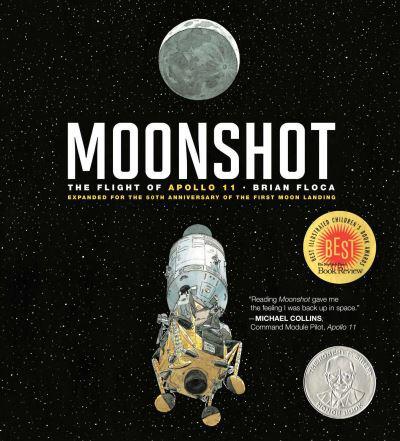
Moonshot: The Flight of Apollo 11 by Brian Floca
Brian Floca’s expanded edition follows Apollo 11 through preparation, launch, the journey to the Moon, the landing and the return home. His detailed illustrations give equal attention to astronauts and spacecraft, from suits and helmets to rockets, modules and the lunar surface. Eight additional pages added for the 2019 edition broaden the visual and factual account, making this a richly illustrated way to revisit the flight itself and the engineering behind the mission.
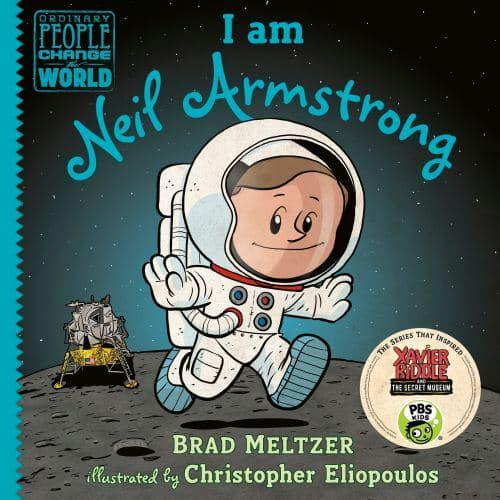
I am Neil Armstrong by Brad Meltzer, illustrated by Christopher Eliopoulos
Brad Meltzer presents Neil Armstrong’s life for 5-9 year olds, beginning with his childhood fascination with flight and following the small steps that led to engineering, piloting and Apollo 11. Christopher Eliopoulos uses comic-style illustrations throughout, and the book closes with photographs and a timeline of key events. The emphasis on teamwork places Armstrong’s Moon landing within a wider story about preparation, cooperation and persistence.
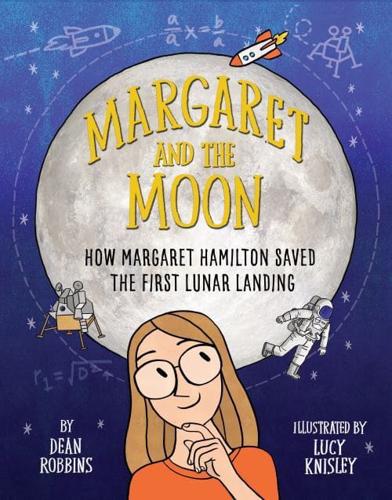
Margaret and the Moon by Dean Robbins, illustrated by Lucy Knisley
Margaret Hamilton’s mathematical curiosity and pioneering software work take centre stage in this biography for 4-8 year olds. Dean Robbins follows her from studying maths to MIT, where her work supported NASA and the Apollo programme, including Apollo 11. Lucy Knisley’s illustrations bring equations, computers and the scale of the project into a picture-book format, highlighting one of the key engineering contributions behind the missions that carried astronauts towards the Moon.
Moon landings books for children aged 7-12
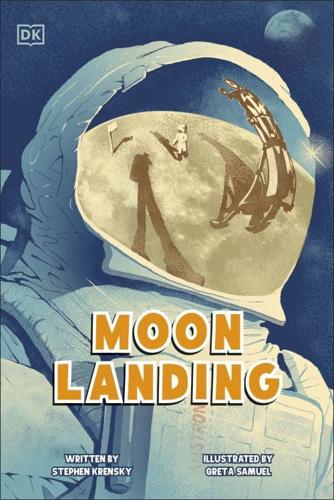
Moon Landing by Stephen Krensky
Stephen Krensky turns Apollo 11 into a fast-moving narrative for 9-12 year olds, beginning with President Kennedy’s challenge and carrying the story through launch, the journey to the Moon and the first footsteps on its surface. Atmospheric illustrations and light-touch diagrams explain key pieces of science and engineering without interrupting the pace. The result is a focused account of the mission itself and the many people whose work made the 1969 landing possible.
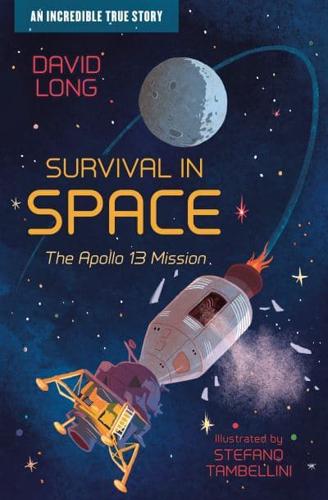
Survival in Space: The Apollo 13 Mission by David Long, illustrated by Stefano Tambellini
David Long retells the Apollo 13 mission for 9+ year olds, with Stefano Tambellini’s black-and-white illustrations adding tension and clarity. After an explosion damages the spacecraft on its way to the Moon, astronauts Jim Lovell, Jack Swigert and Fred Haise must work with Mission Control to return safely to Earth. The book foregrounds problem-solving, teamwork and endurance, and its Barrington Stoke format makes a major episode in space history approachable for children who benefit from accessible reading design.
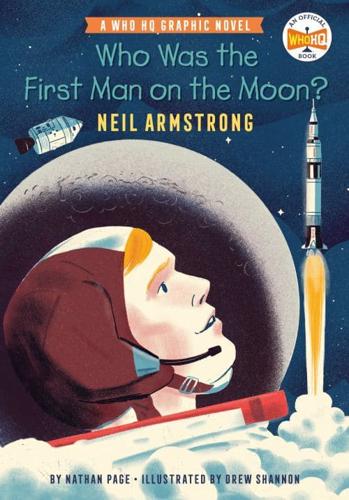
Who Was the First Man on the Moon?: Neil Armstrong by Nathan Page and Who HQ, illustrated by Drew Shannon
This graphic biography for 8-12 year olds combines Neil Armstrong’s life story with the Apollo 11 mission. Nathan Page and Who HQ move from Armstrong’s childhood experiments and early encounters with flight through the calculated risks, training and decisions that led to the first human steps on the Moon.
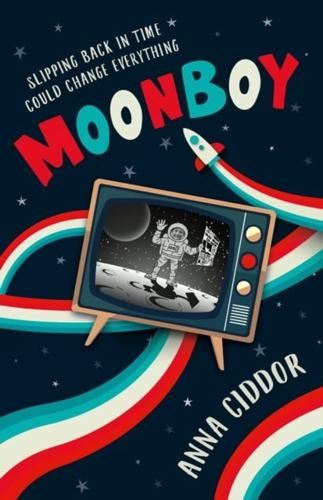
Moonboy by Anna Ciddor
When Charlotte finds a box of keepsakes, she’s pulled back to 1969, and into her grandfather Keith’s childhood during the Apollo 11 moon landing. Through a series of time-slips, she becomes part of his world, discovering a new way to connect with him as he faces dementia in the present. Moving between past and present, Charlotte gently shifts small moments to help her family. Blending history with heart, this cracking sci-fi historical story for 9-12 year olds explores memory, change, and the ties that hold us together.
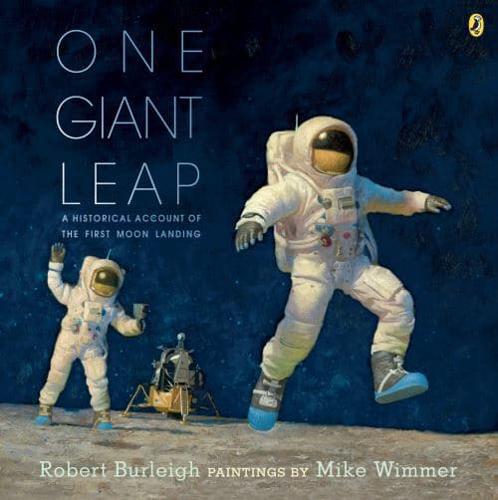
One Giant Leap: A Historical Account of the First Moon Landing by Robert Burleigh, illustrated by Mike Wimmer
Robert Burleigh’s illustrated account for 6-8 year olds places children inside the Apollo 11 journey from Earth to the lunar surface. The text follows Neil Armstrong and Buzz Aldrin as they travel to the Moon and make the first landing, while Mike Wimmer’s large-scale paintings emphasise the size of the machinery and the unfamiliar lunar landscape.
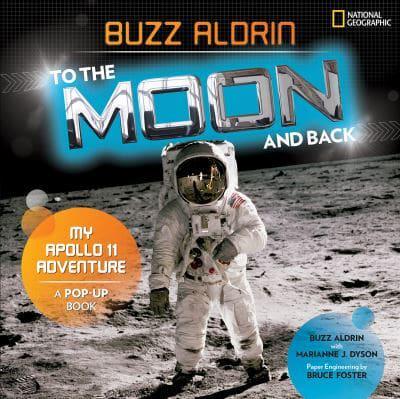
To the Moon and Back: My Apollo 11 Adventure by Buzz Aldrin and Marianne J. Dyson
Buzz Aldrin and Marianne J. Dyson combine first-hand recollection with paper engineering in this account for 8-12 year olds. Intricate pop-ups and folds recreate stages of Apollo 11, while Aldrin’s perspective brings children close to the experience of launch, travel and walking on the Moon.
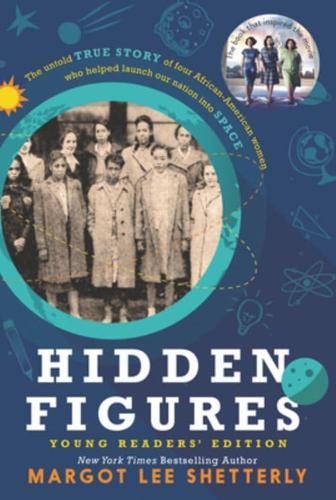
The Untold True Story of Four African American Women Who Helped Launch Our Nation Into Space by Margot Lee Shetterly
Margot Lee Shetterly introduces 8-12 year olds to Dorothy Vaughan, Mary Jackson, Katherine Johnson and Christine Darden, four mathematicians whose work helped shape NASA during the Space Race. The young readers’ edition traces their careers through segregation, changing technology and major early space achievements, placing the Moon landing within the wider scientific and social history that made it possible.
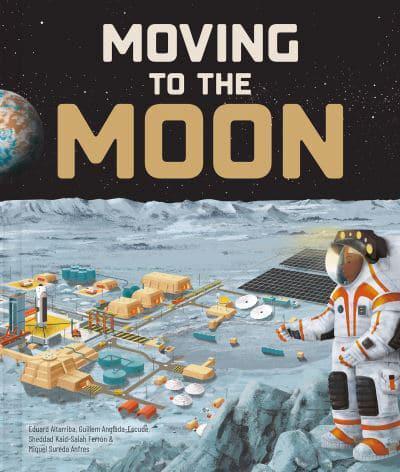
Moving to the Moon by Sheddad Kaid-Salah Ferrón, Guillem Anglada Escudé and Miquel Sureda Anfres, illustrated by Eduard Altarriba
What would it take to build a permanent home on the Moon? This outstanding illustrated hardback STEM book takes KS2 children on a journey from the first lunar landings to plans for future missions and settlements. Along the way, it explains how the Moon formed, its effects on Earth and the challenges of travelling beyond our planet. Combining accessible astronomy, space exploration and possible future technology, it gives curious 8+ year olds plenty to discuss about what living on another world could involve. Highly recommended and ideal for primary school libraries.
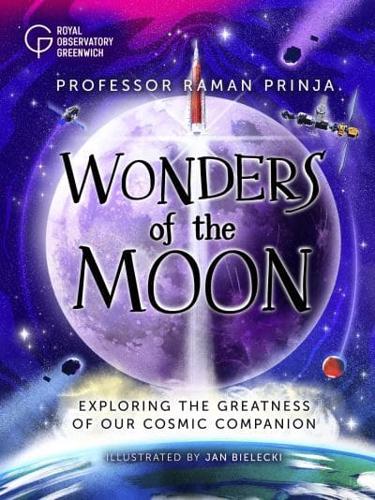
Wonders of the Moon by Raman Prinja, illustrated by Jan Bielecki
From the Artemis missions and spacecraft technology to lunar water ice and proposals for a permanent surface base, this book examines both the science of the Moon and humanity’s plans to return there. The impressive and thorough text includes close-up details of Earth’s cosmic companion alongside the engineering required to reach, explore and potentially live on it. Jan Bielecki’s illustrations cover lunar landscapes, spacecraft and the practical challenges facing the next generation of Moon explorers. It’s perfect for KS2 libraries.
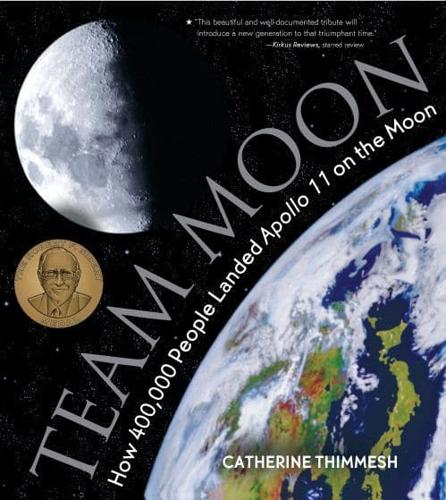
Team Moon: How 400,000 People Landed Apollo 11 on the Moon by Catherine Thimmesh
Catherine Thimmesh shifts attention from the three Apollo 11 astronauts to the vast team behind them. Using NASA photographs, direct quotations, interviews and oral histories, she shows how specialists across engineering, computing, communications, spacesuit manufacture and flight control solved the problems involved in landing people on the Moon and bringing them home. The book turns the mission into a story of interconnected jobs, rapid problem-solving and collaboration across an enormous technical programme.
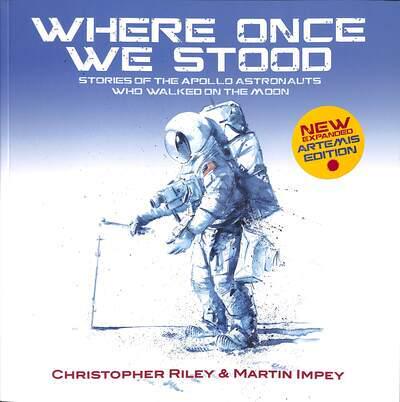
Where Once We Stood: Stories of the Apollo Astronauts Who Walked on the Moon by Christopher Riley, illustrated by Martin Impey
Words spoken by the Apollo astronauts on the lunar surface sit alongside Martin Impey’s stunning paintings, giving a vivid sense of what it felt like to live and work on another world. This expanded Artemis edition adds three new artworks and an epilogue drawing on Christopher Riley’s interviews with the Artemis 2 crew, connecting the historic Moon landings with the next chapter of lunar exploration. For 10+ year olds this striking blend of first-hand testimony, art and space history is ideal for close browsing at home or in the classroom. It’s perfect for KS2 and KS3 libraries.
Moon landings books for teens
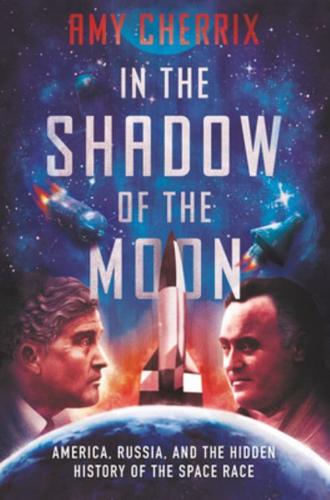
In the Shadow of the Moon: America, Russia, and the Hidden History of the Space Race by Amy Cherrix
Written for 13+ year olds, Amy Cherrix’s narrative history examines the American and Soviet space programmes through Wernher von Braun and Sergei Korolev, the influential rocket engineers working on opposite sides of the Cold War. Drawing the story from the aftermath of the Second World War to the 1969 Moon landing, it connects technological breakthroughs with political rivalry, secrecy and the human costs behind the Space Race.
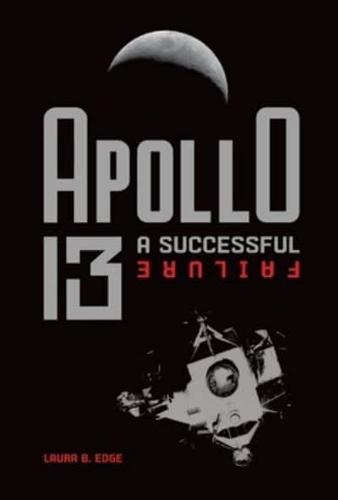
Apollo 13: A Successful Failure by Laura B. Edge
This young adult non-fiction account reconstructs Apollo 13 from the planned lunar mission through the oxygen-tank explosion, the improvised effort to keep the crew alive and the return to Earth. Laura B. Edge follows astronauts Jim Lovell, Jack Swigert and Fred Haise alongside Mission Control, setting their crisis within the wider Space Race.
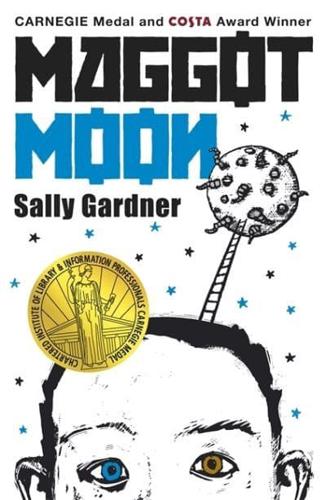
Maggot Moon by Sally Gardner
Sally Gardner’s dystopian novel for 14-18 year olds places a planned Moon landing at the heart of an alternate-history struggle against the authoritarian Motherland. Standish Treadwell and his friend Hector discover that the regime’s space-race spectacle conceals a dangerous truth, drawing Standish into an attempt to expose it. The dyslexia-friendly edition combines political fiction, friendship and rebellion with the imagery and propaganda of a lunar race, offering older teenagers a sharply different literary angle on Moon-landing themes.
Click the buttons below to purchase all of the books in this Moon landings list, as well as class sets of any of these books and many more, from Bookshop.org UK. Or buy all 17 listed titles from Amazon – ideal for gifts or your classroom library.
Buy from UK.Bookshop.Org Buy from Amazon.co.uk
Disclosure: If you buy books using the buttons above: we may earn a commission from Bookshop.org, whose fees support independent bookshops; as an Amazon Associate schoolreadinglist.co.uk earns from qualifying purchases.
Schools & teachers: please respect copyright and don’t copy our Moon landings book list. If you find our book recommendations useful, please consider sharing on social media or linking to this page instead. Thanks.
Moon landing resources for teachers
- The National Archives provides original documents relating to the 1969 Moon landing, including Prime Minister Harold Wilson’s congratulatory telegram to the United States and a contemporary source from Hong Kong. Designed for KS3 and KS4, the resource includes questions exploring historical evidence, international reactions and the reliability of primary sources.
- BBC Teach has assembled a collection of Apollo 11 teaching resources for primary and secondary schools, including an animated account of Neil Armstrong’s journey, contemporary BBC audio recordings, space-themed songs and short films exploring the mission, the astronauts and the challenges of landing on the Moon.
- UK Research and Innovation’s Borrow the Moon programme offers classroom resources for ages 5-18, including Apollo mission timelines, investigations into lunar craters, activities examining the astronauts’ footprints and lessons about gravity. Downloadable teacher guides, presentations and worksheets support science and history teaching across several key stages.
- STEM Learning’s Apollo 11 image collection contains downloadable NASA photographs showing the astronauts, Saturn V launch, lunar module, Moon landing, views of Earth and the crew’s return. The images provide useful primary visual evidence for classroom displays, historical enquiries, sequencing activities and science discussions from KS2 upwards.
- STEM Learning’s Mission to the Moon is a downloadable ESERO-UK activity pack for children aged 5-11. Its practical investigations and games explore lunar landing sites, spacecraft engineering, materials, forces, light and shadows, with opportunities for problem-solving, scientific enquiry and cross-curricular learning.
- Hamilton Trust’s Space Travellers unit provides English lesson planning for mixed Year 2 and Year 3 classes using The Sea of Tranquility by Mark Haddon and The Darkest Dark by Chris Hadfield. Children explore the 1969 Moon landing through chronological reports, factual writing, recounts and grammar activities, supported by historical footage and further reading.
- National Geographic Kids offers a UK curriculum-linked Neil Armstrong resource featuring a comic-style account of the first Moon landing. Suggested classroom activities include writing a newspaper report about the event and imagining the experience of walking on the lunar surface. Downloadable resource sheets require a subscription.
- UK Research and Innovation’s Moon Conspiracies lesson challenges KS3 pupils to evaluate claims about whether the Apollo Moon landings really happened. The downloadable lesson plan, evidence cards, briefing materials and presentation encourage scientific reasoning, source evaluation, critical thinking and discussion of misinformation.
- NASA’s Apollo 11 mission archive brings together the history of the first crewed Moon landing, mission photographs, technical information, astronaut accounts and links to the Apollo Flight Journal and Lunar Surface Journal. It provides original material for research projects, historical timelines and investigations into the engineering behind the mission.
- NASA’s Apollo educational activities include practical classroom projects exploring the technology and science of lunar exploration. Children can build straw rockets, race cardboard Moon rovers and design protective lunar landers, alongside investigations into Moon phases and the engineering challenges of space travel.
- NASA’s Destination: The Moon features a short historical film documenting the Apollo 11 lunar module’s separation from the command module and its descent to the surface. Original mission-control communications accompany the footage, providing a useful visual starting point for lessons about the landing sequence and the decisions made by the astronauts.
- The European Space Agency’s Landing on the Moon resource challenges secondary pupils to design, construct and test a lunar landing module capable of protecting an egg astronaut. Downloadable classroom activities combine Newton’s laws of motion, gravity, velocity and acceleration with engineering design, budgeting, risk assessment and teamwork.
- NASA’s Celebrating Apollo series provides secondary-level history and geography teaching materials exploring the Space Race, the political decisions behind the Apollo programme, technological developments and wider social consequences. Students analyse primary and secondary documents, evaluate evidence and construct written arguments about the historical significance of lunar exploration.
BISAC JNF051010, JNF051040, JNF025080, YAN050020, YAN025080. | Thema YNNZ, TTDX.