Forces and motion books for children and teens
These forces and motion books for children and teens start with familiar questions: what makes something move, stop or fall? Picture stories lead into illustrated science, experiments, comics and facts about forces, gravity, friction and magnets. For older students, mechanics texts develop motion, acceleration, momentum and energy through worked examples and exam practice. Together, the books can support shared reading, classroom investigation and study. This list features books by Kay Barnham, Eoin McLaughlin, Isabel Thomas, Anna Claybourne, Paul Mason, Tom Jackson, Peter Riley, Joy Lin, John Allum, and Mike Benn.
Forces and motion books for children and teens – our recommendations
Forces and motion picture books for 3-7 year olds
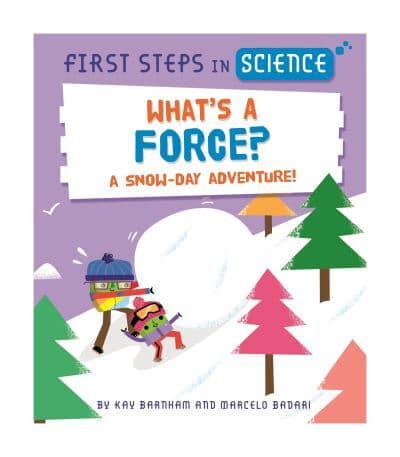
First Steps in Science: What’s a Force? by Kay Barnham, illustrated by Marcelo Badari
A snow day gives super-powered robot siblings Zeb and Astro the perfect opportunity to investigate forces. Sledging, building a snowman and throwing snowballs introduce 3-5 year olds to physics through familiar winter activities. Interactive prompts encourage children to join in, while a creative activity and guidance for adults provide ideas for further exploration.
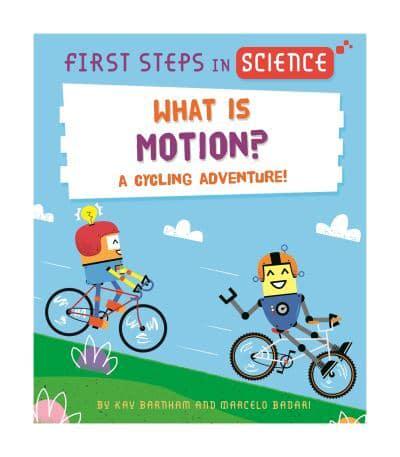
First Steps in Science: What is Motion? by Kay Barnham, illustrated by Marcelo Badari
Robot friends Flex and Flash discover the science of movement as they race around on their bikes and rocket home. Their cycling adventure introduces motion through experiences that 3-5 year olds can relate to. Interactive elements and a creative activity encourage children to explore movement for themselves, with accompanying guidance for parents, carers and teachers.
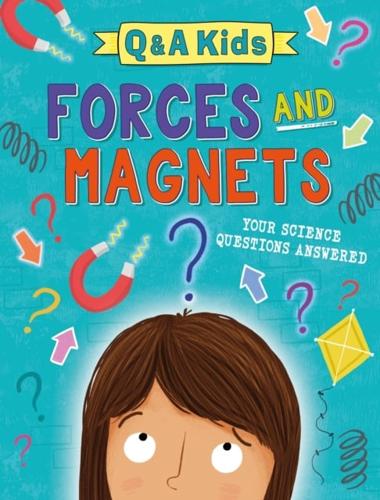
Q and A Kids: Forces and Magnets by Amy Chapman, illustrated by Angelika Scudamore
Why do things fall down, and what makes magnets attract or repel each other? Amy Chapman introduces gravity, friction, air resistance and magnetism through questions that capture the curiosity of 5-7 year olds. Angelika Scudamore’s illustrations, spotting challenges and interactive activities encourage children to investigate the science behind pushes and pulls.
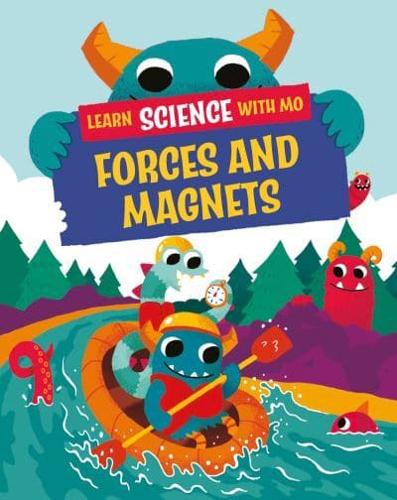
Learn Science with Mo: Forces and Magnets by Paul Mason, illustrated by Michael Buxton
Climbing, skateboarding and rafting give Mo the Monster and his friend plenty of opportunities to discover how forces work during an outdoor adventure holiday. Michael Buxton’s playful illustrations accompany explanations of gravity, magnetism and friction, with science puzzles and activities for inquisitive 5+ year olds. A glossary and answers section help children revisit their discoveries.
The Science Club Investigates: Forces and Magnets by Mary Auld, illustrated by Sernur Isik
When Paola accidentally knocks over Mrs Khan’s bag, the Science Club finds itself investigating forces. From playing football and measuring pushes and pulls with a force meter to discovering the Earth’s magnetic properties, the children’s investigations introduce scientific principles through practical experiences. Simple experiments invite 5+ year olds to join in with the club’s discoveries.
Newton is Floating: An Epic Tale of Gravity by Eoin McLaughlin, illustrated by Matt Hunt
Newton the dog is floating, sausages are stuck to the ceiling and whales are drifting through space. Eoin McLaughlin and Matt Hunt have enormous fun imagining the consequences of a world without gravity. The increasingly absurd situations make this an entertaining read-aloud for 0-5 year olds, with an explanation of the science behind the mayhem at the back.
Emily Vs Gravity by Isabel Thomas, illustrated by Rosalind Beardshaw
When Bear falls at Emily’s feet, she sets about finding a way to get him back where he belongs. But gravity has other ideas. Undeterred, Emily experiments with a seesaw, homemade wings and a catapult. Isabel Thomas and Rosalind Beardshaw turn a scientific puzzle into a playful story about perseverance, inventive thinking and the challenges of defying gravity.
Forces and motion for children aged 7-12
Superpower Science: Fantastic Forces and Motion by Joy Lin, illustrated by Alan Brown
Could a human really possess super strength, fly or move at extraordinary speeds? Joy Lin examines superhero abilities through the laws of physics, considering what these powers would require and how they might affect the human body. Alan Brown’s comic-book illustrations make this an imaginative introduction to forces and motion for superhero enthusiasts aged 9 and upwards.
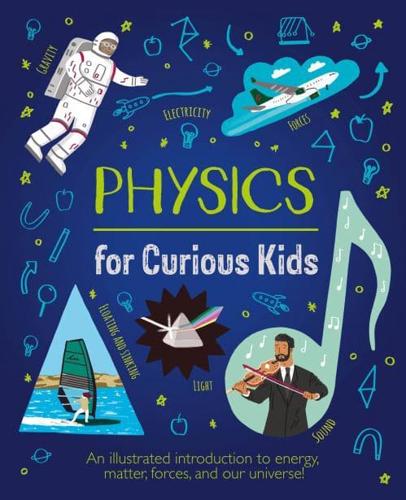
Physics for Curious Kids: An Illustrated Introduction to Energy, Matter, Forces, and Our Universe! by Laura Baker, illustrated by Alex Foster
Why do our eyes deceive us, what happens when something travels faster than sound and how did the universe begin? Laura Baker casts her net wide in this fascinating introduction to physics, moving from the fundamental principles of energy, matter and motion to the wonders of aerodynamics and space exploration. Alex Foster’s colourful illustrations and cleverly conceived diagrams make even the more challenging concepts approachable. Ideal for inquisitive 8-12 year olds with an appetite for big scientific questions.
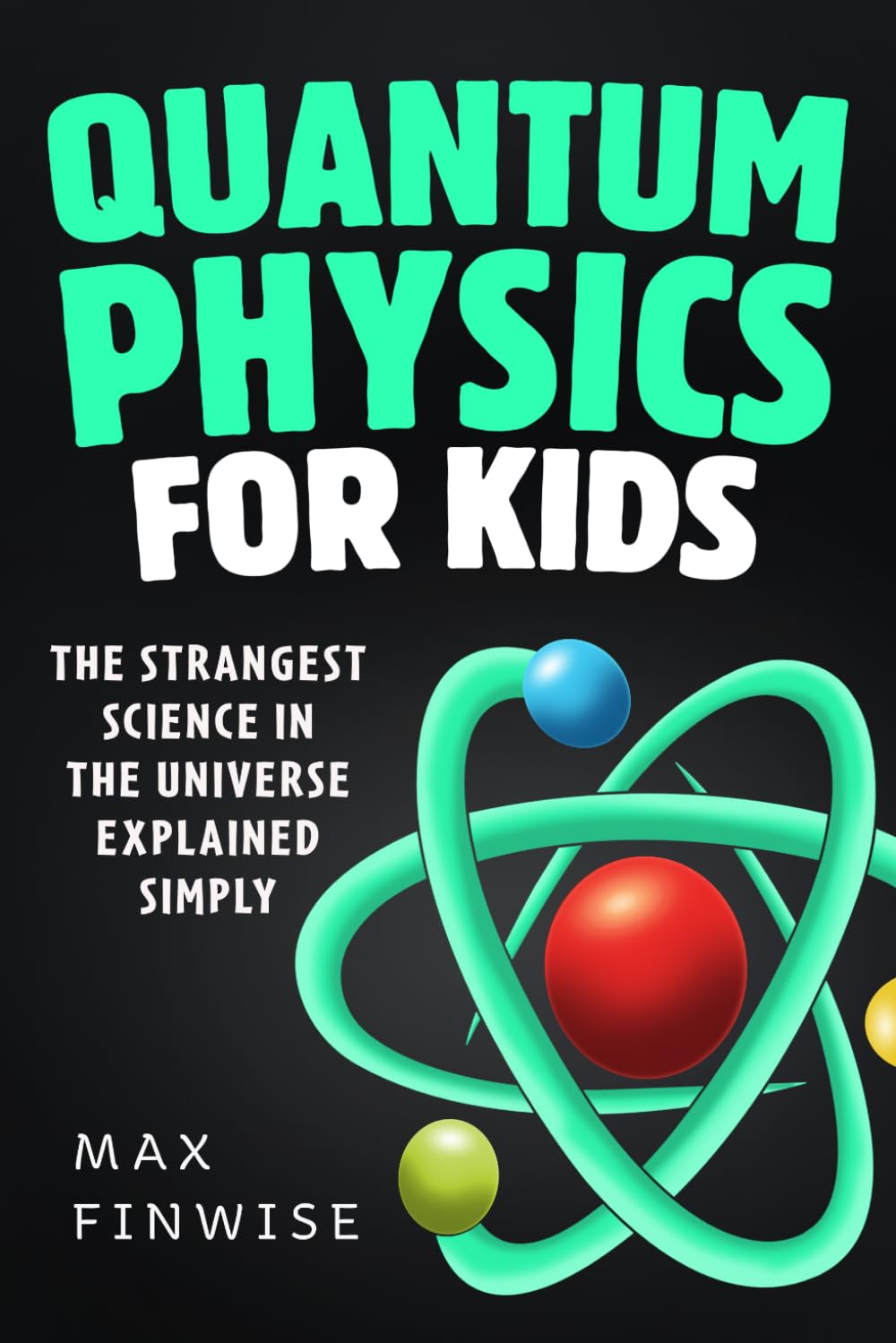
Quantum Physics for Kids: The Strangest Science in the Universe Explained Simply by Max Finwise
Imagine discovering that the solid objects around you are mostly empty space, or that light can behave as both a wave and a particle. Max Finwise takes 8-12 year olds into the wonderfully peculiar world of quantum physics, tackling superposition, entanglement and tunnelling without overwhelming young readers. Illustrations, activities and chapter summaries allow children to digest these mind-bending ideas at their own pace. Particularly interesting are the connections between the seemingly improbable behaviour of particles and the technology we use every day.
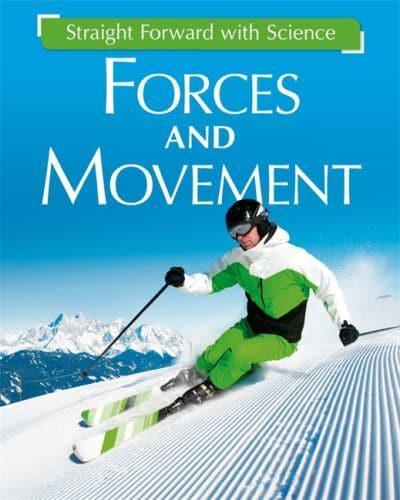
Straight Forward with Science: Forces and Movement by Peter Riley
Gravity, friction and the mechanics of simple machines are explored through straightforward explanations and practical investigations. Peter Riley helps 10+ year olds understand the different forces at work on Earth and how they influence movement. The experiments complement upper KS2 science teaching, allowing children to observe the physical principles they encounter in the classroom.
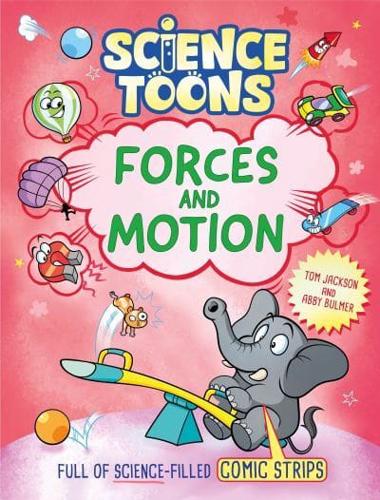
Science Toons: Forces and Motion by Tom Jackson, illustrated by Abby Bulmer
An entertaining cast of comic-book characters introduces the physics behind movement, gravity and the forces acting on everyday objects. Tom Jackson’s scientific explanations sit alongside Abby Bulmer’s humorous cartoons and informative diagrams. The combination works particularly well for 7+ year olds who enjoy comics but might be less inclined to pick up a conventional science book.
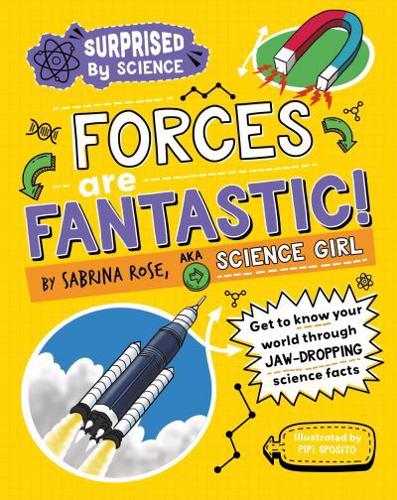
Surprised by Science: Forces are Fantastic! by Sabrina Rose Science Girl, illustrated by Pipi Sposito
Black holes, magnetic navigation and the role of friction in storms feature in this collection of surprising physics facts. Science communicator Sabrina Rose draws on extraordinary natural phenomena and ingenious inventions to explain forces to curious 7+ year olds. Pipi Sposito’s illustrations accompany scientific discoveries that range from everyday experiences to the farthest reaches of space.
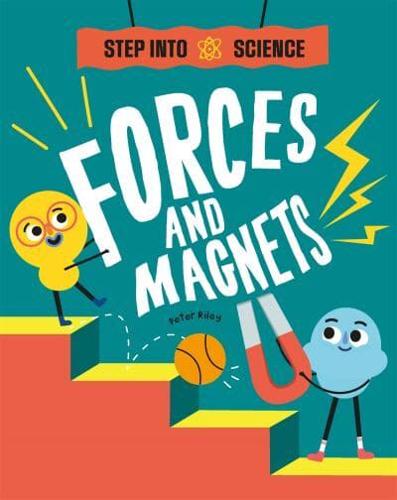
Step Into Science: Forces and Magnets by Peter Riley
Why do objects fall, and what makes the Earth behave like an enormous magnet? Peter Riley combines concise scientific explanations with colourful characters and experiments that encourage 7+ year olds to investigate forces for themselves. Testing different materials for magnetic properties provides a practical complement to the book’s coverage of KS2 science.
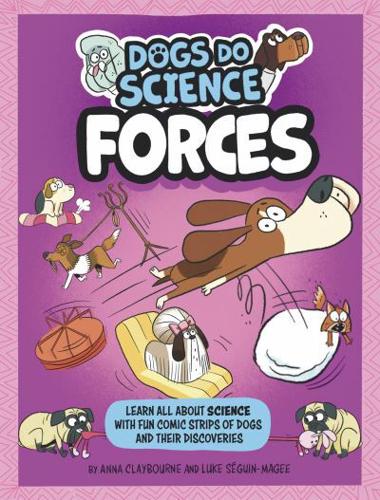
Dogs Do Science: Forces by Anna Claybourne, illustrated by Luke Séguin-Magee
Professor Pooch and his Doberman assistant investigate everything from floating on a lilo to the forces at work on a roundabout. Anna Claybourne and Luke Séguin-Magee make physics entertaining through canine antics, comic strips and quizzes. The humorous approach should particularly appeal to 7+ year olds who enjoy cartoon characters and unusual scientific questions.
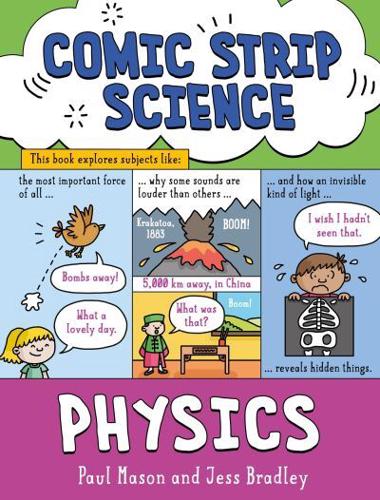
Comic Strip Science: Physics by Paul Mason, illustrated by Jess Bradley
What brings a human cannonball back to Earth, and how do magnets actually work? Paul Mason explores forces, energy and simple machines through short comic-strip stories. Jess Bradley’s entertaining cartoons, additional panels and diagrams explain the physics behind each scenario, making this particularly accessible to 8+ year olds who prefer visual storytelling to lengthy scientific explanations.
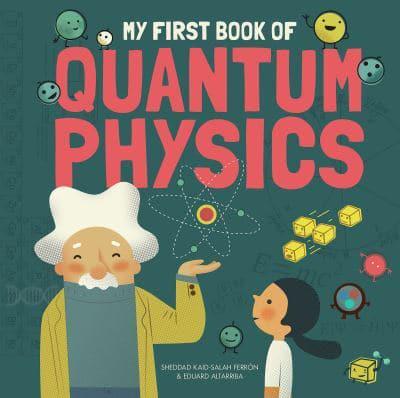
My First Book of Quantum Physics by Sheddad Kaid-Salah Ferrón, illustrated by Eduard Altarriba
Schrödinger’s famous imaginary cat is just one of the curiosities awaiting young readers in this striking introduction to quantum physics. Sheddad Kaid-Salah Ferrón has a knack for making extraordinarily complicated ideas comprehensible, while Eduard Altarriba’s inventive graphics give shape to a microscopic world that defies everyday experience. From the peculiar behaviour of particles to the quantum science behind familiar electronic devices, there’s much here to fascinate 8+ year olds and provoke some wonderfully eccentric scientific conversations at home or school.
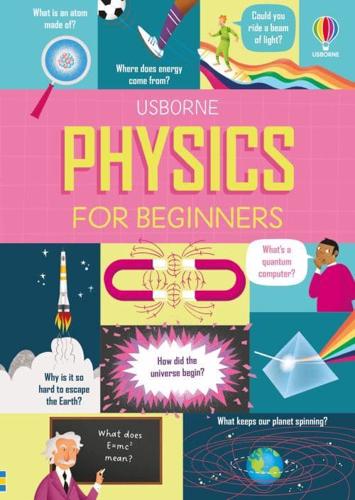
Physics for Beginners by Rachel Firth, Minna Lacey and Darran Stobbart, illustrated by El Primo Ramón
What do physicists actually do, and how much do we still have to discover about the universe? This absorbing Usborne guide approaches physics through the questions scientists ask rather than the equations children might associate with the subject. Colourful illustrations make gravity, relativity and quantum mechanics inviting subjects to explore, while accompanying online resources introduce readers to influential physicists and offer avenues for further investigation. It’s particularly well suited to curious 10+ year olds whose scientific interests extend beyond the school curriculum.
Forces and motion for teens
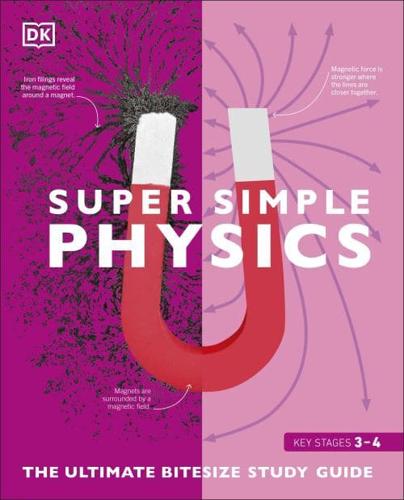
Super Simple Physics: The Ultimate Bitesize Study Guide by DK
With its uncluttered pages, clear diagrams and bite-sized explanations, this substantial DK guide takes much of the frustration out of revising physics. Atomic structure, forces, flotation and astronomy are among the many topics covered, with neatly organised fact boxes making it easy to locate information without having to wade through chapters of dense text. For 12+ year olds struggling to get to grips with a particular classroom topic, the visual approach offers a refreshing alternative to conventional textbooks and revision notes.
Cambridge International AS & A Level Mathematics: Mechanics Coursebook by Jan Dangerfield and Stuart Haring
Designed for the mechanics component of Cambridge International AS & A Level Mathematics, this coursebook develops mathematical modelling through problems involving forces, acceleration, friction and momentum. Connected particles, work, energy and power are also covered. Worked examples lead into practice and review exercises, helping students translate physical situations into mathematical problems and develop their problem-solving techniques.
Physics for the IB Diploma Third edition by John Allum and Paul Morris
Organised around the IB Diploma Physics syllabus and its assessment requirements, this third edition provides detailed coverage of mechanics, including kinematics, forces, momentum, work and energy. Explanations, worked examples and questions help students develop their understanding of the underlying physics and apply it to problems. The mechanics chapters also provide a structured reference for revision.
Edexcel A Level Physics Student Book 1 by Mike Benn and Graham George
Covering AS and the first year of Edexcel A-level Physics, this student book combines theoretical explanations with mathematical support and guidance on the required practicals. Practical skills summaries help students prepare for investigations, while exam-style questions offer opportunities to apply their scientific knowledge and practise assessment techniques.
AQA A Level Physics Student Book 1 by Nick England, Jeremy Pollard, Nicky Thomas and Carol Davenport
This AQA-approved textbook covers AS and Year 1 A-level Physics, with worked examples and a dedicated mathematics chapter to support the course’s mathematical demands. Guidance on the required practicals accompanies the theoretical content. Regular Test Yourself questions help students identify gaps in their understanding, while Stretch and Challenge tasks offer more demanding problems.
WJEC Physics For AS Level Student Book: 2nd Edition by Gareth Kelly and Nigel Wood
Endorsed by WJEC, this second edition covers the AS-level Physics specification, including kinematics and dynamics within its treatment of motion, energy and matter. Concise explanations are accompanied by exam-question guidance and practice questions selected from WJEC past papers. Included answers allow students to check their work during independent study and revision.
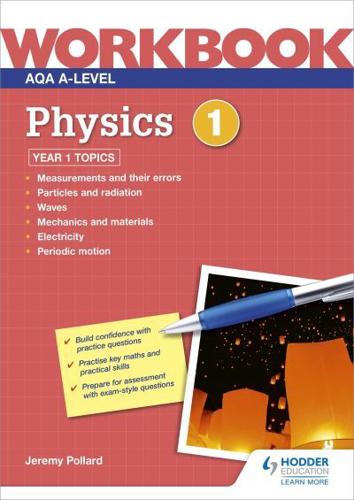
AQA A-level Physics Workbook 1 by Jeremy Pollard
Projectile motion, Newton’s laws, momentum, forces and energy feature in this workbook covering Year 1 of AQA A-level Physics. Questions progress from short-answer exercises to more demanding exam-style problems, incorporating mathematical skills, practical knowledge and connections between topics. Worked answers available online help students identify mistakes and develop their approach to calculations and written responses.
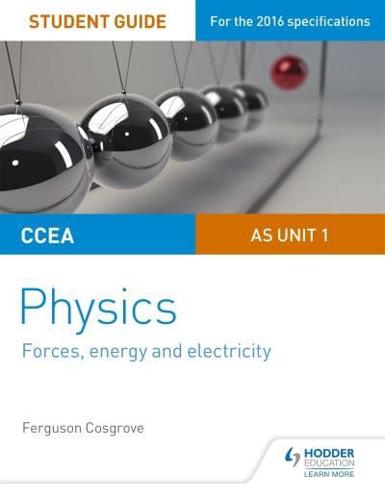
CCEA AS Unit 1 Physics Student Guide: Forces, energy and electricity by Ferguson Cosgrove
Specifically written for CCEA AS Physics Unit 1, this focused study guide covers forces, energy and electricity. Topic summaries allow students to revisit the essential scientific principles, while practice questions and graded answers help them assess their understanding and refine their exam technique.
Click the buttons below to purchase all of the books in this forces and motion list, as well as class sets of any of these books and many more, from Bookshop.org UK. Or buy 20 selected titles from this list from Amazon – ideal for gifts or your classroom library.
Buy from UK.Bookshop.Org Buy from Amazon.co.uk
Disclosure: If you buy books using the buttons above: we may earn a commission from Bookshop.org, whose fees support independent bookshops; as an Amazon Associate schoolreadinglist.co.uk earns from qualifying purchases.
Schools & teachers: please respect copyright and don’t copy our forces and motion list. If you find our book recommendations useful, please consider sharing on social media or linking to this page instead. Thanks.
Forces and motion resources for teachers
- Oak National Academy provides free Year 5 lesson plans, slides, worksheets and quizzes covering gravity, friction, air and water resistance, levers, pulleys and gears. Its Year 3 resources introduce pushes, pulls, contact forces and magnetism.
- STEM Learning hosts a Rolls-Royce activity pack for KS2 featuring five practical investigations into friction, air resistance, pushes, pulls and the directions in which forces act.
- Explorify suggests practical primary classroom investigations involving toy cars, parachutes, paper aeroplanes, magnets and simple machines. Activities explore friction, gravity, air resistance and the effects of forces on moving objects.
- The Primary Science Teaching Trust offers a downloadable Chain Reaction project, including a Year 5 forces scheme of work, teacher guidance and practical challenges in which pupils build machines to explore forces, movement and energy transfers.
- Science Sparks features hands-on experiments for younger children, including ramps, catapults, paper aeroplanes, push-and-pull mechanisms, rockets and demonstrations of Newton’s laws of motion.
- The Association for Science Education provides primary science assessment and progression resources through its PLAN project, including an example exploring forces and magnets, movement across different surfaces and magnetic materials.
- The Institute of Physics’ IOPSpark offers teaching guidance and classroom activities for primary and secondary educators. Topics include motion, contact and non-contact forces, speed, acceleration, Newton’s laws and common misconceptions about forces.
- For KS3, Oak National Academy provides downloadable lesson slides, worksheets and quizzes exploring changing speed, Newton’s first law, streamlining and practical methods of measuring motion.
- STEM Learning’s Best Evidence Science Teaching collection contains research-informed resources for ages 11-16, including diagnostic questions, teacher guidance and activities covering balanced forces, friction, velocity, acceleration, motion graphs and momentum.
- PhET Interactive Simulations offers a free interactive forces and motion simulator. Pupils can experiment with applied forces, friction and balanced or unbalanced forces to investigate how objects start, stop and change their movement.
- For secondary physics, the European Space Agency provides a downloadable paper rocket project in which students design, build and launch rockets, investigate projectile motion and calculate velocity, acceleration and the forces involved in spaceflight.
BISAC JNF051140, YAN050120. | Thema YNTE, YPMP5.