Materials books for children and teens
From the wood, glass and metal we use every day to innovative fabrics and materials engineered at the nanoscale, books about materials give children plenty to investigate. This list includes picture books about making and reusing things, illustrated science books about material properties, and teenage fiction and non-fiction exploring plastic pollution, textiles and sustainable design. There are also resources for older students studying materials in design and technology. This list features books by Oliver Jeffers, Neal Layton, Maddie Moate, Jess Wade, Tom Jackson, Anna Claybourne, Dougie Poynter, Helen Ward, Marisa Kanter, and Jennifer De Leon.
Materials books for children and teens – our recommendations
Materials picture books for 3-7 year olds
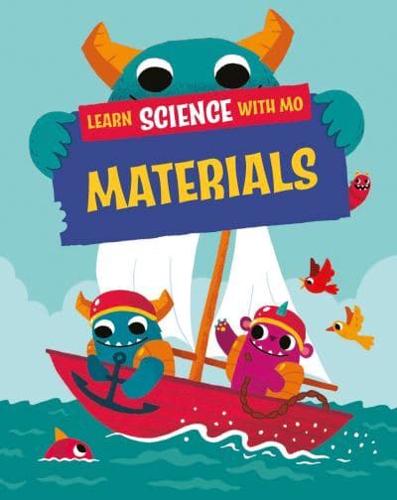
Learn Science with Mo: Materials by Paul Mason, illustrated by Michael Buxton
Mo the Monster and his friend Frankie are taking part in a sailing course, and there’s plenty to investigate as they get out on the water. What makes a boat float, and why are different materials used for different parts of sailing equipment? Paul Mason uses their adventures to explore the properties of familiar substances, with Michael Buxton’s colourful illustrations bringing the science to life. For young scientists aged five and over, Mo’s mishaps and discoveries make questions about materials feel immediately relevant, whether they’re examining something that floats or wondering what makes an object waterproof.
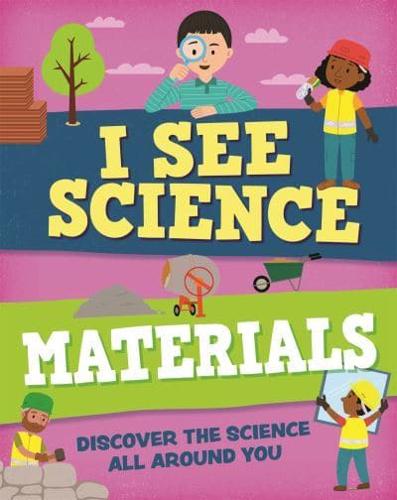
I See Science: Materials by Izzi Howell, illustrated by Christos Skaltsas
A chair, a window, a favourite toy: ordinary objects start to look rather different when you ask what they’re made of. Izzi Howell turns familiar scenes into opportunities for scientific discovery, with Christos Skaltsas’s illustrations inviting children to spot, compare and question. Along the way, readers explore why materials have different properties and how some can change. The combination of pictures, questions and accessible explanations makes this a particularly inviting introduction for children aged five and over, with plenty of ideas to investigate using objects around the house or classroom.
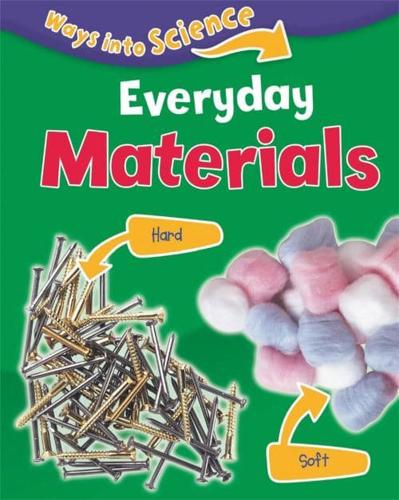
Ways Into Science: Everyday Materials by Peter Riley
Why are windows made from glass, and what makes metal so useful for cooking equipment? Peter Riley begins with the materials children encounter every day, using photographs and practical activities to explore what makes each one different. Wood, plastic, glass and metal become subjects for investigation as readers learn to recognise their properties and compare how they behave. The straightforward explanations suit children beginning to explore science independently, while the hands-on approach encourages them to examine everything from kitchen utensils to classroom furniture with fresh curiosity.
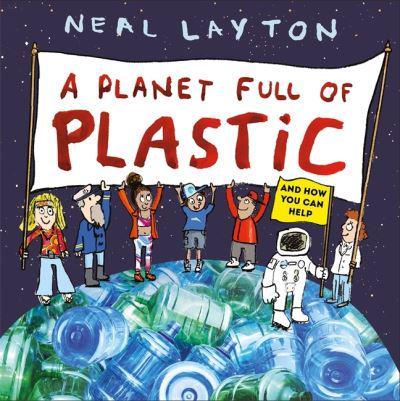
A Planet Full of Plastic by Neal Layton
Plastic is everywhere, from objects we use for a few minutes to rubbish that can remain in the environment for years. Neal Layton traces how this incredibly useful material became such a problem, following discarded plastic into rivers and oceans and exploring what happens to the wildlife that encounters it. His lively collage illustrations make a difficult subject accessible without hiding its seriousness. Alongside the science and environmental concerns, children discover practical ways to reduce waste and rethink the disposable things they use every day.
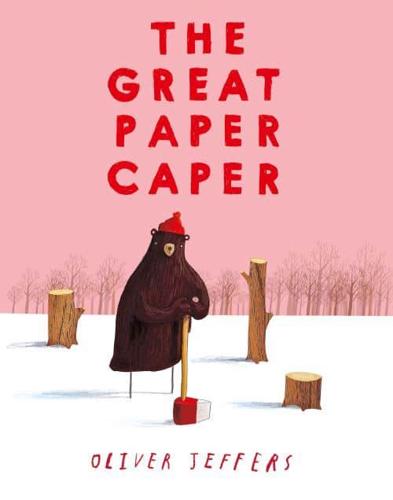
The Great Paper Caper by Oliver Jeffers
Someone is stealing the trees, and the animals of the forest are determined to catch the culprit. Their investigation uncovers a wonderfully absurd mystery involving paper, a surprising suspect and some decidedly questionable use of natural resources. Oliver Jeffers brings his trademark offbeat humour to a story that begins like a woodland detective adventure and gradually reveals something about where paper comes from. His expressive illustrations are full of entertaining details, while the increasingly ridiculous events leave children with plenty to think about when it comes to trees, recycling and waste.
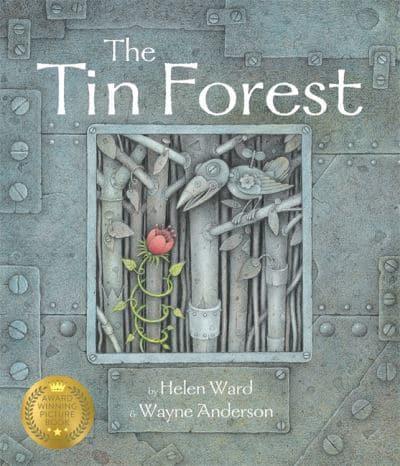
The Tin Forest by Helen Ward, illustrated by Wayne Anderson
Surrounded by scrap metal and broken machinery, an old man dreams of a forest filled with birdsong, flowers and green leaves. With nothing but rubbish around him, he begins building the forest himself, transforming discarded objects into something extraordinary. Wayne Anderson’s richly detailed illustrations capture the contrast between the bleak junkyard and the beautiful world taking shape within it. Helen Ward’s quietly hopeful story makes the possibilities of reuse feel almost magical, particularly as the old man’s remarkable creation begins to change the world around him.
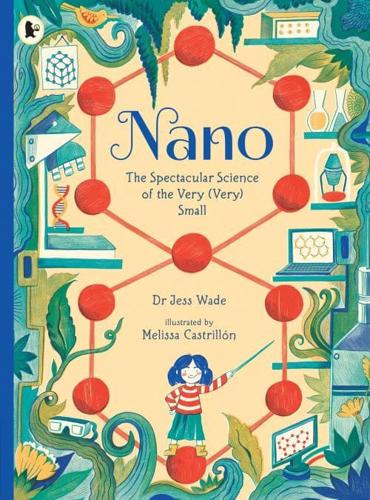
Nano: The Spectacular Science of the Very (Very) Small by Jess Wade, illustrated by Melissa Castrillón
Everything we can see and touch is made from things far too small for our eyes to detect. Physicist Jess Wade takes readers into this hidden world, beginning with atoms and the building blocks of matter before exploring the remarkable possibilities of nanotechnology. Melissa Castrillón’s intricate, colourful illustrations give shape to ideas that might otherwise seem impossibly abstract. The journey from familiar objects to extraordinary scientific discoveries is particularly absorbing for curious children aged six to nine, revealing how much there is to discover about the smallest things imaginable.
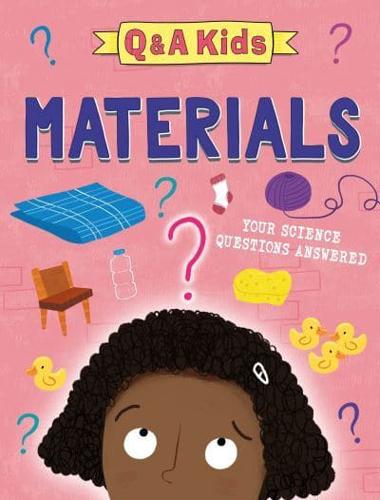
Q and A Kids: Materials by Amy Chapman, illustrated by Angelika Scudamore
Why choose metal for one object and plastic for another? What happens to materials when they’re heated? Amy Chapman’s question-and-answer approach gives curious children a clear route into the science behind everyday objects. Angelika Scudamore’s lively illustrations accompany short, accessible explanations, while simple activities encourage readers to put some of the ideas to the test. The questions are easy to explore together, making this an engaging introduction to material properties for young children who enjoy finding out how things work.
Materials books for children aged 7-12
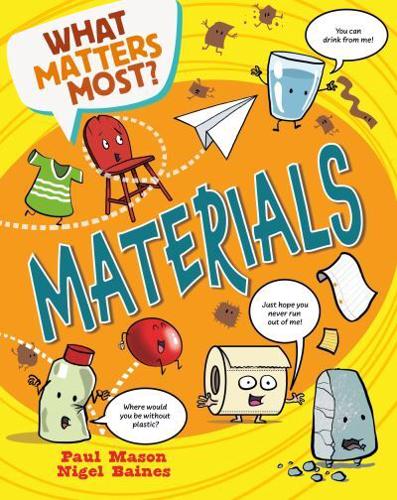
What Matters Most?: Materials by Paul Mason, illustrated by Nigel Baines
Imagine wood, paper, concrete and plastic all trying to prove they’re the most important material in the world. That’s the playful premise of Paul Mason’s illustrated science book, in which different materials make their case by explaining their properties and showing off their many uses. Nigel Baines’s comic-style illustrations give the competing arguments plenty of personality, while the science behind them encourages readers to compare strengths and weaknesses. Children aged seven and over may well find themselves choosing sides before realising that no single material can do everything.
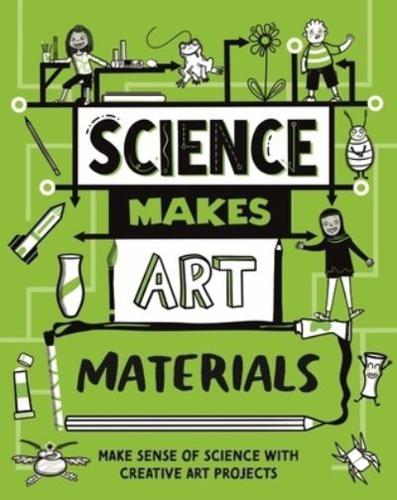
Science Makes Art: Materials by Andrew Charman, illustrated by Ali Ardington
Jumping frogs, pop-up cards and rocket launchers might seem like an unlikely collection of science experiments, but every project offers something to discover about materials. Andrew Charman brings creativity and investigation together, showing how bending, stretching and other physical properties affect what children can make. Ali Ardington’s illustrations help explain the practical activities, while the variety of techniques introduces materials used in art and design. The combination of experimentation and making gives older primary readers a chance to discover scientific principles through the things they create.
How to Build a Chocolate Bridge by Roma Agrawal, illustrated by Robert Sae-Heng
Could a bridge made of chocolate hold its own weight? What about a tower built from pasta? Roma Agrawal turns seven playful construction challenges into a hands-on introduction to engineering, with a meringue rocket among the more unexpected projects. As children build, test and rethink their creations, they encounter principles used by real engineers and discover why the choice of materials matters. Robert Sae-Heng’s energetic illustrations and short introductions to scientists and engineers keep the pace brisk. A standout choice for curious KS2 makers who love a practical challenge.

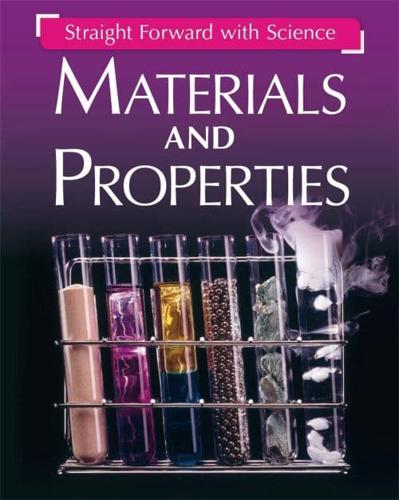
Straight Forward with Science: Materials and Properties by Peter Riley
What makes one material stronger, more flexible or better suited to a particular job than another? Peter Riley moves beyond simply naming everyday substances to examine the properties that determine how we use them. Photographs, scientific examples and clear explanations introduce the vocabulary needed to describe and compare different materials. For readers aged nine and over, the book offers a more detailed look at the science behind manufactured and natural objects, particularly the decisions involved in selecting materials for different purposes.
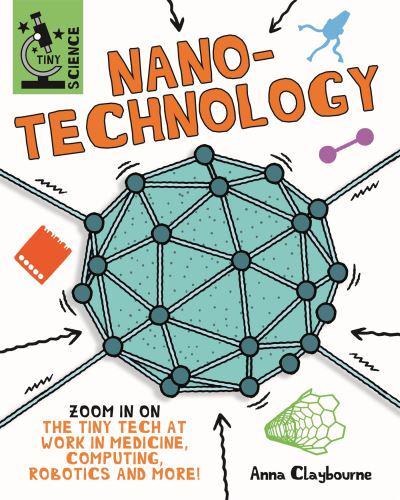
Tiny Science: Nanotechnology by Anna Claybourne, illustrated by Matt Lilly
At the nanoscale, scientists can investigate and manipulate matter in ways that open up some extraordinary possibilities. Anna Claybourne guides readers into this fascinating world of tiny particles, exploring how materials behave and what researchers hope to achieve by working at such small scales. Matt Lilly’s illustrations make the invisible easier to picture, while the explanations connect unfamiliar scientific ideas with technological developments and everyday objects. Children already intrigued by atoms, inventions and engineering will find plenty here to stretch their understanding of what materials can do.
The Greatest Stuff on Earth by Steve Tomecek, illustrated by John Devolle
Air, water, DNA and the stuff inside a smartphone might seem to have little in common, but they’re all part of Steve Tomecek’s entertaining exploration of what makes up our world. With John Devolle’s bold diagrams and playful illustrations, familiar objects become gateways to bigger questions about chemistry, biology and the physical world. Tomecek has a knack for breaking down complicated ideas without losing the fascinating details, connecting seemingly unrelated things and revealing the science hidden inside them. A rewarding read for inquisitive KS2 children who never seem to run out of questions.

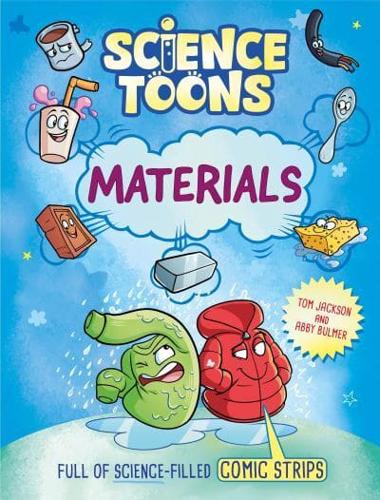
Science Toons: Materials by Tom Jackson, illustrated by Abby Bulmer
What can a cartoon tell you about the difference between a strong material and a flexible one? Quite a lot, as it turns out. Tom Jackson and Abby Bulmer use comic-strip sequences, diagrams and humorous illustrations to unpack the properties of familiar substances, including strength, transparency and flexibility. The pictures do more than decorate the facts, helping readers see how a material’s behaviour influences what we make from it. This lively combination of visual storytelling and scientific explanation makes an appealing alternative to a conventional information book for children aged seven and over.
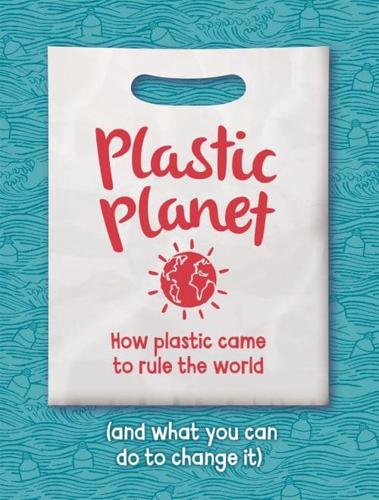
Plastic Planet by Georgia Amson-Bradshaw
From food wrappers to synthetic clothing, plastic turns up in far more places than we might realise. Georgia Amson-Bradshaw traces where it comes from, why it has become so useful and what happens when we throw it away. The environmental consequences of plastic waste sit alongside explanations of recycling and the alternatives being developed to reduce our reliance on it. By following a material from production to disposal, the book gives children a clearer picture of the choices behind everyday products and the challenges involved in making them more sustainable.
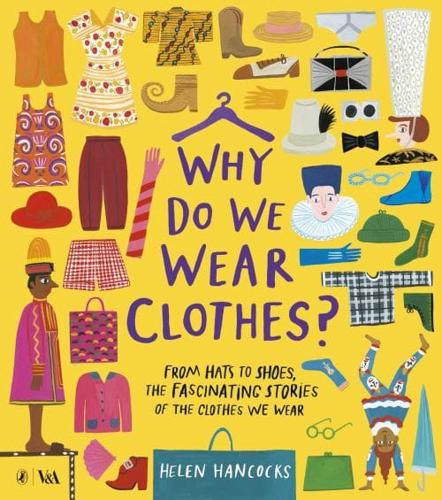
Why Do We Wear Clothes? by Helen Hancocks
Clothes can protect us from the weather, help us do our jobs and reveal something about who we are. But how did the things we wear develop, and why do people choose such different garments? Helen Hancocks approaches clothing through history, art and design in this entertaining illustrated book created in association with the V&A. Her wide-ranging exploration takes readers beyond fashion trends to consider fabrics, practical needs and the many meanings attached to what we wear. An imaginative way to investigate materials through something every child encounters daily.
Materials books for teens
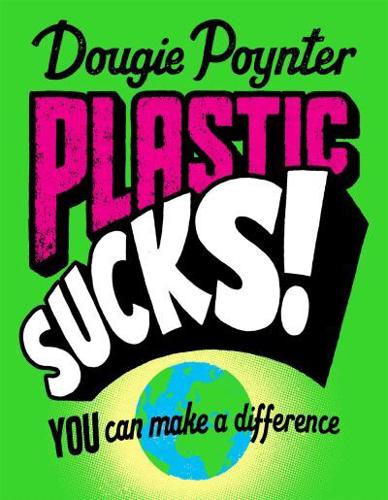
Plastic Sucks! You Can Make a Difference by Dougie Poynter
Plastic is cheap, convenient and almost impossible to escape, but what happens after we’ve finished using it? Musician and environmental campaigner Dougie Poynter investigates the consequences of our dependence on plastic, from single-use packaging to the spread of microplastics. Drawing on interviews, scientific information and his own campaigning interests, he explores how everyday habits contribute to a much larger environmental problem. His direct, energetic approach makes the scale of plastic pollution difficult to ignore, while offering young readers practical ways to challenge wasteful habits and push for change.
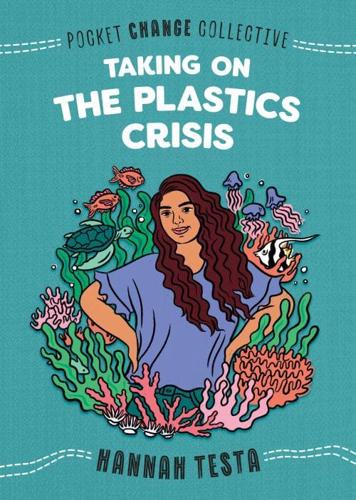
Taking on the Plastics Crisis by Hannah Testa, illustrated by Ash Kwak Lukashevsky
Hannah Testa didn’t wait until adulthood to start campaigning against plastic pollution. In this personal account, she explains how she became involved in environmental activism, raised awareness and began working towards changes beyond her own household. Her experiences give the familiar problem of plastic waste a human centre, while the discussion expands to businesses, legislation and the power of collective action. Illustrated by Ash Kwak Lukashevsky, this compact, accessible book shows teenagers what getting involved in a campaign can actually look like, from recognising a problem to persuading others to take it seriously.
Finally Fitz by Marisa Kanter
Fitz has turned her talent for upcycling unwanted clothes into a popular fashion account, and a summer design programme in New York should be her next big step. Then her girlfriend Dani breaks up with her, accusing Fitz of caring more about her online image than their relationship. When Fitz reconnects with childhood friend Levi, the two agree to fake a romance on social media, hoping to make the people they love jealous. But their carefully staged relationship begins to stir some unexpectedly real feelings. Marisa Kanter brings sustainable fashion, Instagram and complicated friendships together in this contemporary YA romantic comedy.

Borderless by Jennifer De Leon
Maya has a talent for seeing what discarded materials could become. In Guatemala City, she is preparing to showcase her fashion designs when violence overturns her plans, forcing her and her mother to flee towards the United States. Jennifer De Leon keeps Maya’s creativity and ambitions vividly present even as the novel becomes a story of danger, displacement and survival. The contrast between the future Maya hopes to create and the one she is suddenly forced to confront gives this powerful YA novel much of its emotional force. Fashion and recycled materials are woven into a story about identity, family and the struggle to find safety.
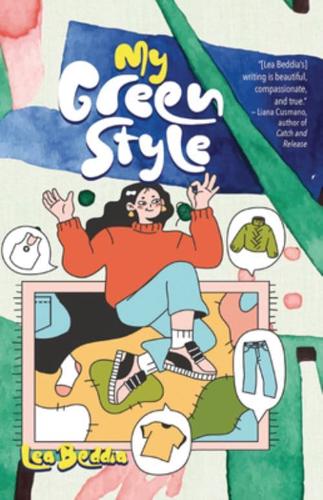
My Green Style by Lea Beddia
Pearl sees potential where other people see unwanted clothes. In Montreal, a school fashion event gives her the chance to put her creativity to work, but it also brings questions about waste, fast fashion and the environmental cost of what we buy. Lea Beddia weaves these concerns through friendships, school life and Pearl’s enthusiasm for developing her own style. The appeal lies in the possibilities of transforming old garments into something personal and original, with the realities of clothing production adding another dimension to this contemporary teenage story.
AQA GCSE (9-1) Design and Technology 8552 by MJ Ross
Why might a designer choose aluminium instead of timber, or a polymer rather than metal? Understanding the properties of materials is central to making these decisions, and MJ Ross explains the science and technical knowledge behind them in this AQA GCSE Design and Technology textbook. Timbers, metals, polymers, papers, boards and textiles are explored alongside modern materials, manufacturing processes and practical design considerations. The structured explanations connect material properties with the products students encounter, giving them a foundation for analysing existing designs and developing their own ideas.
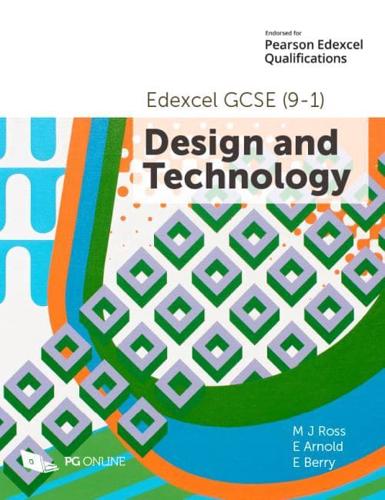
Edexcel GCSE (9-1) Design and Technology by MJ Ross, E. Arnold and E. Berry
Choosing the right material is only the beginning of designing a successful product. This Edexcel GCSE textbook explores how timbers, metals, polymers, papers, boards and textiles behave, how they can be worked and what makes them suitable for different purposes. MJ Ross, E. Arnold and E. Berry connect these properties with manufacturing techniques and the decisions designers make when turning an idea into a finished object. The explanations help students move beyond simply identifying materials to understanding the practical reasoning behind their use in engineering and product design.
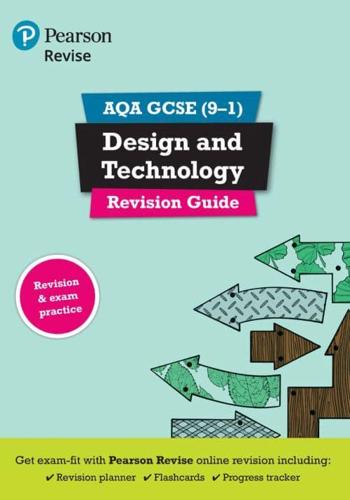
Revise AQA GCSE Design and Technology Revision Guide by Mark Wellington
When revision turns to material properties, manufacturing methods and specialist terminology, students need a resource that’s easier to navigate than a full textbook. Mark Wellington’s guide brings together key AQA GCSE Design and Technology knowledge in a focused format, helping readers revisit technical concepts and connect different materials with their practical uses. The clear organisation supports independent study, whether students are checking their understanding of a particular topic or preparing for an assessment. A useful companion to classroom notes and more detailed course textbooks.
Click the buttons below to purchase all of the books in this materials books for children and teens list, as well as class sets of any of these books and many more, from Bookshop.org UK. Or buy 20 selected titles from this list from Amazon – ideal for gifts or your classroom library.
Buy from UK.Bookshop.Org Buy from Amazon.co.uk
Disclosure: If you buy books using the buttons above: we may earn a commission from Bookshop.org, whose fees support independent bookshops; as an Amazon Associate schoolreadinglist.co.uk earns from qualifying purchases.
Schools & teachers: please respect copyright and don’t copy our materials books for children and teens list. If you find our book recommendations useful, please consider sharing on social media or linking to this page instead. Thanks.
Materials resources for teachers
- Oak National Academy provides free Year 1 science lessons exploring everyday objects, materials and their properties. Resources include downloadable slides, worksheets, quizzes and lesson plans to help children identify, describe and compare familiar materials.
- Oak National Academy’s Year 2 materials unit looks at why different materials are chosen for particular purposes and how objects can be changed by bending, twisting, stretching and squashing. The free lessons include teacher guidance, presentations and printable activities.
- The Royal Society of Chemistry offers a set of materials cards to help primary pupils investigate the properties of different substances and consider their suitability for everyday uses. The cards provide a starting point for sorting, comparing and discussing materials.
- The Institution of Engineering and Technology has created a free materials investigation in which children decide which substances are best suited to making everyday products. Downloadable presentations, activity sheets and teacher notes include curriculum links for England, Wales, Scotland and Northern Ireland.
- STEM Learning’s Explorify suggests practical ways to teach materials through mystery bags, odd-one-out challenges, close-up photographs and scientific discussions. Pupils can investigate waterproofing, flexibility, transparency and material choices while developing their observation and reasoning skills.
- Science Sparks features a collection of KS1 investigations covering waterproofing, magnetism, floating, melting and the strength of materials. Activities include building boats, testing waterproof roofs, sorting toys and investigating which substances are best at muffling sound.
- The Royal Society of Chemistry’s grouping and classifying materials resource provides activities to help children distinguish between objects and the substances from which they are made. It includes planning guidance for introducing different materials, comparing their properties and organising them into groups.
- The University of York’s Centre for Industry Education Collaboration offers practical primary science resources based on real industrial applications. Activities include testing plastics, investigating insulation, separating mixtures, making paper, examining liquids and exploring how materials are used in manufacturing.
- Oak National Academy’s Year 5 science resources cover the properties and changes of materials, including solubility, conductivity, separation techniques and reversible and irreversible changes. Teachers can access complete lesson sequences with slides, quizzes and downloadable worksheets.
- STEM Learning’s Best Evidence Science Teaching resources explore states of matter, the water cycle, separating mixtures and changing materials. The downloadable materials include diagnostic questions, learning progression guidance and activities designed to identify and address common scientific misconceptions.
- The Royal Society of Chemistry’s changing materials videos demonstrate practical experiments involving bath bombs, candles, lava lamps, freezing liquids and chemical reactions. The demonstrations explain the science behind each activity, with selected investigations supported by classroom slides and teacher notes.
- The Association for Science Education provides Primary Science Assessment (PLAN) resources, including examples of pupils’ work and assessment guidance for teaching materials. Year 5 examples explore dissolving, reversible changes and choosing materials for particular purposes, helping teachers assess children’s scientific understanding.
- Practical Action’s Plastics Challenge invites pupils aged 8-14 to investigate the properties of plastics and develop solutions to plastic waste. Resources include teacher notes, practical investigations and design challenges, making the project suitable for science lessons, STEM clubs and enrichment days.
- Practical Action’s Reuse It resources encourage pupils to reduce waste by reusing materials and considering how products can be designed with fewer resources. The activities provide useful links between materials science, design and technology, and environmental sustainability.
- Oak National Academy’s KS3 materials unit introduces secondary pupils to metals, ceramics, polymers and composite materials. Lessons examine how their properties determine their uses, providing downloadable teaching resources and opportunities to connect classroom science with engineering and manufacturing.
- STEM Learning’s secondary science resources explore substances, mixtures and their distinctive properties. Part of the Best Evidence Science Teaching collection, these materials support the development of scientific understanding through carefully sequenced learning and diagnostic assessment.
BISAC JNF051070, JNF051110, JNF051120. | Thema YNT, YPMP3.