Tiny Lies by Luke Palmer – at a glance
The School Reading Lists’ five word review: Friendship, boundaries, AI, trust, consequences.
Children’s book title: Tiny Lies.
Children’s author: Luke Palmer.
Genre: Children’s fiction.
Published by: Barrington Stoke.
ISBN: 9780008863494.
Recommended for children aged: 11+.
First published: March 2027.
This children’s book is ideal for: initiating discussion about the complexities of the AI dilemma, including age restraints, privacy, lack of accountability, and repercussions of your actions.
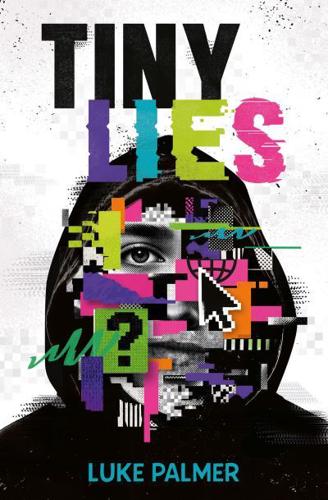
To see the latest price or order, click on the book cover image. As an Amazon Associate, schoolreadinglist.co.uk earns from qualifying purchases.
Our review:
Oli has just had his birthday. He’s a teenager now! One of the things he’s been looking forward to, as he wants to be a filmmaker when he’s older, is the chance to open an account on an AI site and begin to learn how this new technology can be used. There are three different sets of terms and conditions that he agrees to without reading any of them!
After his birthday party, Oli begins to experiment, listening to the site’s bot, uploading photos of all his friends and waiting to see what AI can offer him. Oli is delighted with the results and knows everyone will laugh their heads off at what he’s done.
Unfortunately, his friends, who he’s known since Reception, aren’t at all entertained, and from that moment on, their relationships become more strained. Unable to understand what he’s done wrong, Oli finds himself ostracised at school and, with no idea how to get things back to how they were, plods on with Year 8 alone. Even after trying to explain his actions, he still feels abandoned.
Tia is Oli’s sister and is doing her A levels, but something isn’t right. Travelling to school alone means Oli hears other people’s conversations, and it’s clear someone at his school is also having problems with AI content posted online without consent. After a major incident at school, he finds out the previously unnamed student is his sister, which, it’s clear, everyone else already knew! Seeing things from another point of view helps Oli to realise how wrong he was. Now, as he once again imagines the films he’d make, his outlook has changed so that, whatever the subject, he’ll no longer ignore anyone’s personal boundaries.
Our verdict:
Tiny Lies is an excellent way to introduce middle-grade students to the thorny subject of AI, away from its more basic uses such as answering questions or helping with homework. Oli wants to make movies, from behind the camera, and plans to use the exciting abilities of AI to help him reach his goal. Being 13 opens up the world of AI to Oli, and although he can’t access paid content, his experiments gradually show him how to upload his own content for the ‘bot’ to manipulate. To Oli and at least one of his friends, he’s done nothing wrong, but the rest of his group are very unhappy about it. The discussions that ensue show how the main problem is that Oli’s film wasn’t funny at all and is, in fact, a lie, and that lie impacts most of the group
The results of Oli’s mistake, involving a video he only sent via WhatsApp to people who aren’t likely to forward it to anyone else, are put into some type of context by the online content someone has created of his sister Tia. What he learns, along with the reaction of his fellow students, horrifies Oli and helps him understand why his friends were so upset with him and, eventually, how he can alter his future plans without changing everything.
The author uses AI intrusion from different ends of the scale, including realistic images, such as an explosion, a stroll down a quiet street or a photo taken at a party, to show how it can cause different types of problems. Oli watches movie-quality shorts, all of which are fake. Although he knows his AI-generated movie is manipulated and the two ‘stars’ are not interested in each other, he’d only done it for a laugh, so that’s different, right? It isn’t until he sees Tia’s reaction to the film of her images, generated by AI, that the seriousness of everything hits home.
There is no happy ending here, just a realisation that Oli has to police his own creations because trying to remove anything online that you don’t own directly is notoriously difficult and not always successful.
Luke Palmer talks about another of his Barrington Stoke books, Big Words
Teaching points and book club discussion ideas:
- Oli isn’t impressed with the limited access he has to AI until he uploads his own content. He skips reading the terms of use, just ticking the agree box. Have you done this? Do you think the length of some of these terms puts people off reading them?
- Both Oli and Liam think what he’s done is funny and harmless. What do you think about it?
- Tia has no real choice but to try and ignore everything until she can go to uni. How hard do you think that will be, and how lonely?
- Oli and Tia’s parents are furious about what happened but feel helpless. Is there any way they could have stopped it? What precautions does everyone need to take to prevent this type of thing from happening?
- As with most things, AI has its good and bad points. Do you think Oli’s experiences will make everyone in his friendship group more careful?
- If you think about your online presence, how much of it is interacting with AI rather than finding information, music or games from different sources?
Many thanks to Barrington Stoke for the review copy.
To order a class set of this book, please click below to order via uk.bookshop.org, an organisation that supports local bookshops, or Amazon.co.uk.
Buy from UK.Bookshop.Org Buy from Amazon.co.uk
Disclosure: If you buy books using the buttons above, we may earn a commission from Bookshop.org, whose fees support independent bookshops; as an Amazon Associate, schoolreadinglist.co.uk earns from qualifying purchases.
Browse our Books for Year 7 list.