Classroom routines and clear expectations give teachers and pupils a dependable structure for learning, from the first greeting and entry task to transitions, independent practice and the end of a lesson. This selection of books on classroom routines and expectations brings together practical guides, research-informed teaching books and coaching resources for building routines that are explicit, rehearsed and adaptable. It is designed for individual reading, mentor conversations and instructional coaching, with useful entry points for ECTs as well as experienced teachers. For prices and ordering, click on the book cover.
Classroom Routines and Expectations Books for Teachers – our recommendations
Teach Like a Champion 3.0: 63 Techniques that Put Students on the Path to College by Doug Lemov
Doug Lemov’s third edition sets out 63 classroom techniques in a practical guide to teaching, classroom culture and student participation. Its routines are concrete enough to examine closely, including how teachers give directions, start work, check understanding, narrate expectations and maintain a purposeful lesson. It is particularly useful for teachers, mentors and coaches who want shared language for observing, discussing and rehearsing classroom practice.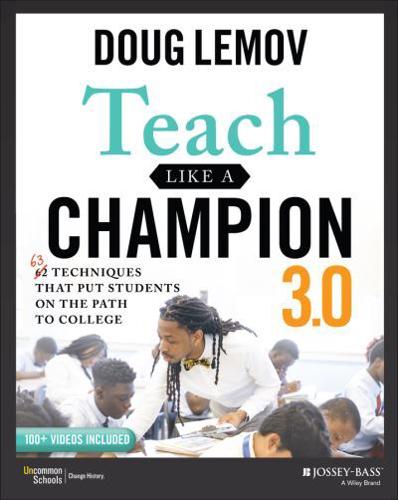
Teach Like a Champion Field Guide 3.0: A Practical Resource to Make the 63 Techniques Your Own by Doug Lemov, Sadie McCleary, Hannah Solomon and Erica Woolway
Designed as a companion to Teach Like a Champion 3.0, this field guide turns the techniques into a working resource for planning, reflection and professional development. It provides space to make notes, select techniques and consider how routines can work in individual classrooms. The practical format makes it particularly useful for mentor meetings and coaching cycles where teachers are moving from identifying a technique to deliberate rehearsal, implementation and review.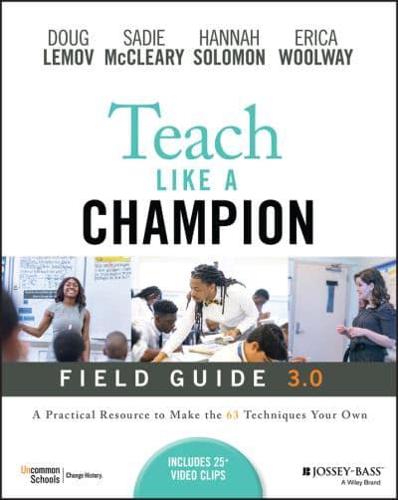
Practice Perfect: 42 Rules for Getting Better at Getting Better by Doug Lemov, Erica Woolway and Katie Yezzi
Doug Lemov, Erica Woolway and Katie Yezzi explore how deliberate practice, feedback, rehearsal and coaching can improve professional performance. For teachers and school teams, these principles provide a useful way to practise the small actions involved in clear explanations, smooth transitions, questioning and consistent expectations. The book is particularly useful for mentors, coaches and professional-development teams interested in making classroom practice focused, purposeful and repeatable.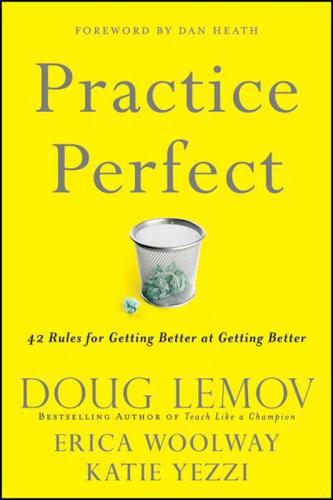
Rosenshine’s Principles in Action by Tom Sherrington
Tom Sherrington interprets Rosenshine’s principles for everyday classroom teaching. The concise format helps readers connect review, small steps, questioning, modelling, guided practice, checks for understanding and independent practice with the structure of a lesson. It works particularly well as a shared text for planning, observation or instructional coaching, giving staff a clear framework for discussing routines as part of effective teaching.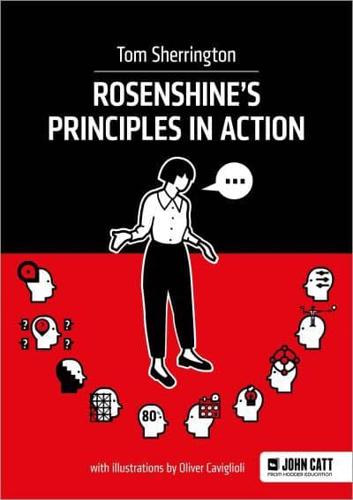
Teaching WalkThrus: Five-step guides to instructional coaching by Tom Sherrington, illustrated by Oliver Caviglioli
This illustrated guide presents essential teaching techniques as clear five-step sequences. The visual format makes it easy to discuss what a classroom routine or teaching move looks like before, during and after a lesson, then use the steps in rehearsal, observation and feedback. It covers explanation, modelling, questioning, feedback, classroom culture and relationships, making it a particularly useful bridge between individual professional reading and instructional coaching.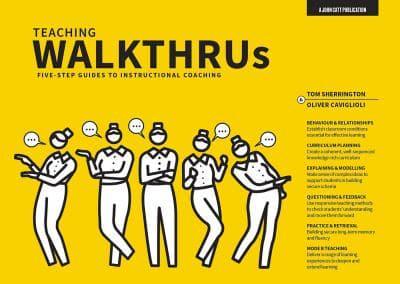
Teaching WalkThrus 3: Five-step guides to instructional coaching by Tom Sherrington, illustrated by Oliver Caviglioli
Volume 3 extends the Teaching WalkThrus series with further concise, visual guides designed for instructional coaching and professional development. Teachers can use individual WalkThrus to clarify expectations, identify a manageable improvement focus and revisit it during coaching. The five-step format also gives mentors a clear structure for rehearsal, observation and feedback, making the book highly practical for schools developing shared approaches to teaching practice.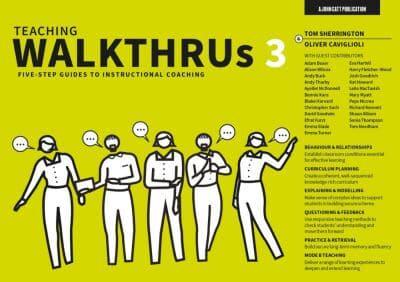
Coaching WalkThrus by Matt Stone, Tom Sherrington and Oliver Caviglioli
Coaching WalkThrus focuses on the coaching process itself, with Matt Stone, Tom Sherrington and Oliver Caviglioli presenting more than 50 techniques for structuring coaching conversations, practice, observation and follow-up. The book gives instructional coaches and mentors a practical repertoire for helping teachers refine classroom routines, expectations and teaching techniques through focused professional dialogue and deliberate practice.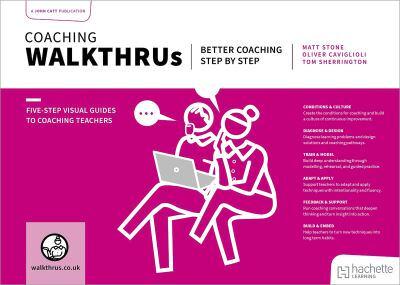
Sweller’s Cognitive Load Theory in Action by Oliver Lovell and Tom Sherrington
Oliver Lovell and Tom Sherrington apply cognitive load theory to classroom practice, with strategies spanning different subjects and teaching situations. The book helps teachers consider how much working memory a new procedure, explanation or task demands and how modelling, sequencing and practice can make learning more manageable. It is particularly useful for teachers and coaches connecting calm classroom routines with clear and carefully structured instructional design.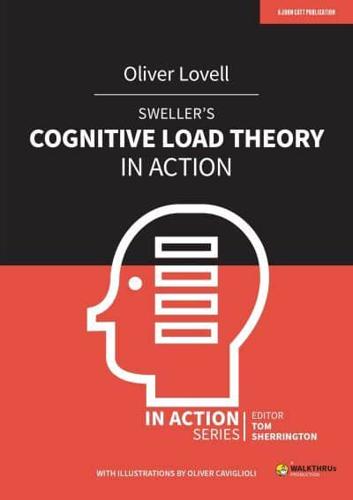
Making Every Lesson Count: Six Principles to Support Great Teaching and Learning by Shaun Allison and Andy Tharby
Shaun Allison and Andy Tharby organise effective teaching around six principles: challenge, explanation, modelling, practice, feedback and questioning. The book helps teachers turn broad expectations about lesson quality into observable actions that can be planned, rehearsed and discussed. Its case studies also give mentors and coaches useful material for professional conversations about teaching routines, classroom consistency and the practical decisions that support strong learning.
The Learning Rainforest: Great Teaching in Real Classrooms by Tom Sherrington, illustrated by Oliver Caviglioli
Tom Sherrington’s framework connects classroom conditions, knowledge-building and the exploration of possibilities. It offers teachers a broad way to think about how routines create the conditions for attention, participation and learning, while pedagogy and curriculum give those routines purpose. The book is particularly useful for experienced teachers, mentors and coaches who want to place everyday classroom practice within a wider framework for effective teaching.
The Learning Rainforest Fieldbook: 30 case studies from the UK and around the world by Tom Sherrington
This companion volume uses 30 case studies from the UK and around the world to show how ideas about teaching are interpreted in real educational settings. The case-study format encourages teams to compare approaches and discuss how expectations become visible in planning, classroom talk and pupil work. It is particularly well suited to professional book groups, mentoring and coaching conversations exploring how teaching principles translate into everyday classroom practice.
The Teaching Delusion 3: Power Up Your Pedagogy by Bruce Robertson
Bruce Robertson’s third Teaching Delusion book is a practical guide to pedagogy and effective teaching. It helps readers examine explanation, modelling, practice, questioning and feedback alongside the professional habits that support improvement. The book provides useful material for teachers, mentors and instructional coaches who want to connect individual classroom routines with shared language for discussing and developing teaching practice.
The Ultimate Guide to Self-Regulation in the Classroom: Helping teachers improve outcomes for every learner by Sue Cowley
Sue Cowley explores self-regulation and the conditions that help learners manage attention, emotions and behaviour for learning. The book connects self-regulation with classroom expectations, transitions and learning habits, helping teachers think about how these can be explicitly taught and supported. Its accessible approach makes it useful for individual professional reading, mentoring conversations and staff discussion about routines, co-regulation and pupils’ growing independence.
The Early Career Framework Handbook, Second Edition by Chartered College of Teaching
Published by SAGE UK and written by the Chartered College of Teaching, this second edition guides readers through the two-year Early Career Framework programme and includes material for mentors. Its contents include building a productive classroom environment, setting and maintaining high expectations, motivation, memory, talk, adaptation and professional learning. Although the ECF has now been replaced by the ITTECF for ECTs starting from September 2025, the book remains relevant to earlier cohorts completing ECF-based training and as a professional development resource for classroom practice.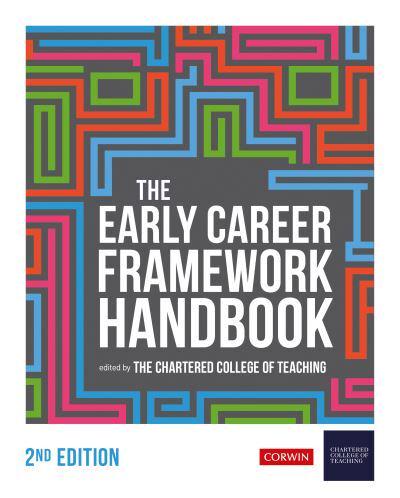
The Initial Teacher Training and Early Career Framework: A Handbook for Mentors and Mentees by Henry Sauntson
Henry Sauntson’s handbook is written around the Initial Teacher Training and Early Career Framework, with trainee and early-career teachers, mentors and mentees in view. Summaries, reflective activities, case studies and practical strategies make it useful before lesson observations and mentoring conversations. The book helps readers connect classroom routines and expectations with the broader professional knowledge and development that support teachers at the beginning of their careers.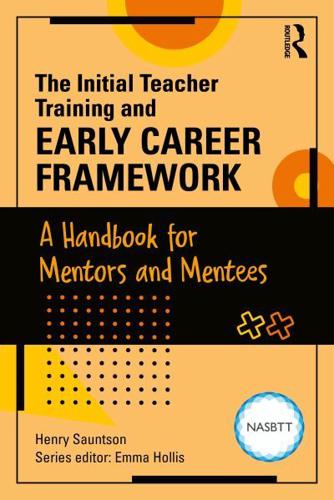
How to Survive Your First Year in Teaching: Fourth edition, fully updated for the Early Career Framework by Sue Cowley
Sue Cowley’s fourth edition is fully updated for the ECF and covers the first two years of teaching. It takes a practical approach to workload, wellbeing and the everyday decisions that make classroom life manageable. ECTs can use the book when establishing routines, expectations and professional habits, while mentors can draw on its accessible structure to identify manageable areas for reflection, discussion and development.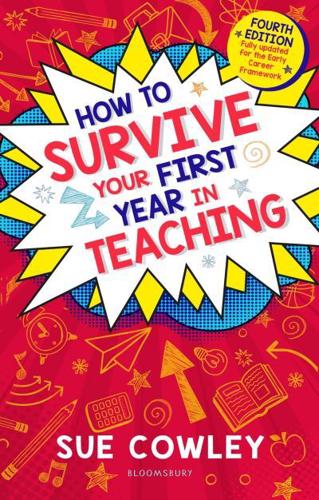
Mentoring and Coaching in Education: A Guide to Coaching and Mentoring Teachers at Every Stage of their Careers by Lizana Oberholzer and Derek Boyle
Lizana Oberholzer and Derek Boyle explore how coaching and mentoring can support teachers throughout their careers. The book examines developmental conversations, professional learning and the different roles mentors and coaches can play when helping teachers refine classroom practice. Chapters and discussion points can support structured cycles of observation, reflection, action and review, making it particularly useful for mentors, coaches and school leaders developing professional learning.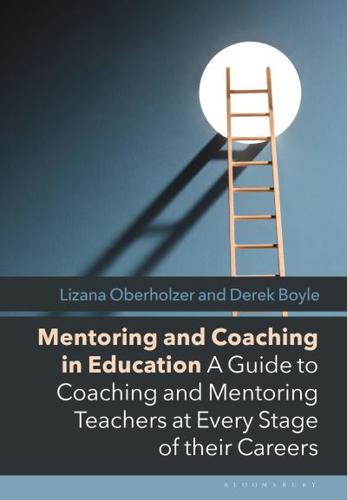
The Coaching Toolkit: A Practical Guide for Your School by Shaun Allison and Michael Harbour
Shaun Allison and Michael Harbour focus on establishing and running a coaching programme within a school. They cover choosing and training coaches, integrating coaching with professional development, considering impact and using practical resources and case studies. The book is particularly useful for instructional coaches and leaders building the structures that allow classroom routines, expectations and teaching techniques to be discussed, practised and refined over time.
The Leader’s Guide to Coaching in Schools: Creating Conditions for Effective Learning by John Campbell and Christian van Nieuwerburgh
John Campbell and Christian van Nieuwerburgh examine the conditions that help coaching flourish across a school. The book introduces a GROWTH framework and explores coaching conversations, feedback and teams, giving leaders a way to connect individual teacher development with a wider professional learning culture. It is particularly useful for school leaders and coaching leads developing coherent approaches to professional dialogue, reflection and improvement.
Get Better Faster 2.0: A 90-Day Plan for Coaching New Teachers by Paul Bambrick-Santoyo
Paul Bambrick-Santoyo presents a 90-day coaching plan for new teachers, breaking teaching skills into smaller steps that can be practised and revisited. Its focus on foundational classroom management and instructional rigour makes it particularly relevant to entry routines, directions, transitions and expectations. The structured approach gives mentors and coaches a practical framework for sequencing development, rehearsing specific actions and helping new teachers build effective classroom habits.
Classroom Routines and Expectations Books for Teachers Resources
- Support for early career teachers – Guidance and resources for ECTs and mentors, including support for classroom practice and professional development.
- Initial teacher training and early career framework – The Department for Education framework supporting teacher training, induction and mentoring in England.
- Teachers’ Standards – The professional standards for teachers in England, including expectations relating to pupil behaviour, teaching and professional conduct.
- Improving Behaviour in Schools – Education Endowment Foundation guidance on classroom management, school-wide systems and implementation.
- The Early Career Framework Handbook – Chartered College of Teaching information for ECTs, mentors and schools using the ECF.
- Teaching WalkThrus – Professional learning and coaching resources based on practical, evidence-informed teaching techniques.
Click the button below to purchase all of the books in this Classroom Routines and Expectations Books for Teachers guide from Amazon.
Buy from Amazon.co.ukDisclosure: as an Amazon Associate, School Reading List earns from qualifying purchases.