Read for Good® is a UK children’s reading charity that works with schools, hospitals and families to help children and young people find enjoyment in reading. Schools may know it best through Readathon®, the sponsored reading challenge it has run since 1984, but its work now also includes the free Track My Read® reading tracker, resources for schools and a hospital programme that supplies new books and professional storytelling to children in hospital.
Choice runs through much of its work. A pupil taking part in Readathon can read a comic, a classic, an audiobook or a blog. Track My Read records what pupils actually choose to read rather than giving them a prescribed reading list. That makes the charity particularly relevant to schools looking for practical ways to make reading for pleasure visible across a class, year group or whole school without narrowing reading to one format or type of book.
What does Read for Good do?
Read for Good’s aim is to help children and young people discover reading for pleasure by improving access to books, protecting choice and giving children reasons to read. Its work takes several forms, but Readathon and Track My Read are the two programmes most immediately useful to schools.
There is also a direct connection between its school and hospital work. Money raised through Readathon helps Read for Good provide brand-new books and regular storyteller visits in the UK’s major children’s hospitals. Schools therefore have a clear charitable purpose for their sponsored reading, while pupils in participating schools are free to choose what they want to read.
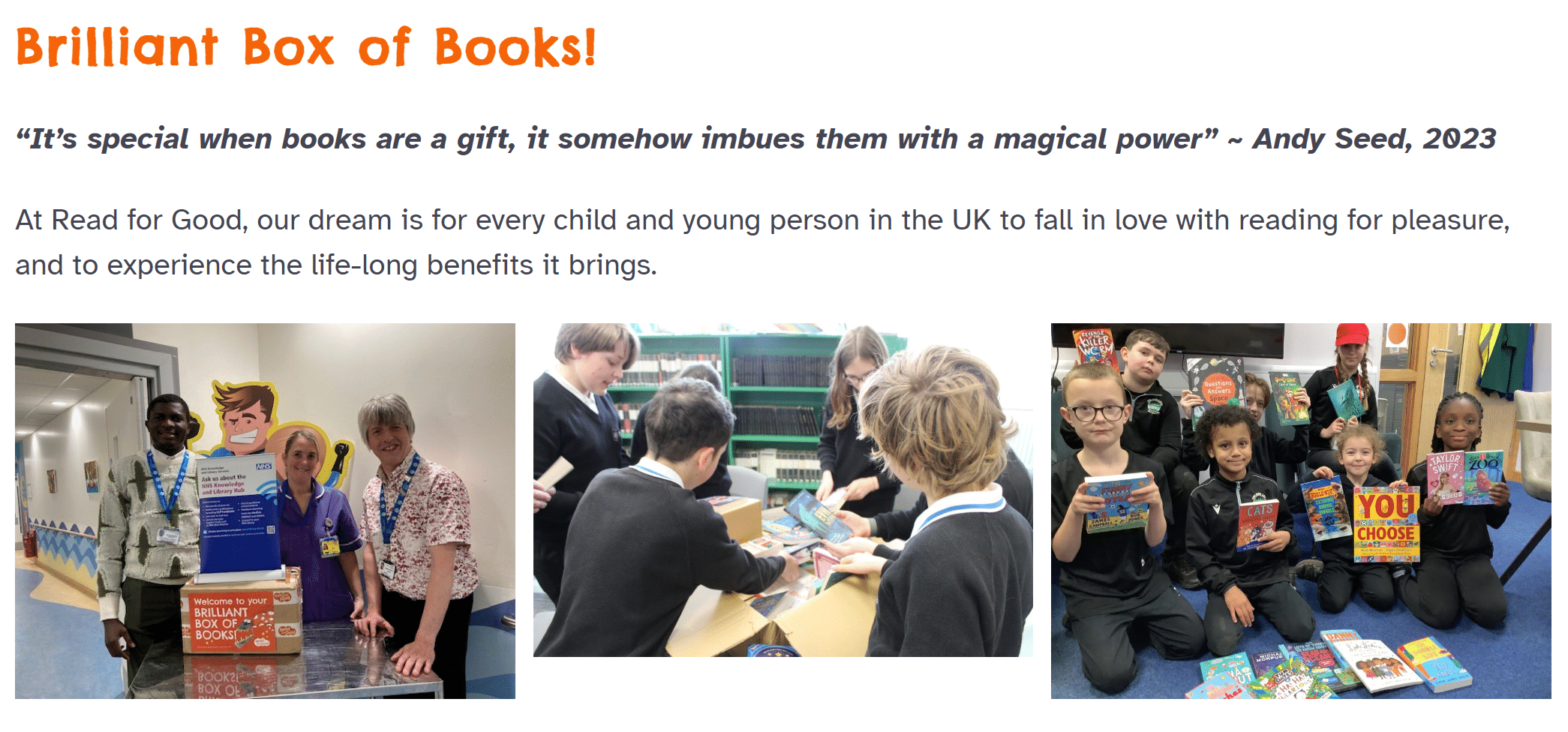
For schools that need to refresh their own reading stock, Read for Good also runs its Brilliant Box of Books programme, providing boxes of new books and comics to schools, medical and community settings subject to funding and availability.
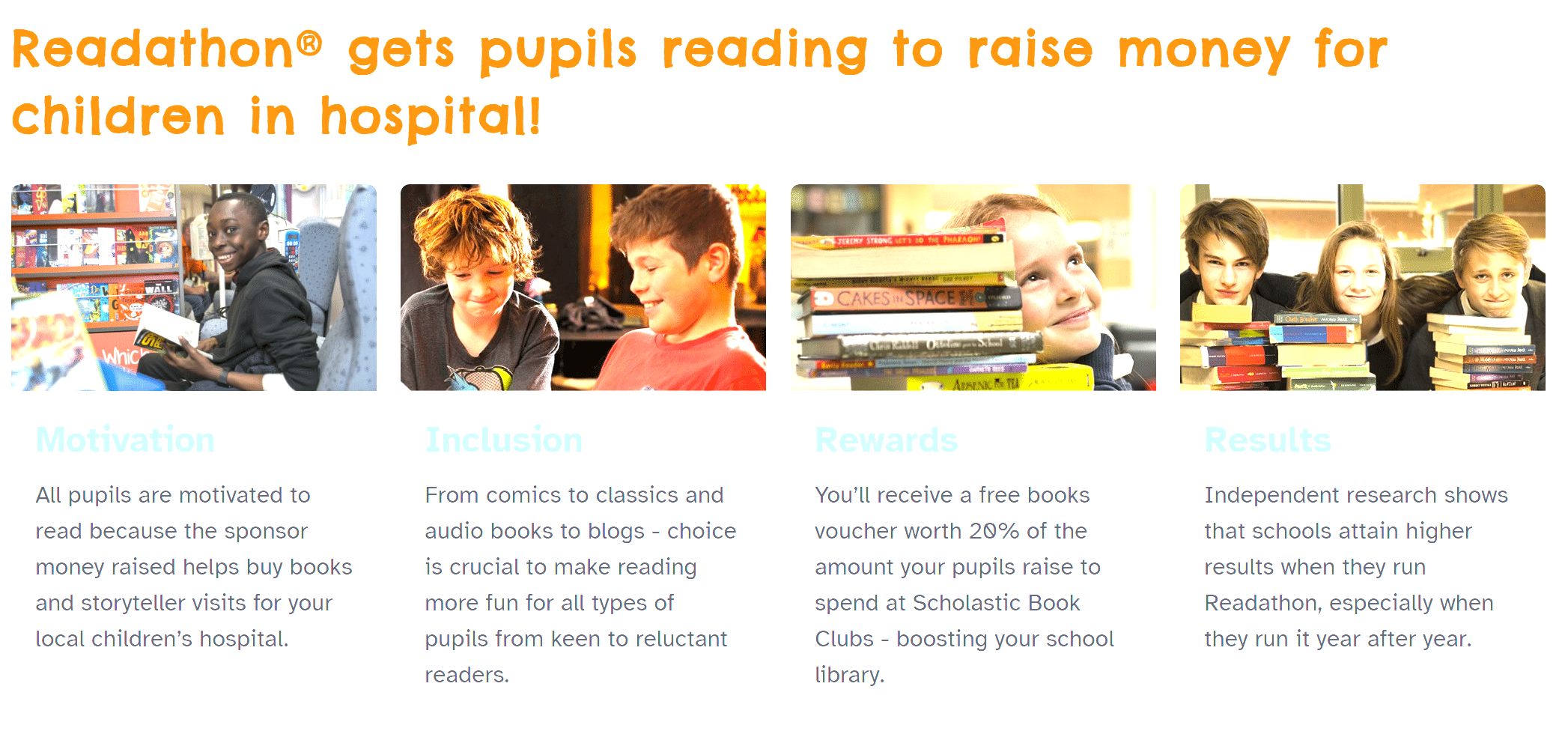
Readathon: turning reading into a whole-school event
Readathon is Read for Good’s long-running sponsored reading challenge. A school creates an account, orders a free Readathon kit and chooses when to run the event. Read for Good suggests two to four weeks as a useful length, but schools can organise anything from a one-day challenge to an activity lasting a whole term.
The model is deliberately flexible. Pupils choose what they want to read and ask family and friends to sponsor them per book or per minute. Sponsors can pay online, and the school can see its online fundraising total through its Readathon account.
Most importantly, “reading” is interpreted broadly. Read for Good explicitly includes everything from comics and classics to audiobooks and blogs. Shared reading can count too. For a school-wide event, that opens participation to children with very different interests, reading habits and preferences rather than making success depend on everybody completing the same kind of book.
The free school kit includes key stage appropriate sponsor cards, bookmarks, stickers, posters and a tracker, with separate primary and secondary launch films available online. Read for Good also provides downloadable certificates, letters and other materials to help schools organise and publicise the challenge.
After the Readathon, the school receives a Scholastic Book Clubs voucher worth 20% of the total sponsorship raised. Participating schools also receive two £5 National Book Tokens that can be awarded to pupils.
What does the research say about Readathon?
A National Literacy Trust study published in 2018 compared more than 6,000 children and young people who had taken part in Readathon with more than 26,000 who had not. Readathon participants reported greater enjoyment of reading, more frequent reading in their free time, a wider range of reading material and more positive attitudes towards reading. They were also more likely to use their school library.
The study shows an association between Readathon participation and these reading behaviours rather than proving that Readathon caused the differences. For schools, its findings are nevertheless useful because they point to the aspects of the programme that distinguish it from a conventional reading record: pupil choice, reading for a purpose and the absence of assessment from the activity itself.
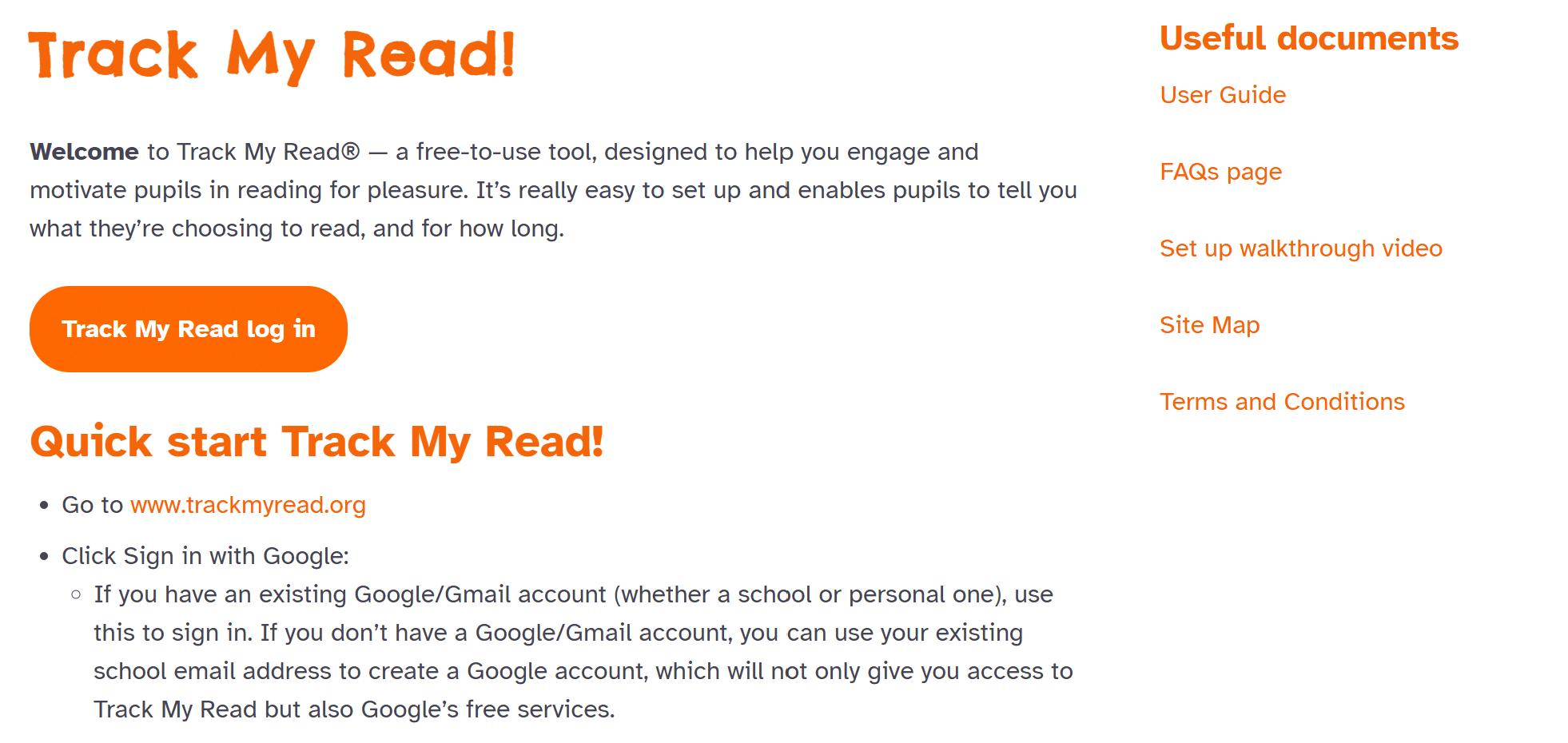
Track My Read: a free online reading tracker
Track My Read gives schools another way to organise reading activity. It is a free web-based tool through which pupils record their reading sessions, including what they have chosen to read and how long they have spent reading.
A school can create one whole-school challenge or separate Track My Reads for classes or other groups. Pupils are added manually or through a CSV file and receive individual usernames and passcodes. They do not need their own Google accounts or email addresses.
Staff can then see the number of reading sessions and minutes logged by individual pupils and inspect the individual reading entries. Results can be sorted by pupil, class or year group and downloaded for analysis in software such as Excel or Google Sheets.
This gives the information more practical uses than a running total of minutes. A librarian or literacy lead can look at what pupils are choosing, find titles that are attracting interest, pick up recommendations to share with other pupils and start conversations about reading preferences. Several staff members can have administrator access, so responsibility can be shared across a department, phase or school.
Track My Read also includes Group Challenges, which can bring several classes, houses, year groups or schools together around a shared reading target. Schools can enable a public dashboard to show collective progress to pupils and families without displaying individual pupil data.
Using Track My Read in school
The organiser of a Track My Read needs a Google account to sign in, although an existing school email address can be used to create that account. Pupils do not need Google accounts.
The service requires pupils’ first and last names, class and year group, together with the reading information they subsequently enter. Read for Good says that school administrators can access their own pupils’ named data, while Read for Good itself has no direct access to pupil names: names are converted into unique reference codes and the charity sees anonymised reading data. Its contracted sub-processors host and process the underlying Track My Read data.
The school or organisation using Track My Read is the data controller and Read for Good acts as the data processor. Schools should therefore introduce it through their normal data-protection procedures and review the service’s terms and Data Processing Agreement as part of that process.
Can Readathon and Track My Read be used together?
Yes. A school can run a Readathon and use Track My Read to record the reading taking place during it. For example, pupils might work towards a collective minutes target while choosing their own reading and raising sponsorship separately.
The two systems are not integrated, however. A Readathon Portal account does not provide access to Track My Read, so a school using both sets them up separately. Track My Read can equally be used without Readathon for a class challenge, holiday reading project, house competition or longer whole-school initiative.
Why reading choice matters in 2026
Read for Good’s emphasis on choice is particularly relevant during the National Year of Reading 2026. The Department for Education and National Literacy Trust campaign encourages children and adults to follow their existing interests into reading and explicitly recognises novels, non-fiction, poetry, comics, magazines, graphic novels and audiobooks.
The latest National Literacy Trust survey found a welcome rise in children and young people’s reading enjoyment and daily reading in 2026, but the wider picture remains challenging. Among 8 to 18-year-olds, 36.1% said they enjoyed reading in their free time, compared with 32.7% in 2025, while 20.3% said they read daily. The survey involved more than 125,000 children and young people across the UK.
For schools in England, the Department for Education’s Reading Framework also gives sustained attention to developing a reading-for-pleasure culture. It stresses the importance of engaging pupils in reading and, particularly for older pupils, access to a wide range of engaging, diverse fiction and non-fiction that can capture their interest.
Schools looking at their broader approach can also use School Reading List’s 13 practical ideas for developing reading for pleasure and our collection of free reading resources for schools.
Costs and access
There is no charge for a Readathon kit, and Track My Read is entirely free to use. UK schools can create a Readathon account and order a kit online. Read for Good also makes provision for BFPO schools and overseas British schools that want to run Readathon, with these schools asked to contact the charity directly.
Track My Read is available more widely. Although designed for schools, Read for Good allows families, book clubs, teams and other groups to create challenges, and overseas schools can use the service, although the charity says it cannot provide them with extensive support.
Our verdict
Read for Good offers schools something more substantial than a one-off sponsored read. Readathon can give a class or whole school a common reason to talk about and spend time reading, while leaving individual pupils free to decide what that reading looks like. The connection with books and storytelling for children in hospital also gives the fundraising an easily understood purpose.
Track My Read extends that idea beyond a single event. Because it is free, works across classes and year groups and records pupils’ own reading choices, it can be useful to librarians, English departments, literacy leads and school leaders who want a clearer picture of voluntary reading across their school.
Find out more about the charity, its programmes and current resources at Read for Good.