India books for children and teens
India books for children and teens can open up the country’s extraordinary variety through contemporary stories, historical fiction, folklore, mythology, geography, science and everyday life. This selection moves from Mumbai journalism and Himalayan adventures to Partition history, India’s space programme and YA fantasy shaped by Indian traditions. It offers teachers, librarians and families a mixture of novels and non-fiction for independent reading, topic work and classroom discussion. This list features books by Jasbinder Bilan, Bali Rai, Sangu Mandanna, Jamila Gavin, Jess Butterworth, Colleen Houck, Sabina Khan, Emily Barr, Roshani Chokshi, and Tanaz Bhathena.
India books for children and teens – our recommendations
India books for children aged 5-12
Nikhil and Jay: Off to India by Chitra Soundar, illustrated by Soofiya
Brothers Nikhil and Jay, along with their parents, visit their grandparents in Chennai, India at Christmas time. Through four interconnected tales, young readers embark on a rich cultural adventure with vibrant illustrations. Perfect for emerging readers transitioning from picture books to longer narratives, this book celebrates family, tradition, and the excitement of exploring. Read our full review.

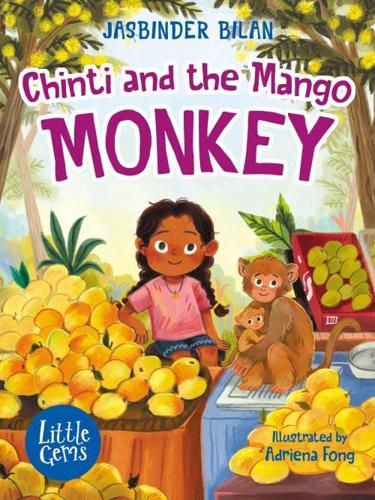
Chinti and the Mango Monkey by Jasbinder Bilan, illustrated by Adriena Fong
Chinti loves helping her family grow and sell mangoes in Gujarat, India, and dreams of becoming a vet when she grows up. One day, while working at the market with her mother, she spots a monkey stealing a mango from their stall. But the animal is not simply looking for food. It wants Chinti to follow it to an injured baby monkey who desperately needs help. This warm-hearted animal adventure for 5+ year olds explores compassion, determination and the importance of understanding animals’ needs.
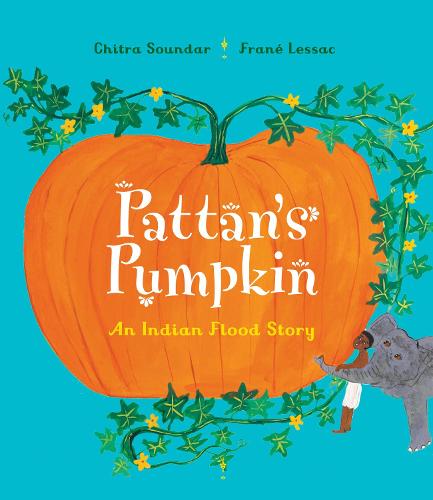
Pattan’s Pumpkin by Chitra Soundar, illustrated by Frane Lessac
Pattan’s Pumpkin brings a Southern Indian flood myth to life with warmth and creativity. When floodwaters threaten their land, farmers Pattan and Kanni carve a boat from an enormous pumpkin to save animals, seeds, and food. Chitra Soundar’s storytelling celebrates ingenuity and a deep bond with nature, while Frané Lessac’s vivid illustrations, inspired by traditional Indian art, add a stunning visual layer. It’s a beautiful tale of survival and harmony.
You’re Safe With Me by Chitra Soundar and Poonam Mistry
You’re Safe With Me by Chitra Soundar is a gentle, poetic tale set in an Indian forest. As a storm rumbles through the night, Mama Elephant soothes the baby animals with comforting words, explaining the sounds and sights in a way that eases their fears. The rhythmic text pairs beautifully with intricately detailed illustrations inspired by traditional Indian art. This heartfelt bedtime story is perfect for calming little ones and introducing them to the wonders of wild weather.

Asha & the Spirit Bird by Jasbinder Bilan
Asha lives in the foothills of the Indian Himalayas, where her father has gone to work in a distant city. When the money he sends home suddenly stops and moneylenders threaten the family farm, Asha sets out with her best friend Jeevan to find him. Along the way, a lammergeier, or bearded vulture, appears at significant moments, and Asha believes it carries the spirit of her grandmother. This atmospheric adventure for 9+ year olds explores family, friendship, courage and determination, weaving Indian spiritual traditions into a compelling story about hope and survival.

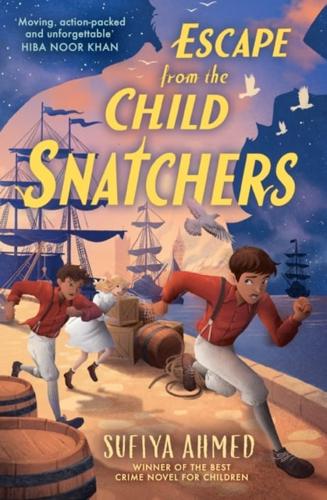
Escape from the Child Snatchers by Sufiya Ahmed
In 1865, Humza and Ranj leave Bombay as stowaways, hoping to find Humza’s missing brother in London. Their journey soon turns dangerous when they cross paths with a ruthless child snatcher. With the help of Daisy, the innkeeper’s quick-thinking daughter, they race through the city in search of Dani. Inspired by real accounts of Indian children in Victorian England, Escape from the Child Snatchers is a fast-paced, atmospheric tale that brings history vividly to life. Utterly gripping, Escape from the Child Snatchers has the pace, plot, and timeless immersive style that will truly engage children with historical fiction.
Ajay and the Mumbai Sun by Varsha Shah
Ajay dreams of becoming a journalist and, after finding a discarded printing press, starts his own newspaper with a group of friends. The Mumbai Sun soon gives them the opportunity to investigate a much bigger story involving power and corruption in the city. Perfect for 9+ year olds, the novel mixes mystery, humour and adventure with questions about journalism, friendship and speaking up when something is wrong. Mumbai itself is an important part of this lively contemporary story.

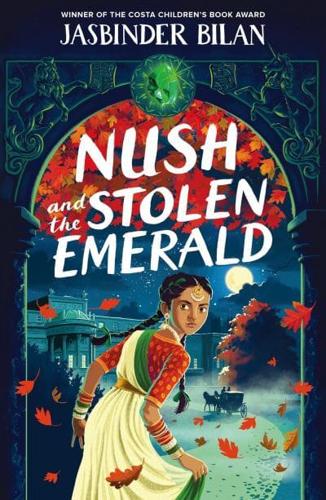
Nush and the Stolen Emerald by Jasbinder Bilan
Nush is a young maharani whose family has lost land and a precious emerald to the British East India Company. When her father travels to England to appeal to Queen Victoria, Nush secretly stows away on his ship, determined to recover the stolen jewel. This historical adventure for 9+ year olds places a resourceful Indian girl at the centre of a story shaped by empire, power and resistance. Jasbinder Bilan combines royal intrigue, mystery and danger with a child’s-eye view of Britain’s colonial involvement in India.
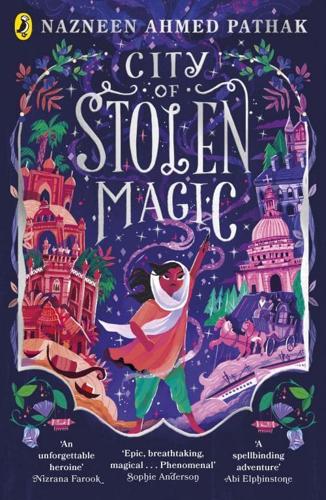
City of Stolen Magic by Nazneen Ahmed Pathak, illustrated by Sandhya Prabhat
India, 1855. Magic is being suppressed under British rule and people with magical abilities are disappearing. When Chompa’s mother is kidnapped, Chompa follows the mystery from India to the streets of East London and discovers that her own unusual powers are part of a much larger struggle. Ideal for 9+ year olds, this historical fantasy combines Indian magic and folklore with a story about colonial power, exploitation and resistance.
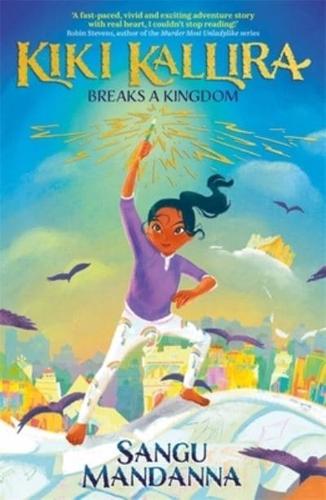
Kiki Kallira Breaks a Kingdom by Sangu Mandanna
Kiki fills her sketchbook with a fantasy world inspired by Indian mythology, only to discover that the kingdom she has drawn has become real. When the demon king Mahishasura threatens both worlds, she must enter her creation and work out how to stop him. This fantasy adventure for 9+ year olds uses characters and ideas drawn from Indian mythology while giving its heroine the unusual challenge of confronting a world produced by her own imagination. Friendship, creativity and courage drive the story.
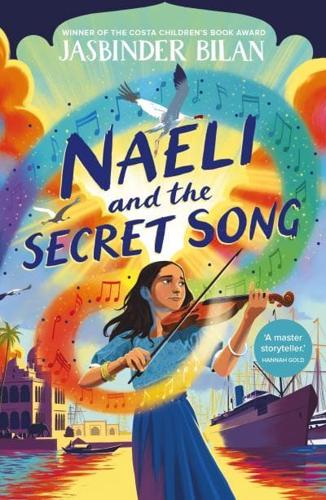
Naeli and the Secret Song by Jasbinder Bilan
Set between Hyderabad and Victorian London, this breataking historical novel follows Naeli as she chases the faint trail of her missing father – armed only with a violin and a name. From crowded Indian streets to gaslit alleys, she unpicks family secrets and wrestles with questions of identity and belonging. Laced with music and mystery, this character-driven story whisks the reader across cultures and continents at breakneck speed. It’s a powerful, moving and memorable novel for 8+ year olds. Highly recommended.
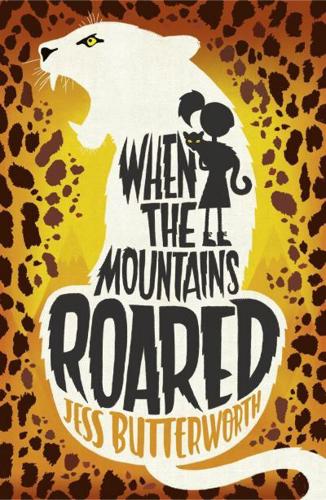
When the Mountains Roared by Jess Butterworth
Ruby moves with her family to the mountains of India, where the landscape and wildlife are very different from the life she knew in Australia. Her growing fascination with the local animals leads into an adventure involving leopards and the threat posed by poachers. Perfect for 9+ year olds, Jess Butterworth’s novel combines family change with wildlife conservation, mountain landscapes and suspense. The Indian setting gives children plenty to discuss about habitats, human pressures on wildlife and protecting endangered animals.
Flora Stormer and the Wishing Stone by Isabella Harcourt
Flora Stormer travels to India with her friend Pavan after his explorer sister uncovers a clue to a long-lost wishing stone, in this fourth instalment of the illustrated first chapter adventure series. Their journey takes them through dense forests, fierce storms, and brushes with danger, all while Flora begins to doubt Naya’s true intentions. As they race to find the stone before it disappears, Flora and Pavan face tests of friendship, courage, and self-belief in this accessible story for 7+ year olds that balances adventure with humility.

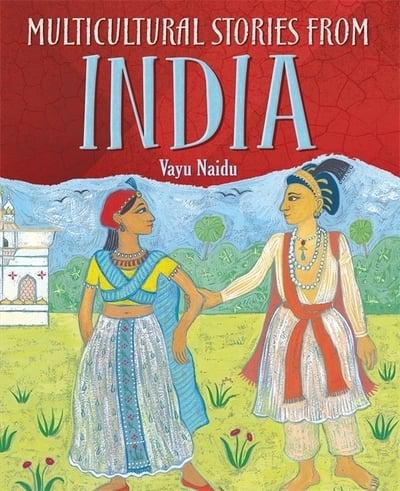
Multicultural Stories: Stories From India by Vayu Naidu, illustrated by Rebecca Gryspeerdt
This collection for 7-11 year olds brings together stories from Indian traditions, including material connected with the Ramayana and tales of the celebrated storyteller Tenali Rama. Vayu Naidu introduces children to several kinds of storytelling, from heroic and religious narratives to humorous and supernatural tales. Maps, background information, a glossary and ideas for further activities help place the stories in context. The anthology works particularly well for teachers who want short texts that can support literacy alongside learning about India’s storytelling traditions.
Time Travellers Secrets and Spies by Sufiya Ahmed
When Suhana, Mia and Ayaan travel to Edinburgh, they find themselves unexpectedly transported through time to India in 1799. There, they meet Imran, a boy working for the Sultan of Mysore, who is preparing for battle. As they explore the fort and palaces, the children uncover a dangerous plot to betray the Sultan and must work out how to help him and his family. This gripping, accessible time-travel adventure for 8+ year olds combines fast-paced storytelling with historical events, friendship and questions about courage and loyalty.

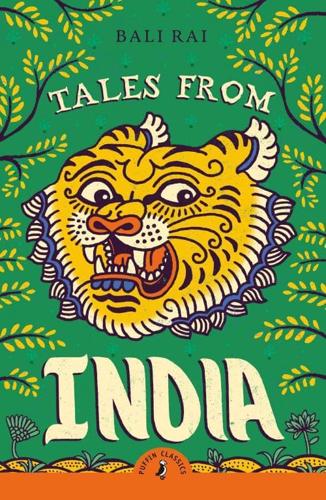
Tales from India by Bali Rai
Bali Rai retells twenty stories from Indian folklore in a collection that brings together adventures, tricksters, rulers, animals and tales with moral or comic turns. The book ranges across different storytelling traditions and includes stories associated with India’s long history, including the Mughal period. The short-story format makes it easy to dip into individual tales or compare several narratives, while Rai’s retellings introduce children to characters and story patterns that have travelled through oral and written traditions for generations.
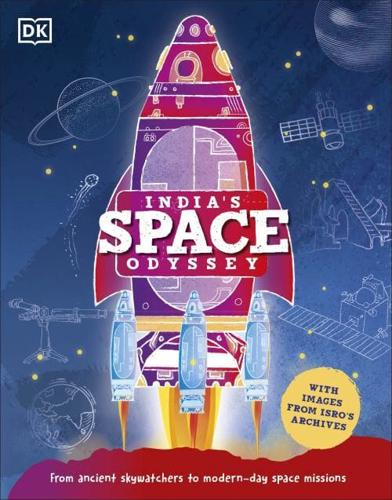
India’s Space Odyssey by DK
India’s astronomy and space programme are explored through photographs, illustrations, timelines and explanations of key missions and scientific ideas. The book traces the story from early astronomical observation to the development of ISRO and ambitious modern space projects, including planetary exploration. Designed for 9-12 year olds, it also introduces important people involved in India’s scientific achievements. This visually led non-fiction title offers a valuable way to connect a study of India with science, engineering, technology and the history of space exploration.
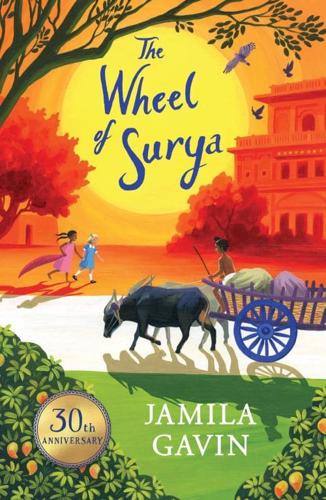
The Wheel of Surya by Jamila Gavin
Against the upheaval surrounding Indian independence and Partition, Marvinder and Jaspal are separated from their mother after violence reaches their Punjab village. Their search for safety becomes a much larger journey across India and eventually towards England, where they hope to find their father. Jamila Gavin’s timeless historical novel for 11+ year olds places family experiences at the heart of enormous political change. It can introduce older primary pupils to migration, displacement, British rule in India and the human consequences of the events of 1947.
Anya’s Quest by Jasbinder Bilan
When Anya sets out with her friend Mahi on a journey across India, she is guided by the goddess Ganga and a river dragon. Along the way they meet spirit animals and witness how rivers, land and wildlife are under threat. This captivating and enchanting story explores pollution, habitat loss and climate change without losing sight of friendship and shared responsibility. Beautifully illustrated by Jane Ray, it draws on Hindu mythology and cultural traditions throughout. A modern classic.

The Line They Drew Through Us by Hiba Noor Khan
Three friends, Jahan, Ravi and Lakshmi, are caught up in the upheaval of the Partition of India as borders are drawn and communities are torn apart. Told from the children’s point of view, this beautifully written and moving story shows how colonial rule and sudden independence lead to fear, violence and loss. Family ties and friendship help hold them together as everything changes. Accessible historical notes and a glossary support readers in understanding the period and its lasting impact.

Bringing Back Kay-Kay by Dev Kothari
Set in contemporary India, this middle-grade mystery follows Lena’s determined search for her missing older brother, Kay-Kay. When he fails to return from a trip, the police assume he has run away, but Lena refuses to believe them. Discovering mysterious poems in his backpack, she begins following clues, questioning fellow travellers and uncovering secrets about her brother’s life. Sibling relationships, family expectations, self-worth and the power of poetry are all useful discussion points. Upper primary readers who enjoy suspenseful, character-driven mysteries will find plenty to engage them. Read our full review.

Evie and Maryam’s Family Tree by Janeen Hayat
When two schoolmates who are paired for a family history project, what starts as an awkward task soon turns into an unexpected discovery. A mysterious folder links their families to India and Partition. As they dig into their grandmothers’ pasts, Evie and Maryam explore themes of identity, friendship, and heritage. This heartfelt historical story offers a glimpse into colonial India and shows how the past shapes the present. Highly recommended for UKS2 classes.

India books for teens
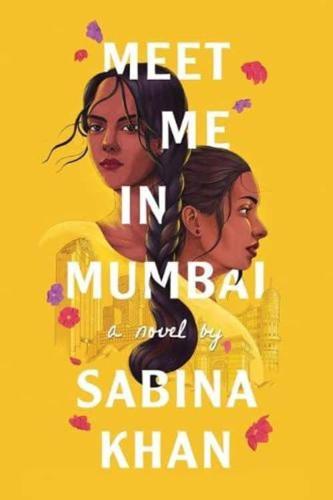
Meet Me in Mumbai by Sabina Khan
Told across two generations eighteen years apart, this YA novel connects the stories of Ayesha and her daughter Mira. Ayesha is an Indian teenager studying in the United States when an unexpected pregnancy changes her future and she makes the difficult decision to place her baby for adoption. Seventeen years later, Mira discovers letters from her birth mother inviting her to India for her eighteenth birthday. This moving novel for 14+ year olds explores adoption, family, identity, belonging and the complicated emotions surrounding a possible reunion in Mumbai.
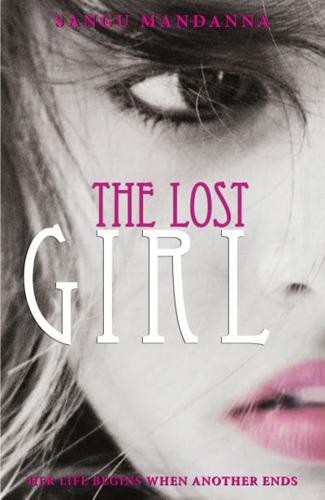
The Lost Girl by Sangu Mandanna
Fifteen-year-old Eva is an echo, a girl created to replace another child if that child dies. She has spent her life learning to copy Amarra’s appearance, memories and relationships, but when Amarra dies Eva is sent to India to take her place. The move forces her to confront difficult questions about identity, family and whether a person created for somebody else’s life can choose one of her own. Sangu Mandanna’s YA speculative novel combines an unusual science-fiction premise with a substantial Indian setting.
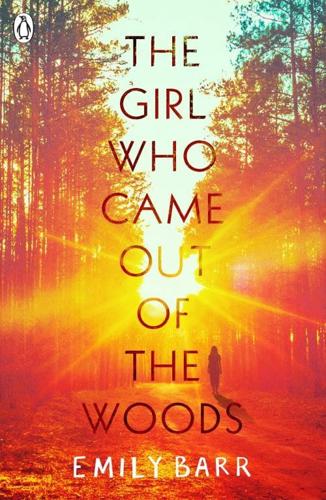
The Girl Who Came Out of the Woods by Emily Barr
Sixteen-year-old Arty has grown up in an isolated community deep in the forests of southern India, largely separated from the modern world beyond it. After a crisis changes life in the commune, she has to venture outside and search for people and answers connected with her family. Emily Barr’s YA novel uses Arty’s unfamiliarity with contemporary life to create both suspense and questions about trust, independence and belonging. The South Indian forest setting remains closely tied to the mystery at the centre of the story.
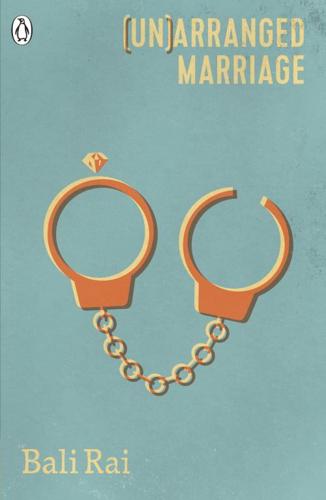
(Un)arranged Marriage by Bali Rai
Manny is a British Punjabi teenager growing up in Leicester whose family expects him to accept an arranged marriage when he turns seventeen. Determined to make his own decisions, he clashes with his parents over friendships, relationships and the future they have chosen for him. His struggle for independence takes him from Britain to Punjab, where family expectations become increasingly difficult to escape. This compelling YA novel for 13+ year olds explores cultural identity, prejudice, family loyalty and personal freedom. Bali Rai’s debut offers a distinctive perspective on growing up between different traditions and expectations.
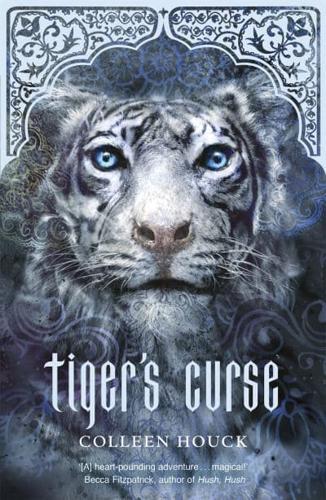
Tiger’s Curse by Colleen Houck
Kelsey Hayes becomes involved in an extraordinary mystery when she meets Ren, a white tiger bound by an ancient curse. Her attempt to help him leads her to India, where the search for a way to break the curse develops into a journey involving temples, legends, magical objects and dangerous challenges. Colleen Houck’s teenage fantasy combines romance and adventure with a story drawing extensively on Indian mythology and settings. It begins a series in which Kelsey’s relationship with Ren becomes intertwined with the wider supernatural quest.
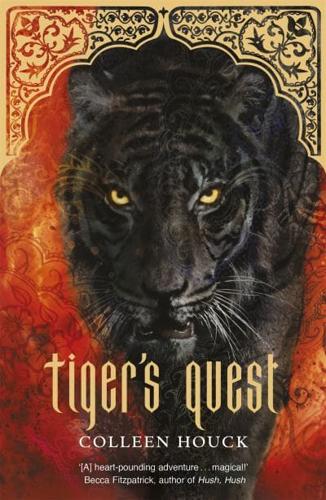
Tiger’s Quest by Colleen Houck
The second book in Colleen Houck’s Tiger Saga continues Kelsey’s connection with the Indian princes Ren and Kishan and the ancient curse that has transformed their lives. Events draw Kelsey back towards India and another stage of the quest, with mythology, magical challenges and romance again central to the story. The novel expands the world introduced in Tiger’s Curse and gives established readers more of its Indian settings and supernatural mythology. It is best read after the first book in the sequence.
The Ivory Key by Akshaya Raman
Four estranged royal siblings are forced to work together when the future of their kingdom depends on finding the legendary Ivory Key. The key may lead them to a new source of magic, but each sibling has different reasons for wanting it and old disagreements repeatedly complicate the search. Akshaya Raman’s YA fantasy creates a South Asian-inspired world shaped by royal politics, puzzles, family loyalties and dwindling magical resources. The adventure offers teenagers an Indian-influenced fantasy setting alongside a quest driven by sibling relationships.

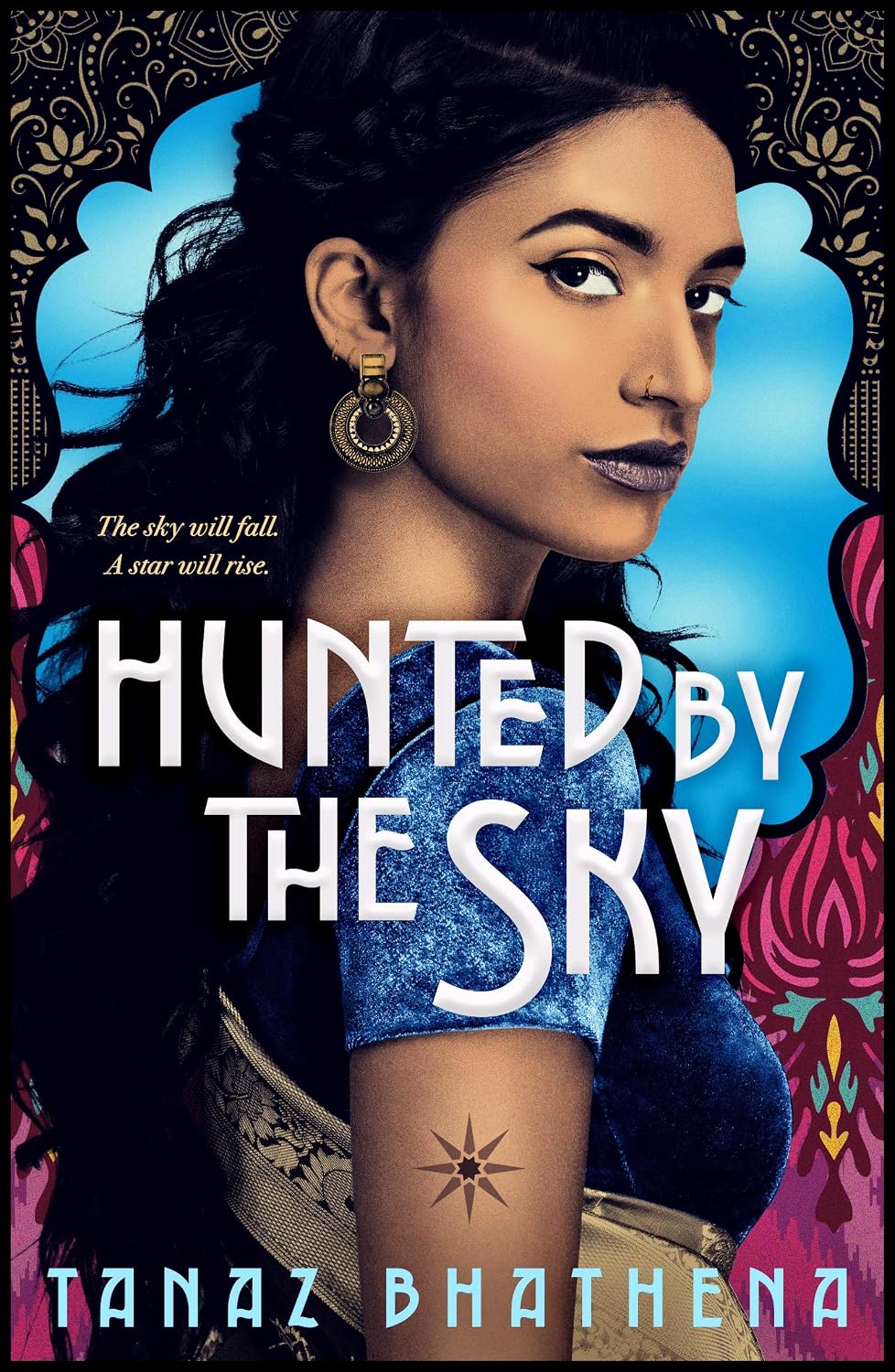
Hunted by the Sky by Tanaz Bhathena
Gul has spent years hiding the star-shaped birthmark that makes her a target in the kingdom of Ambar. After losing her parents, she is taken in by the Sisters of the Golden Lotus and trained in warrior magic, while Cavas is trying to save his seriously ill father. Their paths meet amid rebellion, royal power and dangerous magic. Tanaz Bhathena’s spectacular YA fantasy takes place in a world inspired by medieval India, bringing together questions of class, identity and resistance with an ambitious magical adventure.
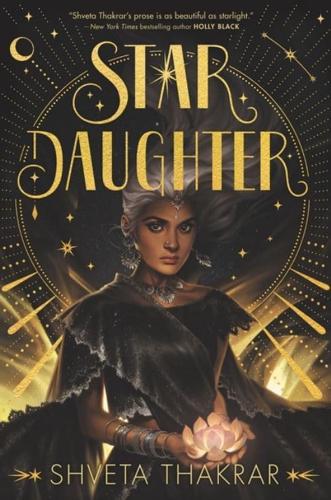
Star Daughter by Shveta Thakrar
Sheetal is the daughter of a human father and a star mother, and she has spent much of her life concealing the celestial side of her identity. When her growing powers accidentally put her father in danger, she must travel to a celestial court and seek the help needed to save him. Shveta Thakrar’s compelling YA fantasy draws strongly on Hindu mythology and South Asian cultural traditions, combining family relationships with music, magic and a competition among the stars. It offers an imaginative route into Indian-inspired mythic fantasy.
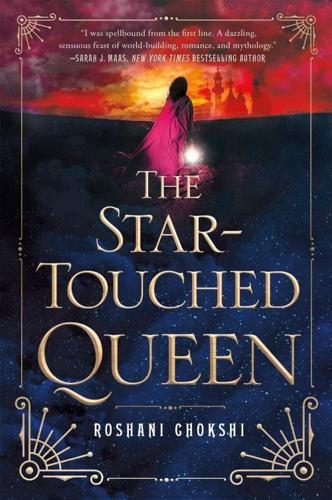
The Star-Touched Queen by Roshani Chokshi
Princess Maya has grown up under the shadow of a horoscope that predicts a marriage associated with death and destruction. When political events lead to her marriage to Amar and a new life as queen of Akaran, she enters a world filled with secrets, magic and forces she does not yet understand. Roshani Chokshi’s brilliant YA fantasy draws on Indian folklore and mythology to create its kingdoms, supernatural imagery and romantic storyline. The novel blends court intrigue with a mythic journey built around fate, trust and Maya’s search for truth.
The Crimson Fortress: The sequel to The Ivory Key by Akshaya Raman
In this gripping sequel to The Ivory Key, four royal siblings must reunite to save Ashoka as its magical defences weaken and the neighbouring kingdom of Lyria becomes an increasingly dangerous threat. Maharani Vira struggles to retain her throne while she and Riya search for answers in the forest, and their brothers Kaleb and Ronak infiltrate the enemy court. With political intrigue, dangerous magic and long-buried secrets, Akshaya Raman brings her Indian-inspired fantasy duology to an exciting conclusion. This richly imagined adventure for 16+ year olds explores trust, power, loyalty and the strength of family bonds.

Click the buttons below to purchase all of the books in this India list, as well as class sets of any of these books and many more, from Bookshop.org UK. Or buy all of the titles from this list from Amazon – ideal for gifts or your classroom library.
Buy from UK.Bookshop.Org Buy from Amazon.co.uk
Disclosure: If you buy books using the buttons above: we may earn a commission from Bookshop.org, whose fees support independent bookshops; as an Amazon Associate schoolreadinglist.co.uk earns from qualifying purchases.
Schools & teachers: please respect copyright and don’t copy our India book list. If you find our book recommendations useful, please consider sharing on social media or linking to this page instead. Thanks.
India resources for teachers
- The British Council’s India education pack provides free lesson plans, assembly ideas and activities for children aged 7-11. Topics include learning Hindi greetings, creating rangoli patterns, making shadow puppets and exploring Indian languages, traditions and culture.
- The Victoria and Albert Museum offers a downloadable India teachers’ resource and accompanying activities for KS1 and KS2. Using objects from its South Asian collections, pupils can investigate Indian textiles, decorative patterns, jewellery, Mughal art and Hindu religious imagery through art, literacy and RE.
- Muktangan Educational Trust has developed three free teaching packs covering Years 1-6, linked to the UK National Curriculum. Using the experiences of families living in Mumbai, the resources introduce everyday life and culture in India through cross-curricular activities. The charity also encourages participating schools to undertake fundraising.
- Oak National Academy’s Indus Valley civilisation unit contains six Year 3 history lessons exploring archaeological discoveries, ancient cities, trade, art and undeciphered writing. Free presentations, videos, worksheets and quizzes help pupils investigate this early civilisation of the Indian subcontinent.
- The Historical Association hosts a collection of KS2 Indus Valley teaching materials originally developed by the Commonwealth Institute. Downloadable activities, maps, archaeological illustrations and teachers’ notes cover Mohenjo-daro, everyday life, trade, transport and religion. Free website registration is required.
- The Royal Geographical Society’s New India module provides geography lessons, presentations, factsheets and activities examining India’s changing economy, population, landscapes and global connections. Topics include monsoons, Bangalore’s technology industries, globalisation, social inequality and links between India and the UK.
- Oak National Academy’s India geography resources include a complete 12-lesson Year 7 unit exploring India’s physical and human geography. Pupils investigate monsoons, the Sundarbans, population growth, migration, life in Mumbai, climate change and India’s growing global influence using maps, videos, worksheets and quizzes.
- The Royal Geographical Society’s India: Pictures of the Past collection includes historical photographs, maps, factsheets and classroom activities investigating the Punjab, migration and Partition. Resources for primary and secondary pupils encourage the comparison of historical evidence and the exploration of connections between Britain, India and Pakistan.
- The British Library’s learning resources include an enquiry examining relations between Britain and India from approximately 1750 to 1930. Using historical sources and teaching activities, secondary pupils can investigate the East India Company, British colonial rule, the experiences of Indian people and the development of the British Empire.
- The National Archives’ Partition of British India lesson uses original letters, maps, newspapers and oral testimony to help KS3 students investigate the events of 1947. Activities explore the attitudes of British officials, experiences of displacement and the human consequences of dividing British India into independent states.
- For GCSE and A-level history, The National Archives’ Indian independence collection provides original documents covering the campaign for independence between 1940 and 1946. Sources examine Gandhi, Nehru, Jinnah, the Quit India Movement, the Second World War and British government policy, helping students develop historical enquiry and source evaluation skills.
- The National Archives’ Loyalty and Dissent collection explores the experiences of Indian soldiers during the First World War. Letters, photographs and official records help secondary students investigate military service, recruitment, loyalty, discrimination and opposition to British colonial rule.
- South Asian Britain: Connecting Histories offers classroom learning resources developed with the British Library. The collection explores Indian independence, imperial trade, Partition, migration, political activism, literature and the contributions of South Asian communities to British society.
- The South Asian Heritage Trust provides free teaching resources for South Asian Heritage Month, including a schools toolkit with assembly guidance, classroom activities and curriculum ideas. Suitable for primary and secondary schools, the materials support learning about Indian and wider South Asian histories, cultures and contributions to life in Britain.
BISAC JUV030020, JNF038020. | Thema YFB, YFH, 1FKA.