World civilisations books for children and teens
World civilisations books for children and teens open windows onto the people, ideas, beliefs and technologies that shaped societies across continents. This selection moves from Ancient Egypt, Greece and Rome to Sumer, the Indus Valley, China, the Maya and later world cultures. Picture books, graphic storytelling, illustrated non-fiction, historical fiction and secondary history texts offer different routes into daily life, archaeology, myth, empire and cultural exchange. This list features books by Mary Pope Osborne, DK, Jessie Burton, Joseph Coelho, Joe Todd-Stanton, Marcia Williams, Anita Ganeri, David Long, Claire M. Andrews, and Felicia Day.
World civilisations books for children and teens – our recommendations
World civilisations books for 3-7 year olds
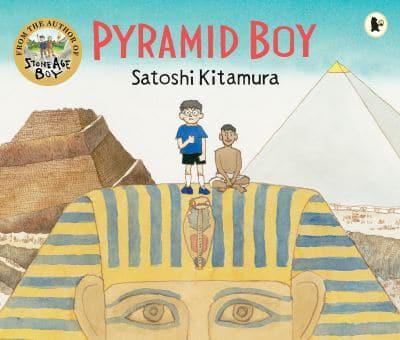
Pyramid Boy by Satoshi Kitamura
A museum visit turns into time travel when a boy finds himself in ancient Egypt. Satoshi Kitamura combines picture-book storytelling with glimpses of daily life, hieroglyphs and pyramid building, followed by additional factual material. This historical picture book for 5-9 year olds gives children an imaginative route into Egyptian civilisation, connecting one child’s adventure with the people, buildings, writing and customs of the ancient world.
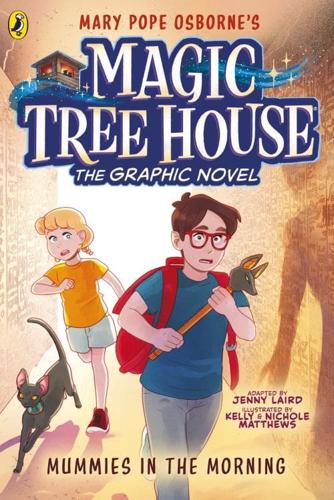
Magic Tree House: Mummies in the Morning: The Graphic Novel by Mary Pope Osborne and Jenny Laird, illustrated by Kelly Matthews and Nichole Matthews
Jack and Annie are whisked to ancient Egypt in this full-colour graphic novel adaptation, where a pyramid, an ancient mystery and a centuries-old riddle turn history into an adventure. Ideal for 5-7 year olds, the story combines time travel and mystery with a visual comic format.
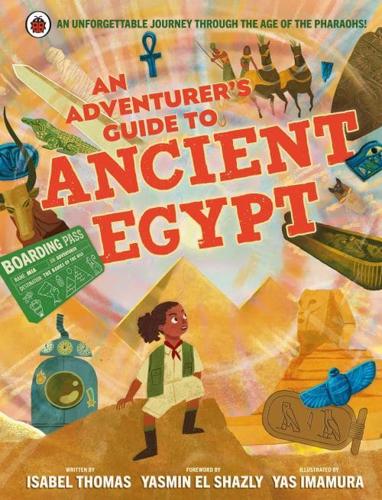
An Adventurer’s Guide to Ancient Egypt by Isabel Thomas, illustrated by Yas Imamura
Mia travels along the Nile and through thousands of years of Egyptian history in an illustrated adventure packed with places, people and discoveries. 5+ year olds can encounter the first pharaoh, the Great Pyramid, animal mummies and other features of ancient Egyptian life. Isabel Thomas combines historical information with an expedition-style format, while Yas Imamura’s illustrations help young children picture monuments, landscapes and objects from one of the world’s best-known ancient civilisations.
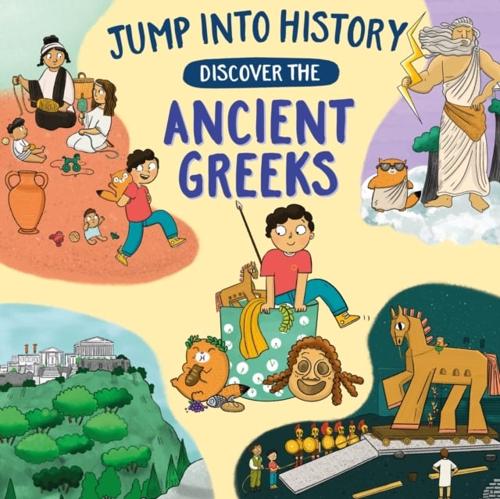
Jump into History: Discover the Ancient Greeks by Kay Barnham, illustrated by Jennifer Naalchigar
Billie and their cat Mia use a special dressing-up box to travel into the world of the ancient Greeks. This introduction for 5+ year olds visits Athens and the beginnings of democracy, Greek gods and goddesses, the ancient Olympic Games, food, theatre, philosophers, astronomy and schooling. The time-travel framework gives younger children a story to follow while short sections introduce the ideas, activities and achievements associated with Ancient Greece.
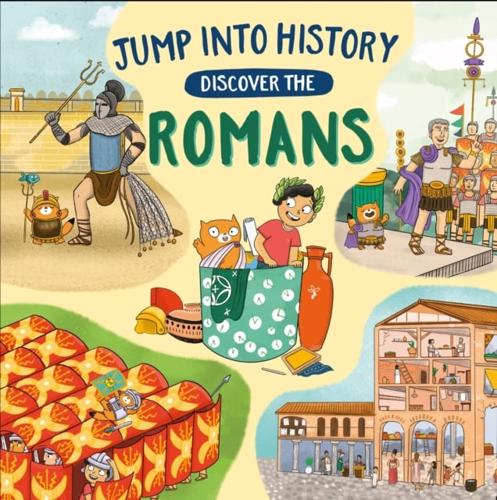
Jump into History: Discover the Romans by Kay Barnham, illustrated by Jennifer Naalchigar
Another trip through Billie’s magical dressing-up box takes Billie and Mia into Roman civilisation. Written as an introduction to history for 5+ year olds, the book visits Roman emperors, the Colosseum and gladiators, the army, schooling and everyday life. Jennifer Naalchigar’s illustrations accompany Kay Barnham’s short historical sections, giving children an approachable way to discover how Roman people lived and some of the institutions and spectacles associated with their world.
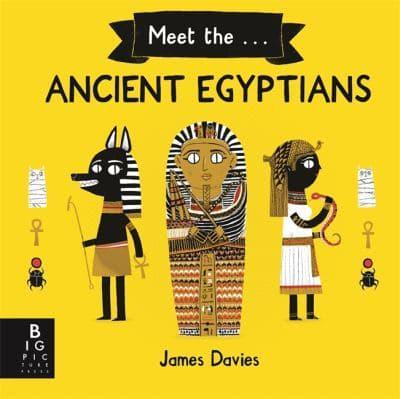
Meet the Ancient Egyptians by James Davies
James Davies introduces Ancient Egypt through bold illustrations, infographics and short bursts of information. Gods and worship, mummification, pyramids, clothing and other aspects of Egyptian life appear in a highly visual format designed for children beginning to investigate ancient history.
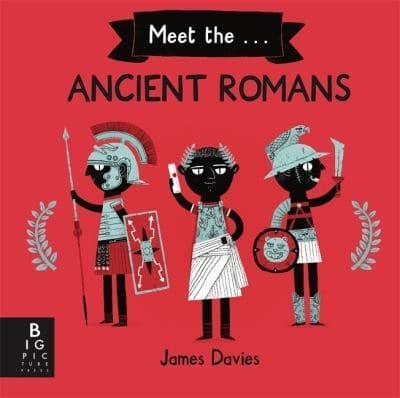
Meet the Ancient Romans by James Davies
Who was Julius Caesar, how were gladiators trained and what was everyday Roman life like? James Davies tackles questions about Roman civilisation through colourful artwork, infographics and concise explanations. Politics, entertainment, clothing and daily routines sit alongside famous figures and institutions, creating a lively introductory survey. The graphic presentation encourages children to browse, compare details and build a picture of Rome from historical information.
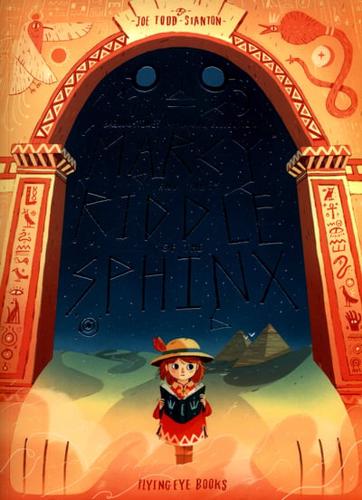
Marcy and the Riddle of the Sphinx by Joe Todd-Stanton
Marcy’s father, Arthur, sets off for Egypt in search of the Book of Thoth and disappears, prompting Marcy to follow him into an adventure of her own. Joe Todd-Stanton draws on Egyptian mythology, mysterious temples and the Great Sphinx in an intricately illustrated story. The result is a fantasy adventure that can sit alongside factual study of Ancient Egypt, giving children an imaginative encounter with its gods, legendary objects and monumental landscapes.
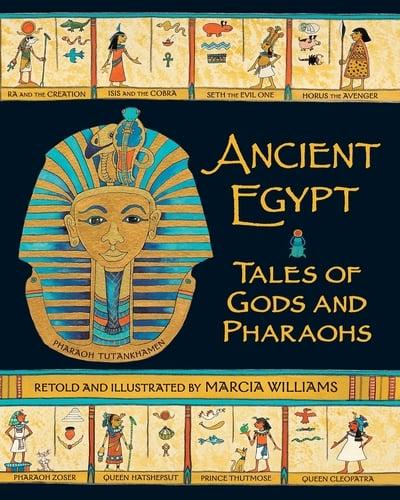
Ancient Egypt: Tales of Gods and Pharaohs by Marcia Williams
Marcia Williams retells Egyptian myths and stories in her distinctive comic-strip format, bringing gods, pharaohs and legendary events together on busy illustrated pages. For 7-9 year olds, the collection includes stories connected with Tutankhamun and Cleopatra as well as ancient Egyptian mythology. Speech bubbles, visual sequences and historical details give children several accessible ways into the material.
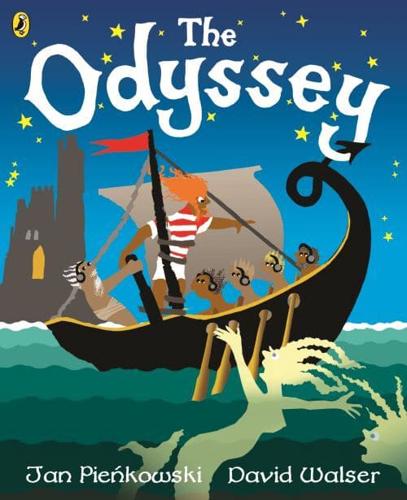
The Odyssey by David Walser, illustrated by Jan Pienkowski
David Walser condenses Homer’s epic journey into a picture-book retelling, accompanied by Jan Pienkowski’s dramatic collage illustrations. Odysseus struggles home from war while encountering the Cyclops, gods, monsters and famous episodes from the Greek epic tradition. The visual storytelling introduces a foundational tale from the ancient Greek world in a form that can be shared aloud, discussed alongside Greek mythology or used to show how stories from ancient civilisations continue to be retold.
World civilisations books for children aged 7-12
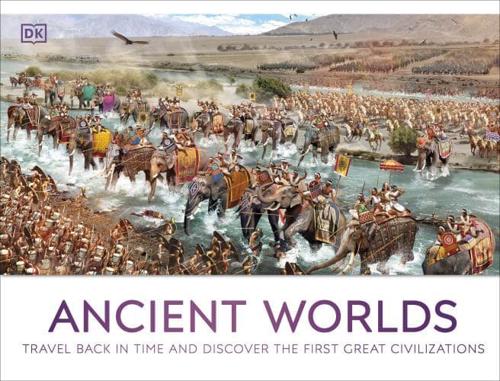
Ancient Worlds: Travel Back in Time and Discover the First Great Civilizations by DK
This illustrated journey for 7-11 year olds travels across some of the world’s great ancient societies rather than examining one civilisation in isolation. Sumer, the Maya, Rome, the Mauryan Empire and Pacific seafaring cultures are among the worlds represented. Large scenes show how people lived, worked, built, traded and developed technologies.
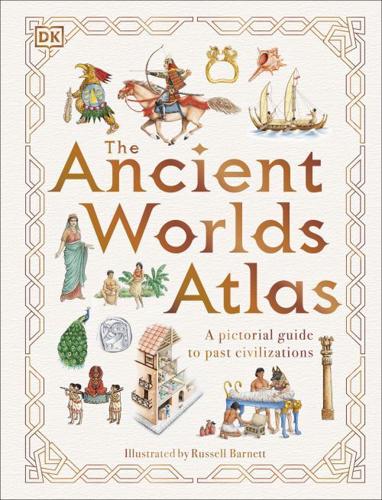
The Ancient Worlds Atlas: A Pictorial Guide to Past Civilizations by DK, illustrated by Russell Barnett
From the earliest cities of Sumer to the Inca world of the Americas, this pictorial atlas places ancient societies in their geographical settings. Russell Barnett’s detailed illustrations and map-like spreads show cities, monuments, landscapes and everyday activity, while accompanying text introduces the evidence historians and archaeologists use to understand the past.
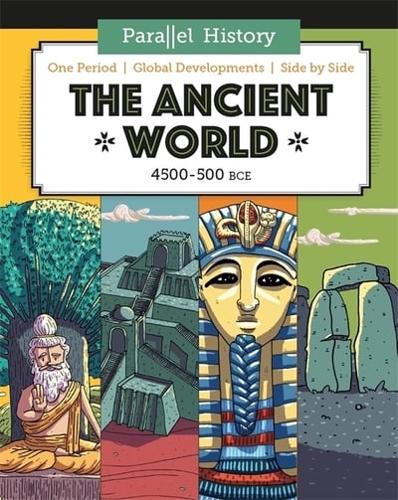
Parallel History: The Ancient World by Alex Woolf
Alex Woolf puts events from different parts of the ancient world alongside one another, helping 9+ year olds see what was happening in several civilisations at the same point in history. Mesopotamia, Egypt, Shang China, the Assyrians, Phoenicians, Persian Empire and societies of Oceania form part of the chronological story.
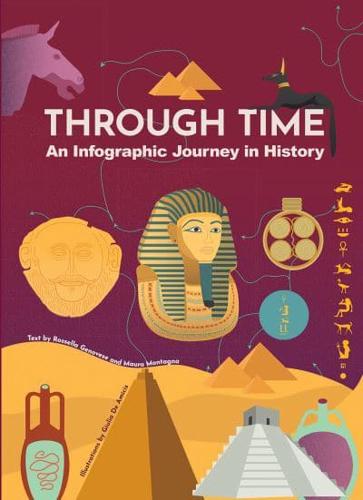
Through Time: An Infographic Journey in History by Rossella Genovese and Maura Montagna, illustrated by Giulia De Amicis
History becomes a series of visual comparisons in this infographic-led book for 8+ year olds. Rossella Genovese and Maura Montagna examine aspects of human societies through time, with Giulia De Amicis using charts and illustrations to organise the information. Food, homes, daily life and inventions can be compared across periods and cultures, helping children spot continuities, differences and developments.
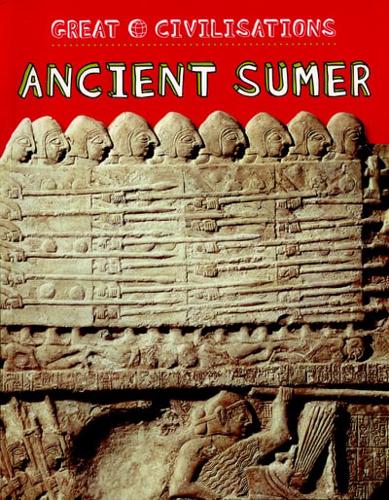
Great Civilisations: Ancient Sumer by Tracey Kelly
Ancient Sumer is introduced through significant structures and objects, including ziggurats and stone seals. Tracey Kelly uses these surviving traces to investigate the civilisation’s achievements and the way its people lived. Ideal for 9+ year olds, the book connects material evidence with themes including writing, architecture, work and society.
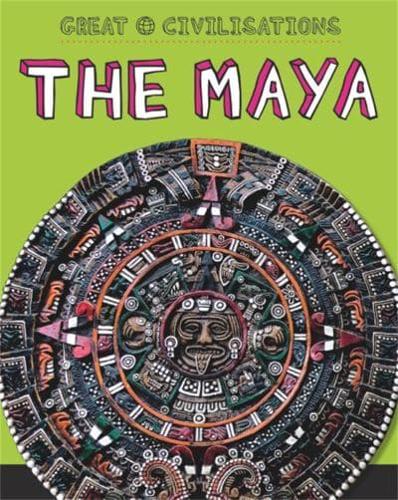
Great Civilisations: The Maya by Tracey Kelly
Tracey Kelly turns archaeological structures and surviving objects into starting points for learning about Maya civilisation. Pyramids, calendars and other evidence introduce 9+ year olds to the achievements, beliefs and organisation of Maya society. The format encourages children to look closely at what people made and built before considering what those remains can tell us about their lives. It works particularly well alongside wider studies comparing civilisations from the Americas, Asia, Africa and Europe.
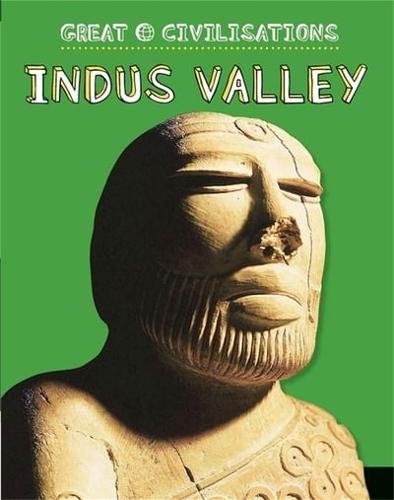
Great Civilisations: Indus Valley by Anita Ganeri
Anita Ganeri introduces the Indus Valley civilisation through important structures and objects, showing how archaeological evidence can illuminate a society that flourished thousands of years ago. The book places material remains at the centre of the investigation, linking them to what is known about settlements, technology and everyday life.
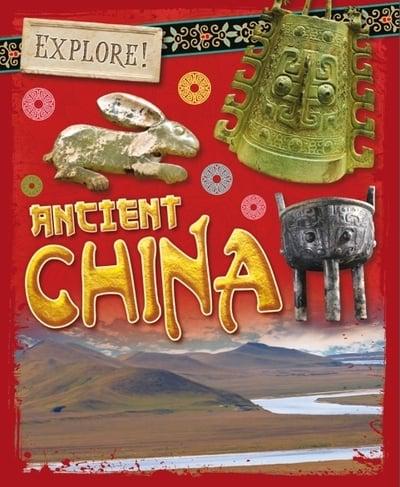
Explore!: Ancient China by Izzi Howell
8+ year olds can investigate Ancient China through the Shang Dynasty and the archaeological evidence it left behind. Izzi Howell introduces subjects including bronze vessels, oracle bones, craftspeople and burial practices, connecting physical objects with what they reveal about society. Photographs and historical information help children build a picture of an early Chinese civilisation while encouraging the kind of evidence-based questioning used by historians and archaeologists.
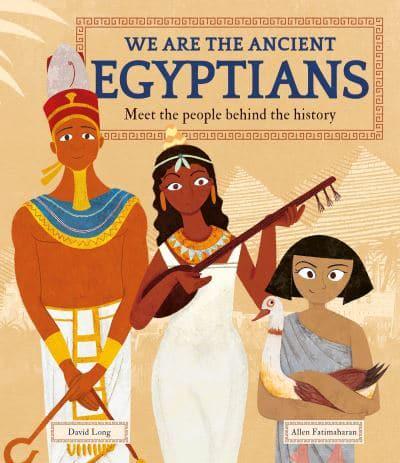
We Are the Ancient Egyptians: Meet the People Behind the History by David Long, illustrated by Allen Fatimaharan
Nineteen people from different parts of ancient Egyptian society introduce their world in this illustrated history for 8+ year olds. Children encounter occupations and experiences including a necropolis builder, brewer, embalmer, tomb robber and pharaoh, creating a broader view of civilisation than a sequence of rulers alone. A hieroglyph key and timeline add reference material.
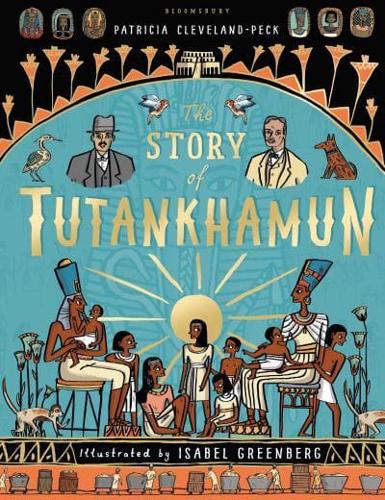
The Story of Tutankhamun by Patricia Cleveland-Peck, illustrated by Isabel Greenberg
Tutankhamun’s life, death and extraordinary later fame are presented to 7+ year olds through Patricia Cleveland-Peck’s narrative and Isabel Greenberg’s illustrations. The book follows the young pharaoh and also considers Howard Carter’s discovery of his tomb, linking ancient history with archaeology. Maps, inventories and graphic storytelling features help organise the wealth of material associated with Tutankhamun.
World civilisations books for teens
Medusa: The Girl Behind the Myth (Illustrated Gift Edition) by Jessie Burton, illustrated by Olivia Lomenech Gill
Jessie Burton retells the Medusa myth by placing Medusa herself at the centre of the story. Living in exile with her sisters, she encounters Perseus when he arrives on her island, setting in motion a story about identity, power, trust and the stories people tell about one another. Olivia Lomenech Gill’s colour illustrations give this hardback edition a strong visual dimension.

The Boy Lost in the Maze by Joseph Coelho, illustrated by Kate Milner
Joseph Coelho’s verse novel interweaves the Greek story of Theseus and the Minotaur with Theo, a contemporary teenager searching for his father. Ideal for 14+ year olds, the parallel narratives examine fathers, sons, masculinity and the different kinds of maze people must navigate.

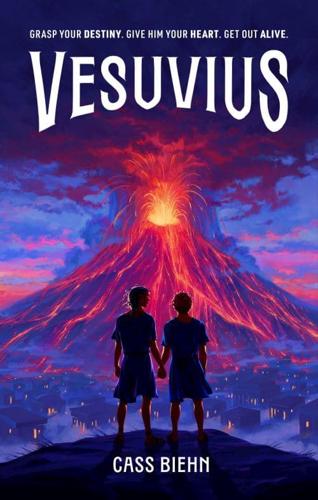
Vesuvius by Cass Biehn
Felix is a thief in Pompeii and Loren is a temple attendant troubled by visions of the city’s destruction. Their lives become entangled after Felix steals a helmet linked to the god Mercury, just as earthquakes and ominous signs point towards catastrophe. Cass Biehn combines Roman Pompeii with mythology, fantasy, mystery and romance in a teenage novel shaped by the approaching eruption of Vesuvius.
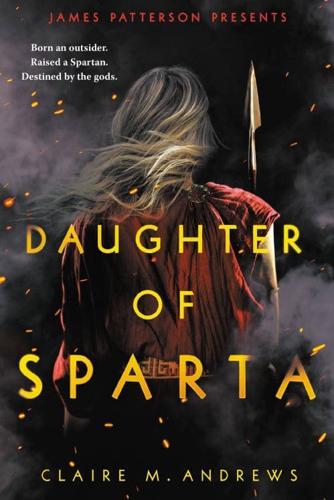
Daughter of Sparta by Claire M. Andrews
Seventeen-year-old Daphne has trained as a warrior in ancient Sparta when an encounter with Artemis sends her on a much larger quest. Nine objects have vanished from Mount Olympus and Daphne must recover them if she is to protect her brother and the gods’ fading power. This adventure for 14+ year olds moves through a world of Greek gods, legendary figures and famous mythical locations, reworking the story of Daphne and Apollo around an active Spartan heroine.
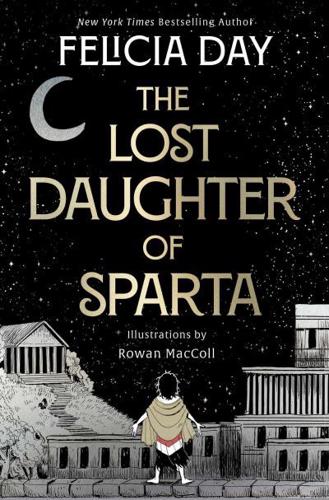
The Lost Daughter of Sparta by Felicia Day, illustrated by Rowan McColl
Philonoe is the youngest sister of Helen, Clytemnestra and Timandra, three women whose stories are bound to a shared curse. Hoping to escape the same fate, she is sent by Aphrodite to retrieve three seemingly impossible objects, with Artemis accompanying her on the quest. Felicia Day and Rowan MacColl use the graphic novel form to reinterpret Greek mythology through a less familiar Spartan character, bringing gods, legendary women, adventure and romance together in a compelling teen retelling.
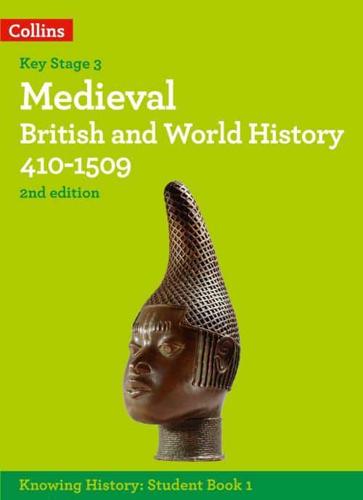
Knowing History – Medieval British and World History 410-1509: (Second edition) by Laura Aitken-Burt, Robert Selth and Robert Peal
Designed for KS3 history, this textbook places British history within a much wider medieval world. Fifty lessons are arranged across ten units, with global sections covering the Islamic world, the Crusades, medieval African kingdoms, Imperial China and the Mongols. Knowledge organisers, timelines, key vocabulary and enquiry questions help students connect events and societies across regions.
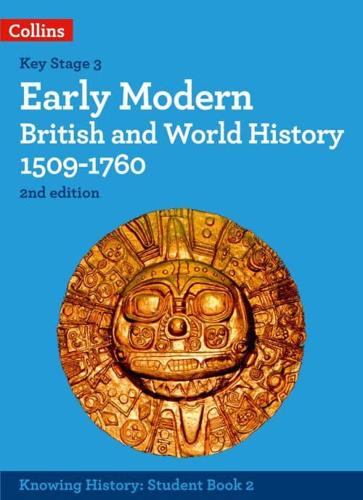
Knowing History – Early Modern British and World History 1509-1760: (Second edition) by Robert Peal, Robert Selth and Laura Aitken-Burt
This KS3 volume continues the global approach into the early modern period. Alongside British and European history, five international units investigate Renaissance Europe, the Americas, the Ottoman Empire, Mughal India and Edo Japan. Fifty lessons, knowledge organisers, timelines and overarching enquiry questions give students a structured way to study societies that were developing, trading and competing during the same centuries.
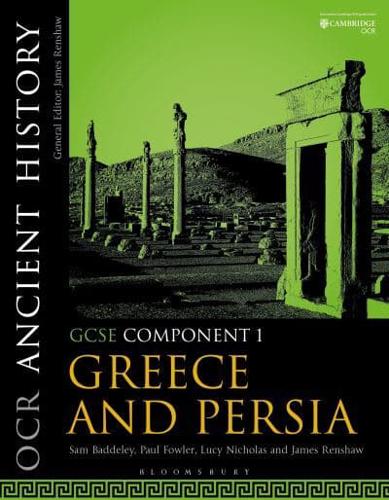
OCR Ancient History GCSE Component 1: Greece and Persia by Sam Baddeley, Paul Fowler, Lucy R. Nicholas and James Renshaw
Written for OCR GCSE Ancient History, this textbook gives secondary students a detailed route into Greek and Persian history. Its topics include the Persian Empire, the development from tyranny towards democracy in Greece, Athens and Pericles, and Alexander the Great. Historical sources, study material and examination practice sit alongside the narrative, so teenagers can consider both what happened and how ancient history is constructed from surviving evidence.
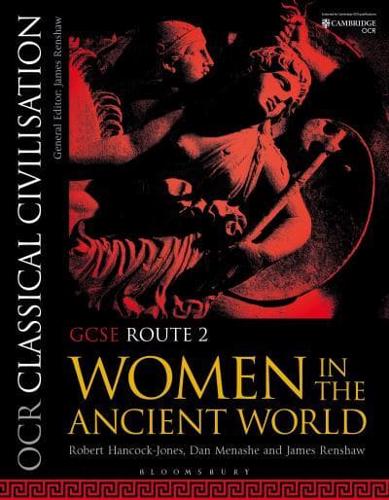
OCR Classical Civilisation GCSE Route 2: Women in the Ancient World by Robert Hancock-Jones, Dan Menashe and James Renshaw
This OCR-endorsed GCSE Classical Civilisation textbook brings together literary, visual and historical material from Greece and Rome. Women in the ancient world form a central part of the route, alongside study of the Homeric world, Roman city life and warfare. Source material and examination-focused activities give teens a structured way to investigate ancient beliefs, social roles and culture while learning how classicists draw evidence from texts, objects and images.
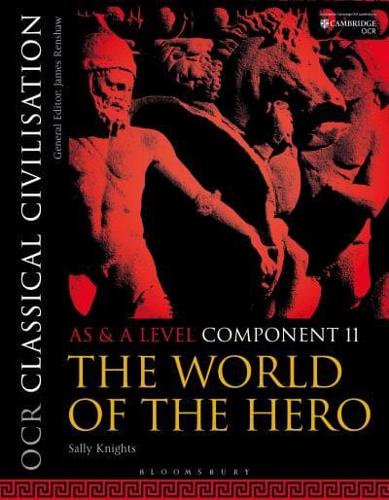
OCR Classical Civilisation AS and A Level Component 11: The World of the Hero by Sally Knights
A-level students studying the ancient world can use this OCR-endorsed text to examine epic heroism through Homer’s Iliad and Odyssey and Virgil’s Aeneid. Sally Knights combines the set works with their cultural and historical contexts, supported by study questions, quotations, further reading and examination guidance.
Click the buttons below to purchase all of the books in this World Civilisations list, as well as class sets of any of these books and many more, from Bookshop.org UK. Or buy the 20 most popular titles from this list from Amazon – ideal for gifts or your classroom library.
Buy from UK.Bookshop.Org Buy from Amazon.co.uk
Disclosure: If you buy books using the buttons above: we may earn a commission from Bookshop.org, whose fees support independent bookshops; as an Amazon Associate schoolreadinglist.co.uk earns from qualifying purchases.
Schools & teachers: please respect copyright and don’t copy our World Civilisations list. If you find our book recommendations useful, please consider sharing on social media or linking to this page instead. Thanks.
World civilisations resources for teachers
- The Historical Association offers schemes of work, teaching articles and subject knowledge resources covering Ancient Sumer, Egypt, the Indus Valley and Shang China. Its comparative civilisation materials explore the development of cities, writing, government, trade and agriculture. Some resources require membership.
- Oak National Academy provides free KS2 history lessons, slide decks, quizzes and worksheets covering Ancient Egypt, Mesopotamia, the Indus Valley, Shang China, Ancient Greece, the Maya, Benin and early Islamic Baghdad. Units include comparisons between civilisations and activities examining archaeological evidence.
- The Historical Association’s early civilisations resource introduces the development of Sumerian, Egyptian, Indus, Shang, Minoan and Olmec societies. Its historical articles support teachers developing a broader understanding of where and when the world’s earliest civilisations emerged.
- Oxford’s Ashmolean Museum has a collection of teaching resources based on historical artefacts, including Ancient Egyptian burial practices, Greek pottery, Roman inscriptions, coins and everyday life in the ancient world. Materials include downloadable teacher notes, classroom activities and museum gallery trails.
- The Horniman Museum’s Kingdom of Benin resources include downloadable object photographs, a learning pack and a gallery trail. Pupils can investigate brass plaques, sculpture, religious objects and the history of the Kingdom of Benin, including the British invasion of 1897 and the subsequent restitution of cultural artefacts.
- Archaeologist Dr Diane Davies offers KS2 teaching resources exploring Maya mathematics, calendars, writing, religion, architecture and archaeology. The website includes videos, historical explanations, practical activities and investigations into the lives of Maya people today.
- The Smithsonian National Museum of Asian Art provides lesson plans, object studies and videos exploring Chinese civilisation. Topics include Bronze Age technology, ancient writing, religious beliefs, the Silk Roads and everyday life during different Chinese dynasties. The materials are particularly useful for extending Shang Dynasty studies.
- 1001 Inventions offers educational guides, posters, films and classroom activities exploring scientific and technological achievements across medieval Muslim civilisation. Resources examine inventors, mathematicians, engineers and scientists, including Ibn al-Haytham’s work on light and vision.
- The Metropolitan Museum of Art’s Ancient Egypt collection includes a comprehensive downloadable teaching resource containing historical background, maps, lesson plans, classroom activities and a glossary. Teachers can use Egyptian artworks and artefacts to investigate religion, rulers, daily life and burial traditions.
- The Metropolitan Museum of Art’s wider curriculum resources include teaching materials on Ancient Near Eastern civilisations, featuring cuneiform tablets, sculpture, cylinder seals and monumental reliefs. Discussion questions and object-based lessons help pupils investigate the societies of Mesopotamia and neighbouring regions.
- National Geographic Education explores the history of ancient Indian civilisations, from the cities of the Indus Valley to the Mauryan and Gupta empires. Its illustrated historical explanations provide useful background for comparing early cities, government, trade and cultural achievements.
- UNESCO’s Silk Roads programme examines the networks of trade and cultural exchange connecting civilisations across Asia, Africa and Europe. Historical information about the movement of goods, ideas, religions and technologies provides useful material for upper KS2 and secondary history enquiries.
BISAC JNF025020, JUV016020. | Thema YNH, YFT, YPJH.