Germs books for children and teens
Some germs make us ill, but the microscopic world is far more varied than that. These germs books for children and teens move from funny handwashing stories and lift-the-flap science to bacteria, viruses, immunity and the history of disease. Older readers can find YA thrillers in which outbreaks change whole communities. Together, the books offer ways to talk about hygiene, investigate biology and enjoy a gripping story. This list features books by Nicola Davies, Tony Ross, Katie Daynes, Steve Mould, Nick Arnold, Anna Claybourne, Teri Terry, Neal Shusterman, James Dashner, and Michael Grant.
Germs books for children and teens – our recommendations
Germs picture books for 3-7 year olds
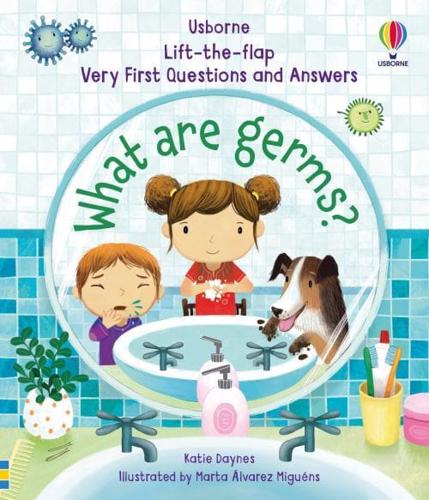
Very First Questions and Answers What are Germs? by Katie Daynes, illustrated by Marta Alvarez Miguens
Where do germs live, and how do they move from one person to another? Little fingers can lift the flaps to find answers about these invisible visitors and the everyday habits that help keep us well. The questions are direct and the illustrations are full of details to investigate together. Created for 3+ year olds, this introduction makes a natural starting point for conversations about sneezing, washing hands and why soap matters.
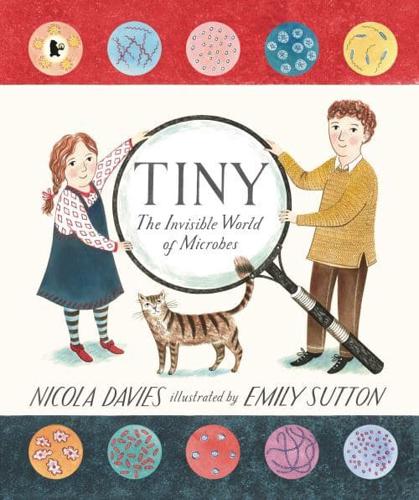
Tiny: The Invisible World of Microbes by Nicola Davies, illustrated by Emily Sutton
A whole world exists beyond what our eyes can see. Nicola Davies introduces microbes through comparisons that make their astonishing size and numbers easier to imagine, while Emily Sutton fills the pages with detailed paintings of the life around us. Children discover that microscopic organisms are found in the air, in water and even inside people, and that many are essential to life.
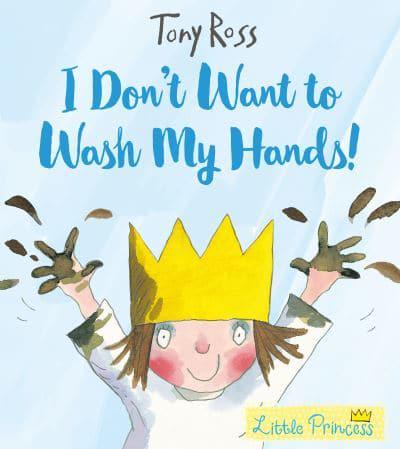
I Don’t Want to Wash My Hands! by Tony Ross
Little Princess has heard plenty of reasons to wash her hands, but she is getting fed up with doing it. After playing outside, using the toilet and all the other things that fill her day, another trip to the sink feels like a nuisance. Tony Ross turns this familiar argument into a funny picture-book story, complete with the Princess’s wonderfully expressive reactions. There is plenty here for a lively read-aloud and a conversation about the germs we cannot see.
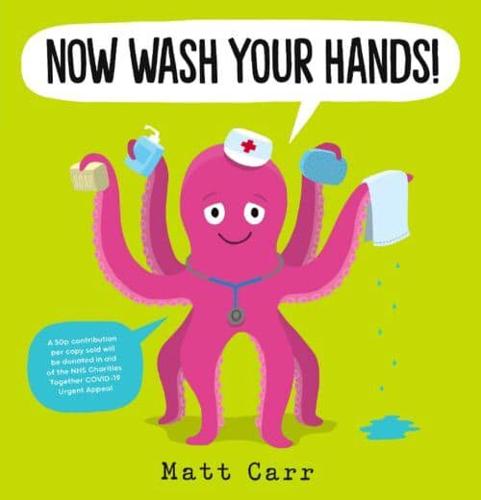
Now Wash Your Hands! by Matt Carr
Doris the Doctorpus is visiting a school for little animals, and she has something important to explain. Germs may be tiny, but washing hands helps stop them spreading. Luckily, Doris has a song to help everyone remember what to do. Matt Carr’s bright, comic illustrations give this 3+ year olds’ story plenty of energy. The classroom setting and cheerful handwashing lesson make it easy to share with a group before snack time or lunch.
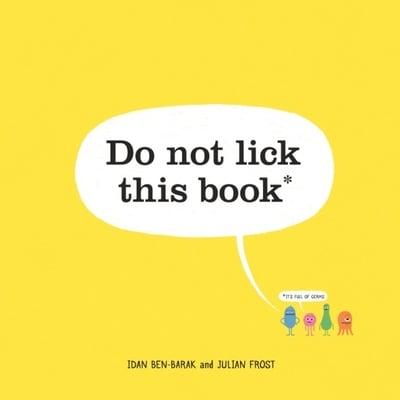
Do Not Lick This Book by Idan Ben-Barak, illustrated by Julian Frost
Meet Min, a microbe so small that she needs a microscope to be seen. Her journey introduces children to the microscopic inhabitants of familiar places, including teeth and clothes. Photographs, cartoon artwork and the book’s playful invitation to look closely at everyday objects work together to make the science feel surprisingly immediate. The combination of story and real-world images gives 5+ year olds a memorable introduction to the microbes living all around us.
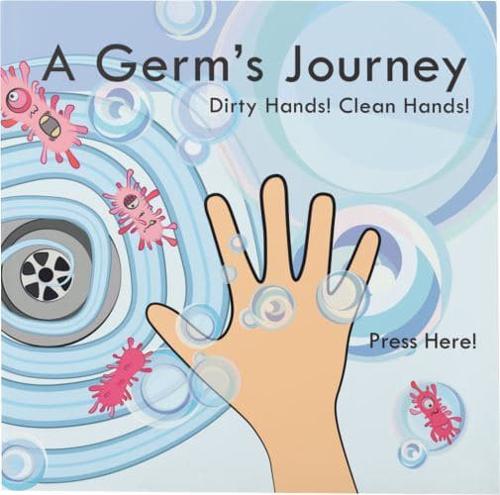
A Germ’s Journey by Katie Laird and Sarah Younie, illustrated by Charlie Evans
A germ sets off from a toilet seat and travels towards a tummy in this hands-on explanation of how infection can spread. The board book uses heat-sensitive patches: when children warm the pages with their hands, more germs appear. That little moment of discovery makes the invisible visible and provides a useful starting point for talking about clean hands. Bold pictures and a simple journey give young children a clear sequence to follow and plenty to discuss.
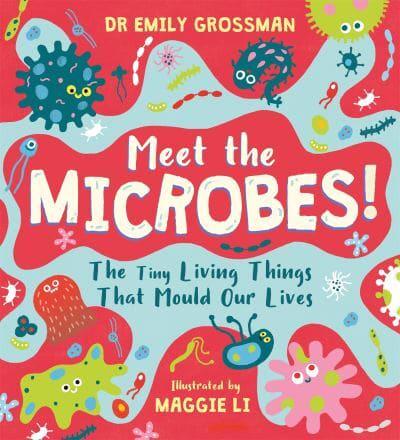
Meet the Microbes! by Emily Grossman, illustrated by Maggie Li
Microbes are everywhere, from the sea to the inside of our bodies, and many of them help keep the world working. Emily Grossman introduces this busy miniature world with playful explanations, supported by Maggie Li’s colourful illustrations. Children meet the tiny organisms that share our planet and learn why it makes sense to distinguish helpful microbes from those that cause illness. This illustrated introduction for 5+ year olds works especially well alongside early science topics about living things.
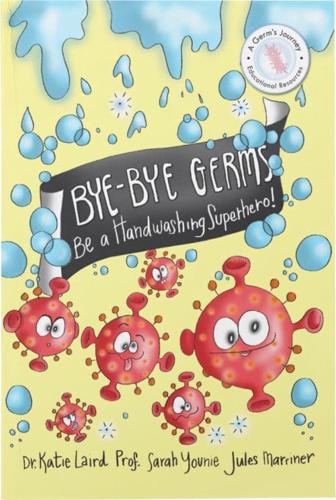
Bye-Bye Germs: Be a Handwashing Superhero! by Katie Laird and Sarah Younie, illustrated by Jules Marriner
Jess is playing with her brother Joe when a tickle in her throat turns into a great big cough and sneeze. How can the family stop germs travelling further? Their story combines familiar home situations with practical handwashing advice. Jules Marriner’s illustrations include a chance to spot where germs might be hiding, and the book also contains a picture guide to washing hands. It gives young children a friendly way to connect the story of a sneeze with what happens next.
Germs books for children aged 7-12
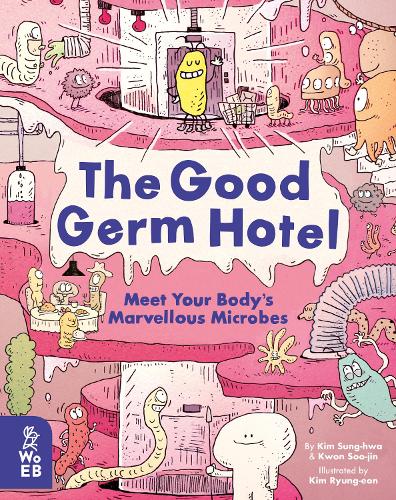
The Good Germ Hotel by Kim Sung-hwa and Kwon Su-jin
Inside the human body, trillions of microbes help with digestion, support our immune defences and keep harmful germs in check. Kim Sung-hwa and Kwon Su-jin imagine the body as a five-star hotel, with a friendly gut bacterium guiding children around its remarkable residents. Comic-style illustrations by Kim Ryung-eon explore bacteria, antibiotics and bodily functions with plenty of humour. This entertaining introduction to the microbiome will appeal to KS2 children who enjoy discovering how their bodies work.
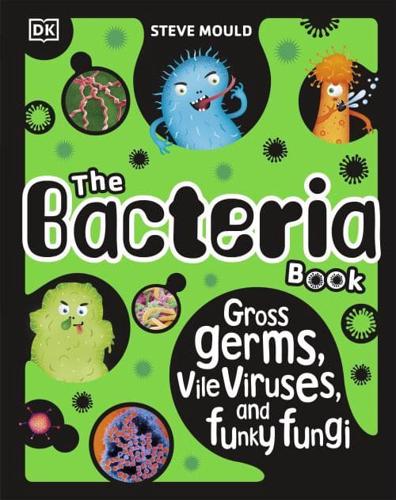
The Bacteria Book by Steve Mould
Bacteria, viruses and fungi may be tiny, but they have an enormous effect on life. Steve Mould takes 7-9 year olds into the microscopic world through photographs, diagrams and lively explanations. From bread and cheese to the microbes living in our bodies, the examples show how much we depend on these organisms. This updated edition also covers pandemics, vaccines and the immune system, giving curious children a broad introduction to microbiology that reaches well beyond the germs that make us ill.
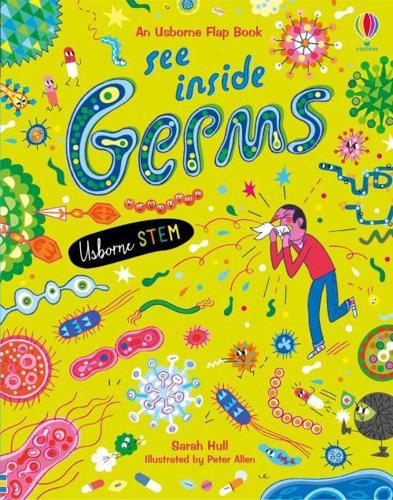
See Inside Germs by Sarah Hull, illustrated by Peter Allen
What happens when a virus enters the body, and how do vaccines help protect us? Sarah Hull uses lift-up flaps to look inside the microscopic world, covering bacteria, viruses, fungi, immunity and antibiotics. There are also sections on how germs spread and the problem of antibiotic resistance. Peter Allen’s detailed drawings reward close inspection. With so much information tucked beneath the flaps, 7+ year olds can dip into individual questions.
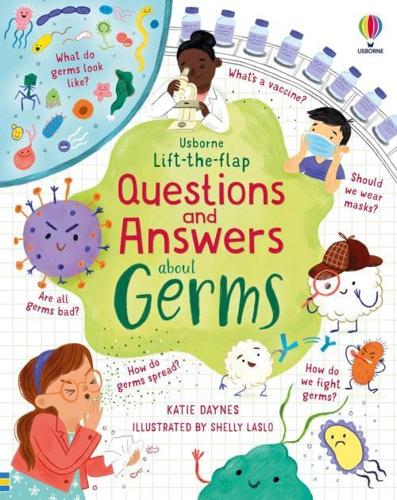
Questions and Answers About Germs by Katie Daynes, illustrated by Shelly Laslo
Why do germs make us sick? How does the body fight back? And can microbes ever be helpful? These are some of the questions tackled in Katie Daynes’s interactive book. Children lift flaps to uncover answers, meet the people who investigate infection and discover that harmless and beneficial microbes vastly outnumber the troublesome ones. Shelly Laslo’s characterful illustrations bring the explanations to life.
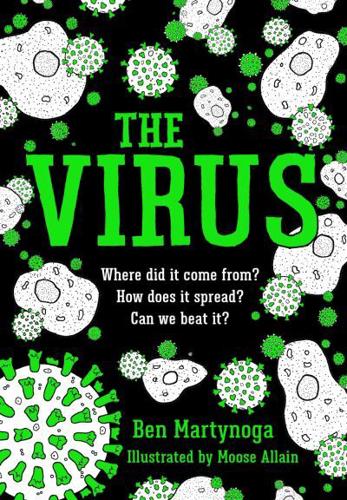
The Virus by Ben Martynoga, illustrated by Moose Allain
How can something so small change so many lives? Ben Martynoga explains what viruses are, how they enter and use human cells, and why the body has such an elaborate system for fighting them. COVID-19 provides a real-world context, while Moose Allain’s cartoons help unpack the science. There is room for humour as well as the serious questions raised by a pandemic. This illustrated science book gives older primary children a vocabulary for discussing viruses, infection and the body’s defences.
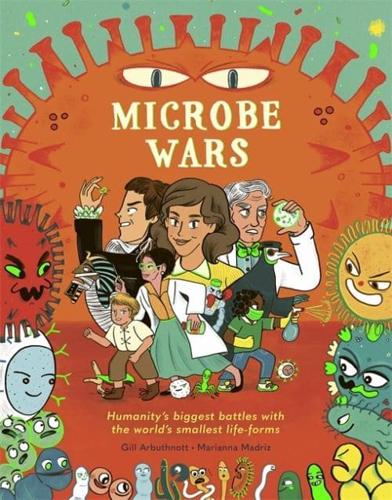
Microbe Wars by Gill Arbuthnott, illustrated by Marianna Madriz
Disease outbreaks have altered human history, but the story of microbes also includes remarkable medical discoveries. Gill Arbuthnott takes 7+ year olds from the Black Death and influenza to the development of vaccines and antibiotics, showing how scientists have gradually learned more about infection. Marianna Madriz’s illustrations help tell the stories of the people and ideas behind these breakthroughs. There is space for the helpful work microbes do too, from digestion to food production, making this a broad and absorbing history of microbiology.
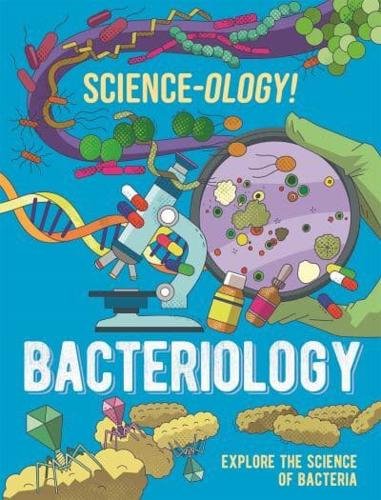
Science-ology!: Bacteriology by Anna Claybourne, illustrated by Daniel Limon
What does a bacteriologist actually do? Anna Claybourne takes 9+ year olds into the laboratory to find out how scientists study bacteria, which equipment they use and what earlier discoveries have taught us. Case studies show the work in action, including the surprising ways some viruses can be used against bacteria. Photographs and Daniel Limon’s illustrations make this an inviting look at microbiology as a real job.
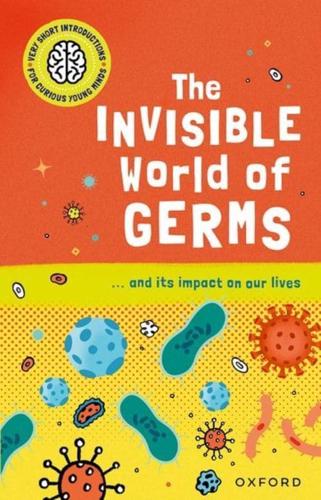
Very Short Introductions for Curious Young Minds: The Invisible World of Germs by Isabel Thomas
Invisible germs have shaped medicine and the way people live, but the term covers several very different kinds of microbe. Isabel Thomas unpicks this subject through short, approachable explanations, illustrations and comic-strip elements. Bacteria, viruses and other microscopic organisms take their places in a bigger story that includes scientific discoveries and the development of germ theory.
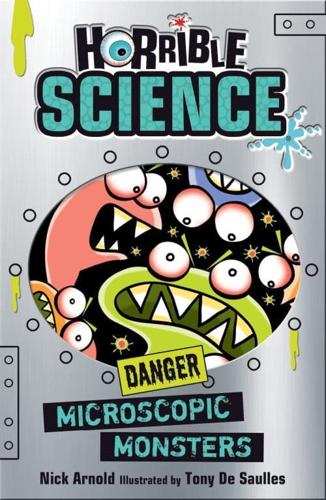
Horrible Science: Microscopic Monsters by Nick Arnold, illustrated by Tony De Saulles
Nick Arnold heads into the world of microscopic life with the Horrible Science mixture of unusual facts, jokes and gloriously gruesome details. Readers encounter the tiny organisms that live on and inside us, including bacteria and other microbes, as well as the strange ways that microscopic creatures survive. Tony De Saulles supplies the familiar comic artwork.
Germs books for teens
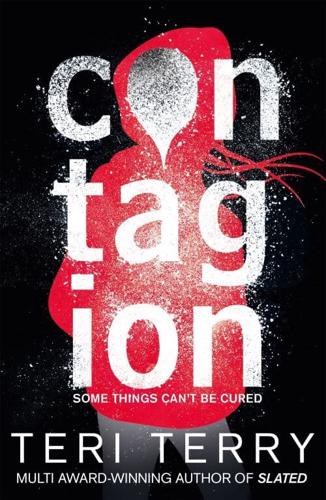
Dark Matter: Contagion by Teri Terry
A deadly epidemic sweeps Scotland, and those who become infected face quarantine and military detention. Twelve-year-old Callie survives the disease but dies following an experimental treatment at a secret research facility. Yet something of her remains. Her brother Kai is determined to find her, while his new friend Shay may hold vital clues to what happened. Teri Terry’s opening Dark Matter novel combines science fiction, supernatural suspense and conspiracy, exploring the frightening consequences of infection, secrecy and unchecked authority.
All Better Now by Neal Shusterman
A virus is spreading, and its survivors experience an extraordinary change: they become permanently content. As more people welcome the effects, others begin campaigning against the disease, and the hunt for a vaccine gathers pace. Three teenagers from very different backgrounds are pulled into the struggle over what should happen next. Neal Shusterman’s dystopian thriller for 14+ year olds uses an infectious illness to examine power, persuasion and the value society places on happiness. The central question is unsettling: who gets to decide whether a cure is needed?

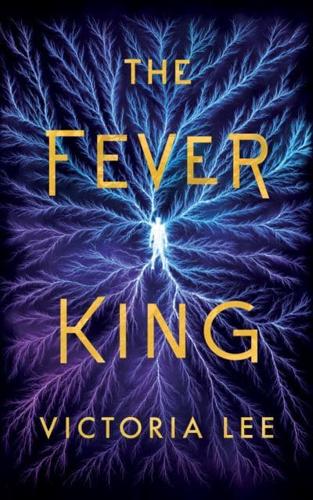
The Fever King by Victoria Lee
Sixteen-year-old Noam Álvaro survives a deadly magical virus that kills his family and leaves him with the ability to control technology. In the divided former United States, his new powers bring him to the attention of the government, even as he campaigns for people displaced by outbreaks. Victoria Lee blends an infection-driven fantasy premise with political intrigue, loyalty and romance. Noam’s efforts to change the system become more complicated as he learns whom he can trust. A YA novel with a distinctive take on disease and power.
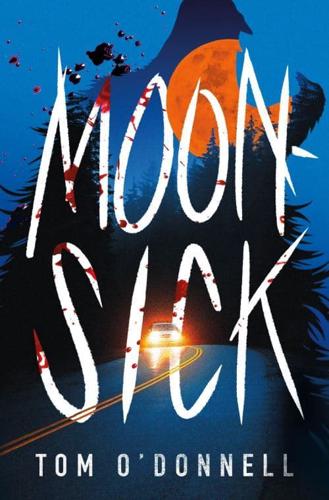
Moonsick by Tom O’Donnell
Heidi Mills lives in a society that knows how to lock itself away from the lupino virus, a disease connected to terrifying transformations. After intruders break into her home, she is bitten and faces a desperate search for a cure before the next full moon. Her journey takes her beyond the protected life she knows and into the divisions of a post-pandemic world. A gripping YA horror novel, Moonsick brings infection, privilege and werewolf mythology together in a fast-moving thriller.
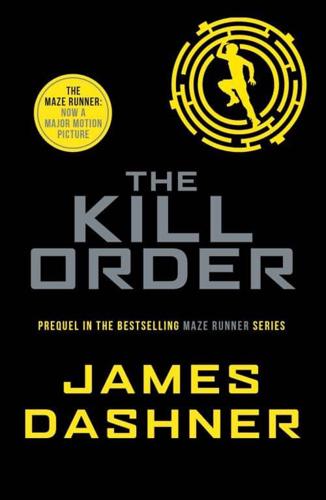
The Kill Order by James Dashner
Before the events of The Maze Runner, the world has already been devastated by solar flares. Mark and the people around him are struggling to survive when an even more disturbing threat appears: a deadly illness spreading through the survivors. James Dashner’s prequel follows their efforts to understand and escape the outbreak as civilisation continues to unravel. Disease is central to the plot, making this a natural pick for teens interested in dystopian fiction, epidemics and the origins of a larger series.
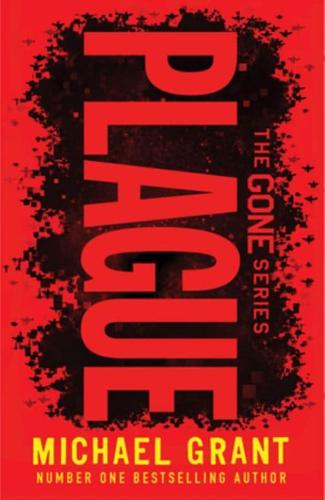
Plague by Michael Grant
Inside the strange world of the Gone novels, the young survivors face another crisis as a frightening illness begins to spread. Michael Grant adds disease to a setting already shaped by isolation, dwindling supplies and the struggle to maintain order. The fourth book in the series combines epidemic horror with the continuing relationships and conflicts between the characters. Its intense events give established Gone fans a new challenge to follow, as fear of infection changes life for the teenagers trapped together.
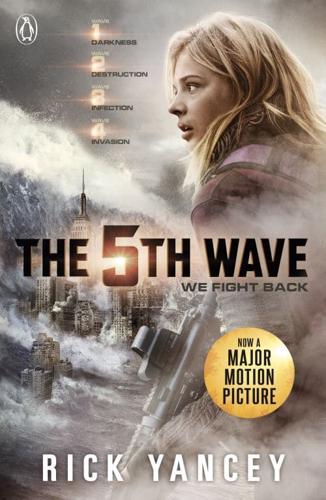
The 5th Wave by Rick Yancey
After an alien invasion, humanity has been attacked in successive waves, including a devastating disease. Cassie is among the survivors, trying to stay alive and find her younger brother in a world where even another human face may be a threat. Rick Yancey’s opening novel blends a large-scale disaster with Cassie’s personal search. The outbreak is one of the invaders’ weapons, making infection part of a wider story about survival, uncertainty and whom to trust.
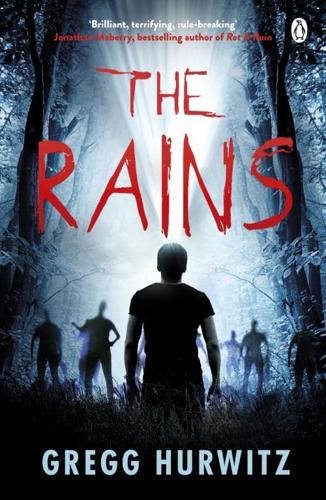
The Rains by Gregg Hurwitz
A mysterious infection is turning adults into dangerous, altered versions of themselves. Teenage brothers Chance and Patrick Rain take refuge with other survivors, but Patrick’s eighteenth birthday is dangerously close. Chance must find a way to protect him before the disease can claim him too. Gregg Hurwitz gives this YA horror story an unusually sharp deadline, placing the brothers’ relationship at the heart of the outbreak. It is a tense tale of infection, survival and the frightening boundary between childhood and adulthood.
Click the buttons below to purchase all of the books in this germs book list, as well as class sets of any of these books and many more, from Bookshop.org UK. Or buy 20 selected titles from this list from Amazon – ideal for gifts or your classroom library.
Buy from UK.Bookshop.Org Buy from Amazon.co.ukDisclosure: If you buy books using the buttons above: we may earn a commission from Bookshop.org, whose fees support independent bookshops; as an Amazon Associate schoolreadinglist.co.uk earns from qualifying purchases.
Schools & teachers: please respect copyright and don’t copy our germs books for children and teens list. If you find our book recommendations useful, please consider sharing on social media or linking to this page instead. Thanks.
Germs resources for teachers
- The UK Health Security Agency’s e-Bug programme provides free, curriculum-linked lesson plans, presentations, worksheets and practical activities for children aged 3-16. Topics include useful and harmful microbes, handwashing, respiratory hygiene, infections, vaccinations, antibiotics and antimicrobial resistance.
- STEM Learning has compiled a collection of primary science resources exploring bacteria, viruses, fungi and the spread of infection. Activities include investigating hand hygiene, demonstrating how germs spread through sneezing, studying useful microbes in breadmaking and exploring the body’s immune defences.
- The PSHE Association offers a handwashing lesson pack for KS1, with suggested adaptations for KS2. It helps pupils understand why and when to wash their hands, practise effective handwashing techniques and develop healthy personal hygiene routines.
- A Germ’s Journey provides downloadable teaching resources for EYFS and KS1, including lesson plans, posters, colouring sheets, handwashing activities and videos. Children can investigate how invisible germs spread using paint, glow gel and pepper experiments, alongside activities exploring helpful and harmful microbes.
- NHS Scotland’s children’s hand hygiene pack includes teacher activity ideas, illustrated posters, reward charts, printable stickers and an animated film. Designed for children aged 3-6, the resources encourage effective handwashing in nurseries, Reception classes and other early years settings.
- WaterAid offers free teaching resources for EYFS through KS4, including classroom presentations, craft activities, experiments and a schools film. Its Global Handwashing Day materials explore germs, the importance of soap and clean water, and the challenges faced by communities without adequate hygiene facilities.
- Food Standards Scotland’s Germ Outbreak activity introduces nursery and younger primary pupils to germs and how they spread. The three-session resource includes a handwashing video, chalk or glitter experiments, classroom discussions and poster-making activities, with links to Scotland’s Curriculum for Excellence.
- For older primary pupils, Food Standards Scotland’s Stop the Germs! provides worksheets and practical investigations into bacteria and cross-contamination. Pupils trace how germs move around a school, identify sources of food-poisoning bacteria and create posters, dramas or videos explaining how to prevent infection.
- Food Standards Scotland’s Bacteria Busters is an interactive activity for secondary pupils exploring how bacteria grow in kitchens. Using an interactive kitchen scene and worksheet, students identify potential sources of contamination, investigate the conditions bacteria need to multiply and suggest ways of reducing food-poisoning risks.
- The University of Dundee provides free microbiology education resources for primary and secondary schools, including illustrated workbooks, photographs of microbes, activity books, videos and teacher guides. Highlights include Hidden Life on Your Hands, biofilm games and activities exploring the diversity of microscopic life.
- The Microbiology Society offers educational animations, games, articles and activities covering bacteria, viruses, fungi, the immune system and antimicrobial resistance. Resources include The Super Cells animation and workbook, microbiology investigations and materials exploring both beneficial and harmful microbes.
- For secondary science teachers, the Microbiology Society’s Practical Microbiology for Secondary Schools provides a free downloadable guide containing 21 practical investigations suitable for KS3, GCSE and equivalent Scottish qualifications. Many activities can also be adapted for A-level biology and project work.
- The Rosalind Franklin Institute’s Virus Factory in Schools offers free teaching materials for KS2 and KS3 exploring viruses, cells, DNA, microscopy and scientific research. Resources include workshop plans, an educator guide, videos, citizen science activities and opportunities for pupils to engage with researchers.
- For school staff, the UK Health Security Agency’s health protection guidance provides practical advice on preventing and managing infectious diseases in education and childcare settings. It covers hand hygiene, respiratory infections, cleaning, outbreaks, immunisation and guidance on when children should stay away from school.
BISAC JNF051050, JNF024020, JNF024060. | Thema YNTA, YNN, YXA.