Life cycle books for children and teens
A tiny egg becomes a butterfly, an acorn grows into a towering oak, and cells carry the instructions that shape living things. These life cycle books for children and teens follow nature from first beginnings through growth, reproduction and change. Picture books introduce familiar animals and plants, illustrated non-fiction answers bigger questions, and the books for older students investigate hormones, inheritance and evolution. There are ideas here for storytimes, science lessons, school gardening and independent reading. This list features books by Eric Carle, Julia Donaldson, Yuval Zommer, Jen Green, Benji Davies, Lesley Sims, Ben Martynoga, Hannah Witton, Lindsay Turnbull, and Barbara Taylor.
Life cycle books for children and teens – our recommendations
Life cycle picture books for 3-7 year olds
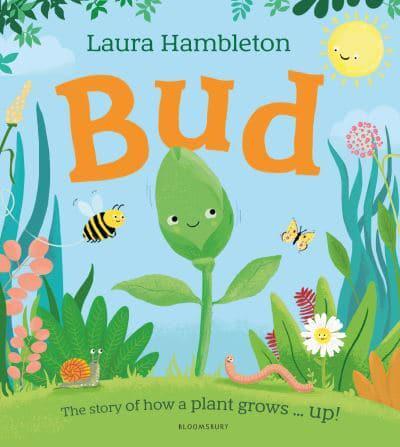
Bud: The story of how a plant grows … up! by Laura Hambleton
Bud is a small rosebud growing in a red pot in a greenhouse. Sun keeps Bud warm, Moon tells stories of the outside world, and then everything changes when Bud is planted outdoors. Laura Hambleton combines a gentle growing-up story with facts about what happens as a plant develops. There are trees, worms and an unfamiliar new environment for Bud to discover. This colourful picture book for 3+ year olds makes a lovely starting point for looking at plant growth and talking about changes that come with growing up.
Bird Is Dead by Tiny Fisscher, illustrated by Herma Starreveld
Bird Is Dead offers a frank approach to death and grief for children aged 4 to 8. With quirky and striking collage illustrations it approaches the topic with understanding, sensitivity and practicality – an approach which parents and teachers will find useful to prompt discussions in families and classrooms.

The Very Hungry Caterpillar by Eric Carle
An egg rests on a leaf, a caterpillar hatches and a remarkable appetite takes over. Eric Carle’s familiar picture book follows the caterpillar through the days of the week, the food it eats and the changes leading to its transformation into a butterfly. Bright collage illustrations and the holes through the pages make the sequence especially memorable. Children can enjoy the story aloud and then return to the pictures to trace the stages of a butterfly’s life cycle, from egg to caterpillar to adult.

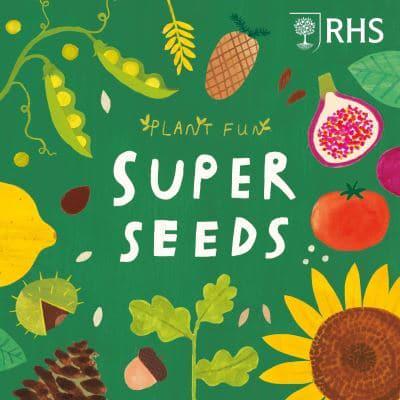
The Oak Tree by Julia Donaldson, illustrated by Victoria Sandøy
One acorn begins a story that stretches across a thousand years. Julia Donaldson’s rhyming text follows an oak as it grows into a magnificent tree, providing shelter for birds, beetles, squirrels and other wildlife. Generations of people pass beneath its branches, and Victoria Sandøy’s illustrations show the seasons and centuries changing around it. When the old tree eventually falls, another acorn begins to grow.
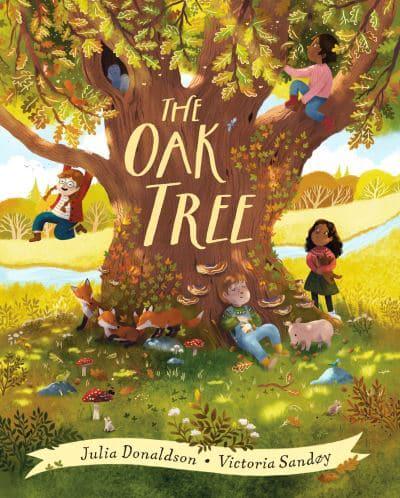
Rosa’s Big Sunflower Experiment by Jessica Spanyol
Rosa and her friends set about growing sunflowers, filling pots with soil, planting seeds and labelling their work before finding the right spot for the plants. Their experiment introduces the practical steps involved in growing flowers and watching changes take place over time. Jessica Spanyol’s illustrations keep the focus on the children working together and enjoying the process. This story is particularly handy alongside a real classroom growing project, when children can compare what happens in their own pots with Rosa’s sunflower experiment.
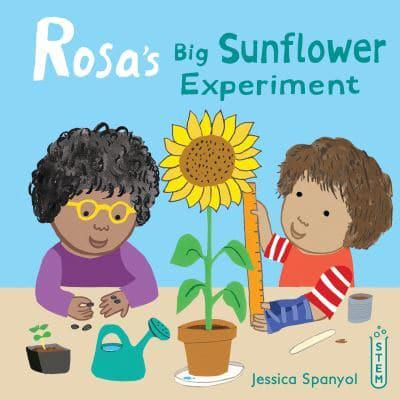
Plant Fun: Super Seeds by Susie Williams, illustrated by Hannah Tolson
Just how does a seed become a plant? This illustrated science book looks inside seeds and follows the changes that allow them to germinate and grow. It also introduces some remarkable examples from the plant world, showing how widely seeds can vary. Hannah Tolson’s bright pictures accompany Susie Williams’s explanations, turning an everyday object into something worth examining closely. Written for 5+ year olds, it gives children plenty to notice when they collect seeds outdoors or start planting them in pots at school.
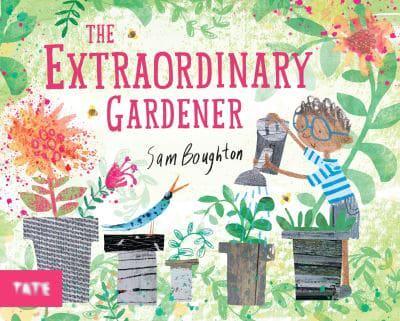
The Extraordinary Gardener by Sam Boughton
Joe lives in a tower block and imagines a world bursting with greenery. He plants a seed on his balcony and waits for it to grow. What begins with one small plant leads him to grow more, and soon his neighbours become part of the transformation. Sam Boughton’s picture book makes the passage from seed to growing tree part of an uplifting story about sharing plants and bringing colour to a city. The illustrations offer plenty of detail for conversations about how plants grow and the places where people can nurture them.
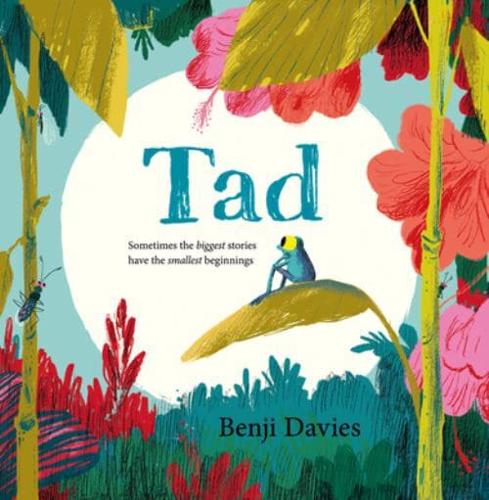
Tad by Benji Davies
Tad is the smallest tadpole in a very big pond. Her brothers and sisters seem to be changing faster than she is, and something called Big Blub lurks beneath the water. As the other tadpoles disappear, Tad wonders whether she will ever catch up. Benji Davies draws the pond in rich colours and gives the natural process of becoming a frog the shape of an exciting story. This picture book for 3-5 year olds can lead neatly into looking at tadpoles, developing legs and the changes that happen before a frog leaves the water.
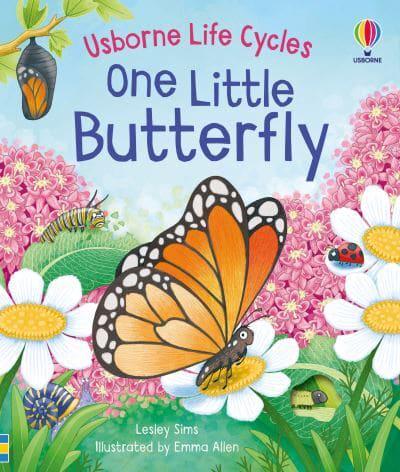
One Little Butterfly by Lesley Sims, illustrated by Emma Allen
A tiny egg becomes a caterpillar, the caterpillar feeds and grows, and finally a butterfly emerges from its chrysalis. Lesley Sims takes children through these familiar stages in a small board book with cut-out holes that reveal what is happening from one page to the next. Emma Allen’s illustrations make the transformation easy to follow, especially when children want to return to an earlier stage and look again. Its interactive pages give 3+ year olds a hands-on introduction to one of the natural world’s most striking life cycles.
Life cycle books for children aged 7-12
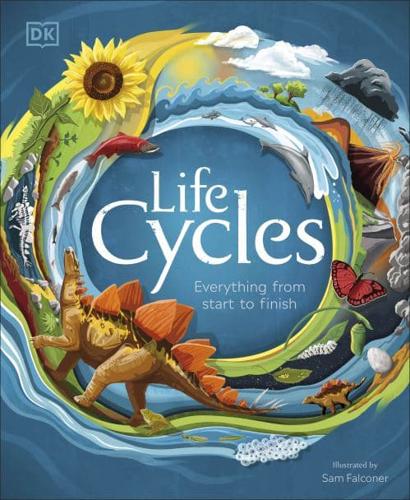
Life Cycles: Everything from Start to Finish by DK, illustrated by Sam Falconer
What happens between the beginning and end of a living thing’s life? This large illustrated reference book opens that question out to more than sixty cycles and natural processes. Children can follow the lives of animals and plants, look at human development and discover how different parts of the natural world are connected. Sam Falconer’s detailed illustrations sit alongside photographs and short explanations.
The Tomorrow Tree by Maciej Michno and Danio Miserocchi, illustrated by Valentina Gottardi
This beautifully illustrated nonfiction picture book explores what happens after a tree falls, and why that’s just the beginning of the story. From fungi and insects to birds and mammals, it shows how a fallen tree becomes a hub of life in the forest. Aimed at primary-aged children, it introduces big ideas like life cycles, biodiversity, and sustainability in a way that’s clear and engaging. Written by Maciej Michno and Danio Miserocchi, with a focus on nature’s hidden heroes. Highly recommended for 7-9 year olds.

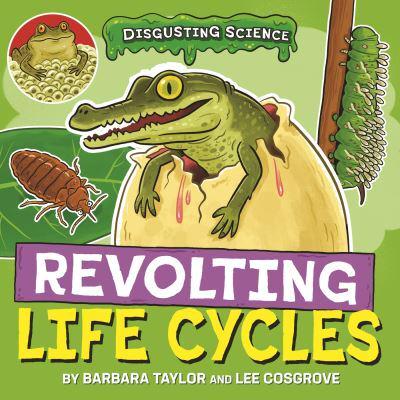
Disgusting Science: Revolting Life Cycles by Barbara Taylor, illustrated by Lee Cosgrove
Some animal life cycles involve behaviour that seems extraordinary to humans. Barbara Taylor introduces the startling ways creatures grow, survive and reproduce, including owlets competing with their siblings and parents that eat their own young. Lee Cosgrove’s cartoon illustrations and the book’s science activities help explain what is happening behind these unusual examples. For 7+ year olds, the emphasis on curious and sometimes revolting facts makes biological processes memorable, while the subject remains firmly rooted in how animals complete their life cycles.
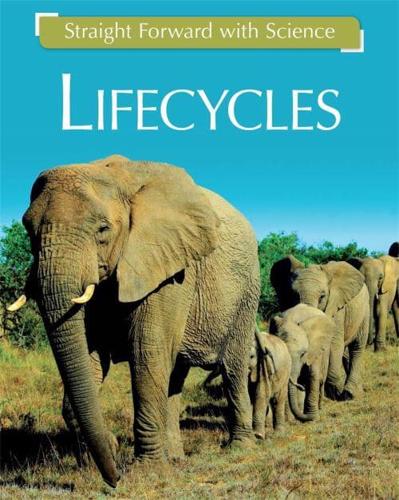
Straight Forward with Science: Life Cycles by Peter Riley
Plants, amphibians, birds and insects all develop in different ways. Peter Riley introduces their life cycles through straightforward explanations and practical science tasks. Children can compare the stages of growth and development across groups of living things, noticing where processes are similar and where they differ. The activities encourage them to investigate what they have read and connect the diagrams and descriptions with familiar examples.
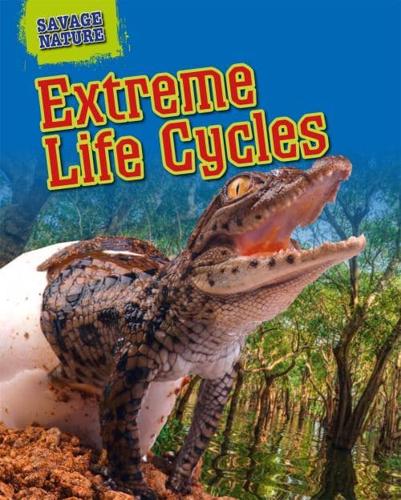
Savage Nature: Extreme Life Cycles by Louise Spilsbury
From a fungus that turns ants into hosts to tapeworms living inside other animals, nature has some astonishing reproductive strategies. Louise Spilsbury investigates how organisms develop and survive when the obstacles to completing their life cycles are especially challenging. Examples from around the world bring together biology, adaptation and natural history. Fact boxes add detail to the main explanations.
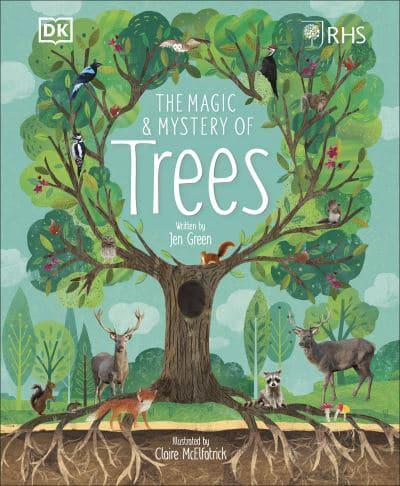
RHS The Magic and Mystery of Trees by Jen Green, illustrated by Claire McElfatrick
Trees have extraordinary stories to tell, starting with a seed and continuing through years of growth. Jen Green introduces the hidden processes that help trees live, from their roots to their leaves, as well as the relationships they form with other organisms. Claire McElfatrick’s illustrations make the science visible through detailed scenes of trees and forests. Children can discover how trees support wildlife and respond to their surroundings, then use what they have learned to observe a familiar tree through the changing seasons.
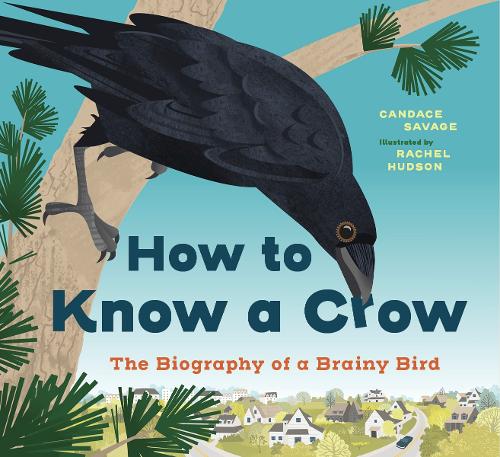
How to Know a Crow by Candace Savage
Candace Savage follows Oki, a young American crow, from the moment she hatches to the time she raises a family of her own. Along the way, readers discover how crows communicate, play, learn, find food and care for their young. Scientific research provides fascinating insights into these intelligent birds, while Rachel Hudson’s detailed illustrations bring their behaviour and family relationships to life. Written for 9-12 year olds, this engaging nonfiction book combines the life cycle of a crow with a wider exploration of animal intelligence, social behaviour and the natural world.
Evolution: Join Us on an Exhilarating Journey from the Origins of Life to the Present Day! by Sarah Darwin and Eva-Maria Sadowski, illustrated by Olga Baumert
Evolution works over many generations, shaping the plants and animals whose life cycles we see today. Scientists Sarah Darwin and Eva-Maria Sadowski tell the story of life on Earth from its earliest beginnings, introducing natural selection and the work of Charles Darwin and Alfred Russel Wallace. Olga Baumert’s large illustrations, diagrams and a timeline help connect events that happened millions of years apart.

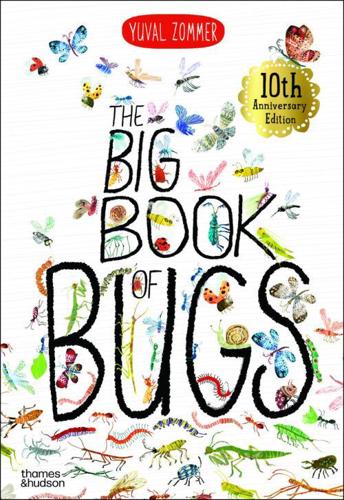
The Big Book of Bugs: 10th Anniversary Edition by Yuval Zommer
Why do bugs lay eggs, and what happens to their young? Yuval Zommer introduces beetles, butterflies, bees, moths and many other small creatures in this large illustrated guide. Pages on baby bugs and life cycles sit among sections on feeding, movement, habitats and the fascinating variety of invertebrates. Children can search for creatures in the detailed pictures while picking up facts about how they live and reproduce.
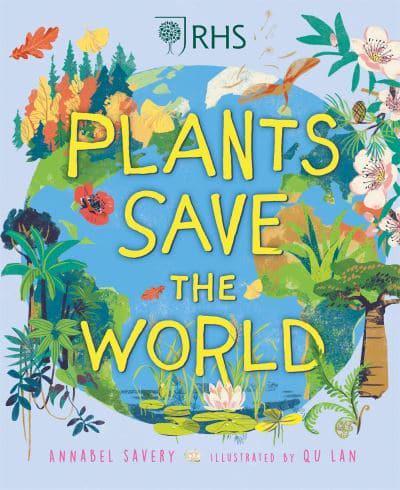
Plants Save the World by Annabel Savery, illustrated by QU Lan
Plants do far more than grow from seeds. In this illustrated nonfiction book, produced with the Royal Horticultural Society, Annabel Savery explores how plants provide food and medicine, clean the air, shelter wildlife and help reduce flooding. From weeds and mosses to towering trees, readers discover how plants support food chains and ecosystems, and why protecting them matters. QU Lan’s detailed illustrations bring these examples to life. With practical ideas for helping plants thrive, this engaging book for 7+ year olds connects plant life cycles with biodiversity, conservation and the natural world.
Life cycle books for teens aged 13+
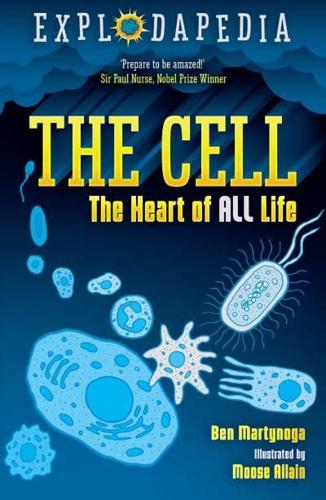
Explodapedia: The Cell by Ben Martynoga, illustrated by Moose Allain
Every plant and animal begins with cells, and the processes taking place inside them make growth and development possible. Ben Martynoga looks closely at these fundamental units of life, explaining the biology beneath the creatures and ecosystems we see around us. Moose Allain brings the ideas to the page through energetic illustrations. This illustrated science book gives teenagers a way into the cellular processes behind life cycles, linking what happens in individual cells with the development and continuing existence of complex living organisms.
Explodapedia: Evolution by Ben Martynoga, illustrated by Moose Allain
Why do organisms change over many generations, and how do the characteristics of a species develop? Ben Martynoga turns to evolutionary biology to explain how life has become so varied. Moose Allain’s illustrations bring scientific ideas and examples into sharp focus. The book takes teenagers beyond the stages in a single animal’s life to consider the much longer timescale of adaptation and evolutionary change. It pairs well with books about reproduction and inheritance, where the passing of genetic information from one generation to the next becomes central.
Biology: The Whole Story by Lindsay Turnbull, illustrated by Cécile Girardin
Beginning with the origins of life, Lindsay Turnbull follows the development of the living world through to modern ecosystems. Along the way she explains biological ideas and how discoveries have helped us understand the organisms sharing our planet. Cécile Girardin’s illustrations give the substantial text a strong visual dimension. There is plenty here for teenagers interested in the relationship between growth, reproduction, inheritance and evolution. The book also places individual life processes within a much bigger history of life on Earth.
Super Simple Biology: The Ultimate Bitesize Study Guide by DK
Reproduction, inheritance, cell biology and ecosystems all appear in this illustrated secondary-school biology guide. Short explanations are accompanied by diagrams and focused boxes that unpack how important processes work. Sections headed ‘How it works’, ‘Look closer’ and ‘Key facts’ help students check their understanding and revisit the science. For teenagers studying life cycles as part of a wider biology course, it brings together the underlying processes involved in producing new organisms, passing on characteristics and developing from one life stage to another.
Reproduction Biology by Joy Hinson and Peter Raven
Organisms have evolved many ways to reproduce and help their offspring survive. Joy Hinson and Peter Raven look at sexual and asexual reproduction across plants, animals and humans, including pollination, attracting mates and caring for young. They also examine how environmental changes affect reproductive success and introduce current work in human reproductive science. This Oxford Biology Primer gives sixth-form biology students a focused account of the processes that allow life cycles to begin again in a new generation.
Hormones by Joy Hinson and Peter Raven
Hormones help regulate the changes that happen as organisms grow and reproduce. Joy Hinson and Peter Raven introduce the endocrine system and its part in development, behaviour and reproduction. Human biology provides the main thread, while examples from other species include amphibian metamorphosis, ovulation, changes in fish and bonding behaviour in birds. The book connects school biology with further study, making it particularly relevant to students investigating the mechanisms behind developmental stages and reproductive cycles.
Evolution by Neil Ingram, Sylvia Hixson Andrews and Jane Still
Evolution depends on variation and inheritance across successive generations. Neil Ingram, Sylvia Hixson Andrews and Jane Still introduce the principles that explain how populations change over time, building on ideas encountered in school biology. This Oxford Biology Primer offers a route into more advanced study. It complements an examination of plant and animal life cycles by showing what happens when reproduction, inherited characteristics and natural selection are considered across many generations rather than within the life of one organism.
The Hormone Diaries: The Bloody Truth About Our Periods by Hannah Witton
Hannah Witton writes about periods and hormones with a direct, conversational voice, drawing on her own experiences, research and stories shared by other people. Topics include the first period, hormonal contraception, polycystic ovary syndrome and endometriosis. The result is a book for teenagers who want to understand the menstrual cycle as part of everyday life, with room for practical questions and different experiences. It brings a human perspective to the biology of puberty, hormones and reproductive cycles that students may first meet in science lessons.
Click the buttons below to purchase all of the books in this life cycles list, as well as class sets of any of these books and many more, from Bookshop.org UK. Or all the titles from this list from Amazon – ideal for gifts or your classroom library.
Buy from UK.Bookshop.Org Buy from Amazon.co.ukDisclosure: If you buy books using the buttons above: we may earn a commission from Bookshop.org, whose fees support independent bookshops; as an Amazon Associate schoolreadinglist.co.uk earns from qualifying purchases.
Schools & teachers: please respect copyright and don’t copy our life cycle books list. If you find our book recommendations useful, please consider sharing on social media or linking to this page instead. Thanks.
Life cycle resources for teachers
- Oak National Academy provides a comprehensive series of free Year 5 science lessons exploring the life cycles of mammals, birds, amphibians and insects. Resources include downloadable PowerPoint presentations, worksheets, videos and quizzes. Pupils investigate metamorphosis, compare animal life cycles and explore how different species grow and reproduce.
- The Linnean Society’s Life Cycles Activity Pack, available through STEM Learning, features practical science activities for KS1 and KS2. Children can model seed dispersal and insect pollination, observe tadpole development, make butterfly feeders, create insect gardens and complete a life cycle quiz hunt. Many activities use equipment readily available in primary schools.
- Butterfly Conservation offers an animated film, downloadable life cycle guide and illustrated worksheets for children aged 5-7 and 7-11. The resources follow butterflies and moths through their four stages of metamorphosis, from egg and caterpillar to pupa and adult. A time-lapse film shows an orange-tip caterpillar transforming into a chrysalis.
- The Royal Horticultural Society’s All About Seeds teaching resource provides practical KS1 and KS2 activities investigating how plants grow and reproduce. Pupils collect and examine seeds, learn about germination, design seed packets and write planting instructions. The activities combine science with English, art and design technology.
- The Natural History Museum provides KS2 teaching resources, videos and activities exploring life cycles, habitats and classification. Its Plant Club activity encourages children to grow seeds and record their development in a plant diary. Short films show butterflies emerging from chrysalises, how peanuts grow and the different ways plants disperse their seeds.
- The Science & Plants for Schools resources, hosted by STEM Learning, include downloadable teacher guidance, worksheets, presentations and practical investigations into plant reproduction. Activities explore flower structure, pollination, fertilisation, fruit formation and seed dispersal. Children can dissect flowers, examine different fruits and investigate how plants produce new generations.
- Froglife’s educational resources offer amphibian fact files, classroom activities and presentations to support learning about frogs, toads and newts. Teachers can use the materials to explore amphibian development, compare frogs and toads, investigate habitats and discuss the environmental threats affecting these animals. Cross-curricular activities include poetry, art and food chains.
- The Bell Foundation’s Life Cycle of a Frog resource is particularly useful for supporting pupils who use English as an additional language. Free teaching notes, PowerPoint presentations, differentiated flashcards, matching activities and sentence-building tables help children describe the transformation from frogspawn to adult frog while developing scientific vocabulary and spoken English.
- Oak National Academy’s plant life cycles unit provides nine Year 5 lessons exploring plant reproduction, flower structure, pollination, fertilisation, seed formation and dispersal. Pupils also investigate asexual reproduction and growing plants from cuttings. Downloadable resources include slides, worksheets and quizzes, with opportunities to develop scientific observation and enquiry skills.
- The Royal Horticultural Society’s Bees, Pollination, Habitats and Conservation resource features editable PowerPoint presentations and activities organised throughout the year. Pupils learn about the life cycle of bumblebees, the importance of pollinators in plant reproduction and how environmental changes affect bee populations. Practical tasks include planting bee-friendly flowers and investigating pollination in the school grounds.
- The Woodland Trust’s Tree Tools for Schools provides free curriculum-linked outdoor learning activities, wildlife identification sheets, interactive resources and printable worksheets for KS1, KS2 and KS3. Teachers can use its Nature Detectives activities to investigate seasonal changes, study trees and wildlife, observe plant development and record changes in the school environment.
- The Oak National Academy’s Human Development unit contains eleven Year 5 science lessons examining the human life cycle from birth to old age. Teaching resources cover childhood, adolescence, puberty, adulthood and ageing. Pupils can also investigate changes in human height, collect information, construct line graphs and make predictions using scientific data.
- National Geographic Kids has an illustrated guide to the life cycle of a frog, explaining how frogspawn develops into tadpoles, froglets and adult frogs. The photographs, accessible explanations and scientific vocabulary make it useful for KS1 and KS2 reading comprehension, independent research and producing annotated life cycle diagrams.
- The Royal Horticultural Society’s dandelion resource explores the life cycle of a familiar flowering plant and its importance to wildlife. Pupils can study germination, flowering, pollination and wind dispersal, watch a life cycle video and investigate dandelions growing in the school grounds. Reflection questions encourage children to consider the relationship between plants, insects and birds.
- STEM Learning’s Reproduction in Plants collection provides supplementary resources for KS3 and GCSE biology. Activities investigate flower structure, wind and insect pollination, fertilisation, seed formation and dispersal. Practical ideas include examining pollen tube growth under a microscope, exploring vegetative reproduction through cuttings and investigating how plants reproduce in different environments.
- The PSHE Association’s Changing and Growing Up lesson pack supports age-appropriate teaching about the human life cycle, physical development and puberty. KS1 lessons introduce growing and changing, while KS2 activities explore adolescence, personal hygiene, healthy relationships and the changes experienced during puberty. The updated materials include animations and teacher guidance; access to the lesson pack requires membership.
BISAC JNF051050, JNF051000. | Thema YNN, YNNT, YFP.