Antarctica books for children and teens
Antarctica books for children and teens bring together stories of polar exploration, wildlife, science and life on the ice. Younger readers can meet penguins, follow Shackleton’s crew and discover how researchers work in remote stations. Older readers can turn to expedition accounts, memoirs, travel writing, maps and fiction set in the south. This list spans illustrated non-fiction, an interactive adventure, historical narrative and first-hand accounts, offering classroom links across geography, history and reading for pleasure. This list features books by William Grill, Holly Webb, Sheena Dempsey, Helen Scales, Ernest Shackleton, Ranulph Fiennes, Sara Wheeler, Favel Parrett, Ally Wilkes, and Marc Martin.
Antarctica books for children and teens – our recommendations
Antarctica books for children aged 5-12
Clang! by Sam Usher
In Clang!, Boy and Grandad embark on an imaginative adventure to find Boy’s lost toy penguin, transforming an old bath into a boat to journey to the South Pole. Aimed at children aged 2-7, Clang! will encourage creativity, imagination, and problem-solving while subtly introducing scientific concepts. With emotive illustrations and carefully considered text, it also positively reinforces the strong, supportive relationship between Boy and his Grandad. Highly recommended.

Pablo and Splash by Sheena Dempsey
Two penguins, Pablo and Splash, set out on a hilarious time-travel adventure to the age of dinosaurs. While Splash is all about excitement and warmth, far from their chilly Antarctic home, Pablo prefers a quieter life. After a mishap in a scientist’s lab, they accidentally activate a time machine and land on a beach full of dinosaurs. With witty dialogue and expressive illustrations, the graphic novel perfectly captures the clash between cautious Pablo and daring Splash. This lively, fun read is perfect for emerging readers.

I Did See a Mammoth by Alex Willmore
An Antarctic expedition is meant to be all about penguins, until one young explorer spots something much larger, stranger and definitely extinct. With a woolly mammoth swimming, dancing and even skateboarding through the snow, this is a lively picture book for 5 year olds who like visual comedy, repeated disbelief and a child narrator who determindly knows exactly what they saw.

The Snowy Penguin by Holly Webb
Bella joins her mother on a research trip to Antarctica, where she spots a penguin with a rare pale brown coat. Determined to learn more, she stumbles into a strange time-slip that brings her face to face with nineteenth-century sailors determined to capture the bird. Holly Webb mixes perilous icy adventure with a touch of mystery in this magical and rewarding tale, introducing 6–8 year olds to the Antarctic landscape while exploring friendship, bravery and the need to protect vulnerable wildlife. It is ideal for LKS2 book clubs.

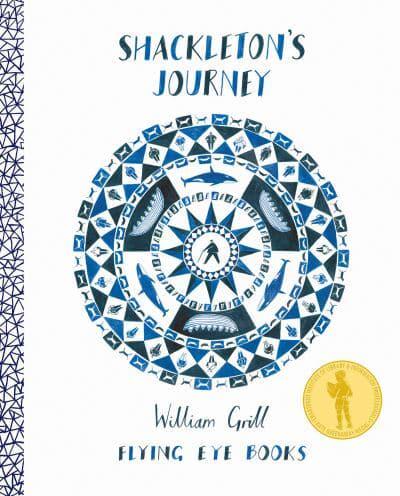
Shackleton’s Journey by William Grill
William Grill’s illustrated account of Shackleton’s 1914 Endurance expedition opens with the plan to cross Antarctica and follows the crew after their ship becomes trapped in pack ice. Maps, diagrams and closely observed scenes convey the scale of the journey and the conditions faced by the men. The narrative moves from the voyage south to the struggle to survive after Endurance is lost. This illustrated account for 7-11 year olds connects Antarctic geography with exploration history.
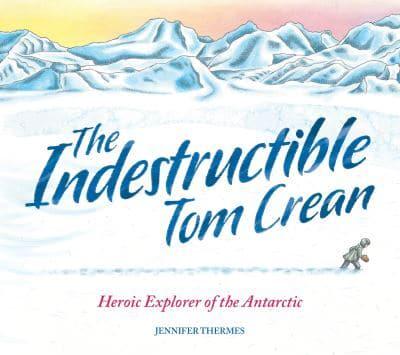
The Indestructible Tom Crean by Jennifer Thermes
Jennifer Thermes tells the true story of Irish explorer Tom Crean, a crewmate on the Discovery, Terra Nova and Endurance expeditions. Through Crean’s life, children encounter three major voyages and the risks faced by their crews during the early twentieth-century race to explore Antarctica.
All About Antarctica by Marc Martin
Marc Martin’s illustrated book travels across the southernmost continent, from Sno-Cats and icefalls to meteorites and migrating whales. Its pages introduce active volcanoes, colossal squid, research vessels and everyday life at a station, setting penguins and icebergs within a wider picture of Antarctic science and geography.

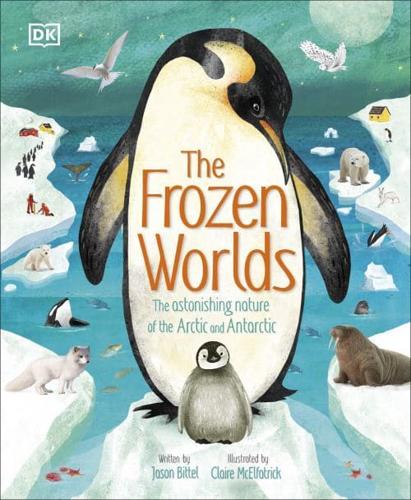
The Frozen Worlds by Jason Bittel, illustrated by Claire McElfatrick
Jason Bittel’s illustrated and photographic guide visits both the Arctic and Antarctic, introducing polar landscapes, animals and the science of life in extreme cold. Children can learn about iceberg formation, adaptations that help animals survive low temperatures and the ways scientists study Antarctica. The book also points to actions that can help protect the polar regions. Photographs, illustrations and concise facts let young readers compare the two poles while keeping Antarctic wildlife and research in view.
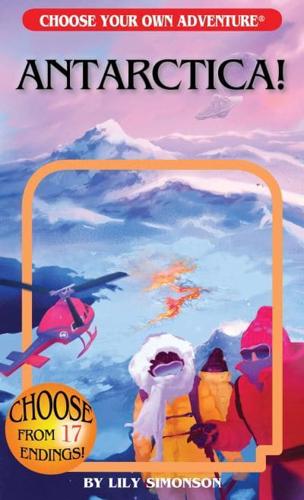
Antarctica! by Lily Simonson, illustrated by Vladimir Semionov
Lily Simonson’s interactive Choose Your Own Adventure places the reader as the youngest scientist in an Antarctic research team. A colleague goes missing just as the narrator is preparing to return to a remote research site; choices shape how the rescue and the experiment unfold. With 25 possible endings, the paperback invites 9+ year olds to navigate a story through decision-making, science and exploration.
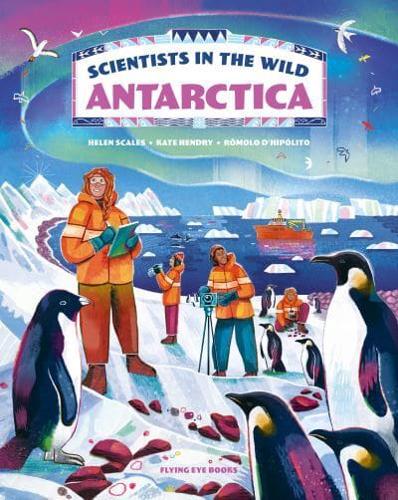
Scientists in the Wild: Antarctica by Helen Scales and Katharine Hendry, illustrated by Rômolo D’Hipólito
This illustrated non-fiction expedition for 8-12 year olds invites readers aboard a team of scientists sailing around Antarctica. Their work ranges from tracking wildlife with drones and satellites to studying fossils, searching for Shackleton’s Endurance with a deep-diving robot and reading ice cores. Helen Scales and Katharine Hendry connect research methods with the region’s vulnerable environment, while Rômolo D’Hipólito’s illustrations present the scientists’ work in story form.
Antarctica by Karen Romano Young
In this compelling collection of narrative non-fiction true stories about exploring and understanding Antarctica, pupils will gain a thorough understanding of the world’s most southerly continent. Packed with historical detail, STEM, geographical facts, environmental insights and wildlife guides, this lively illustrated hardback will appeal to children in KS2. With a useful glossary and source notes at the back of the book, it’s a perfect vehicle to spark independent learning.

Antarctica books for teens and sixth formers
Mawson in Antarctica by Joanna Grochowicz
This detailed and gripping narrative account of Douglas Mawson’s Australasian Antarctic Expedition from 1912-1914 is perfectly pitched to 10-14-year-olds. Drawing from archive diaries and letters, the harsh conditions and challenges faced by Mawson and his team are brought to life. Mawson in Antarctica highlights their scientific achievement, the power of friendship, and their resilience in enduring the severe Antarctic weather. Highly recommended for Y6-Y8. Read our full review.

In Shackleton’s Footsteps: A Return to the Heart of the Antarctic by Henry Worsley
Henry Worsley’s account links Shackleton’s 1908 attempt to reach the South Pole with Worsley’s own later retracing of the route. The earlier party turned back 97 miles short; a century later, Worsley’s team continued along the route and completed the remaining distance. The narrative covers both the original expedition and the planning, fundraising and training behind the modern journey, comparing polar travel across two eras.
Shackleton: Explorer. Leader. Legend. by Ranulph Fiennes
Ranulph Fiennes tells the story of Ernest Shackleton’s Antarctic expeditions, focusing on Endurance, trapped in ice during the attempted crossing. He places Shackleton’s decisions alongside previous expeditions, his rivalry with Captain Scott and what followed after the rescue. Drawing on his own polar experience, Fiennes revisits the winter on the ice, the crew’s survival and Shackleton’s efforts to reach help.
South: The Endurance Expedition by Ernest Shackleton
Shackleton’s own narrative recounts the 1914 Imperial Trans-Antarctic Expedition and events after Endurance became trapped in the Weddell Sea. As the ship is lost, he describes the crew’s progress from the ice to Elephant Island and the small-boat voyage to South Georgia to bring help. This first-person account combines expedition logistics, harsh conditions and Shackleton’s efforts to rescue every member of the party.
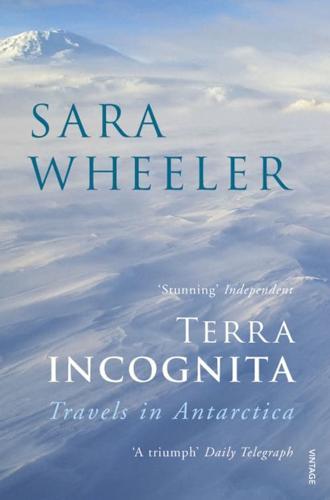
Terra Incognita: Travels in Antarctica by Sara Wheeler
Sara Wheeler’s travel narrative combines the landscape and history of Antarctica with observations of the people temporarily living there. She writes about myths surrounding the continent, the practical routines of life in remote stations and the contrast between small human settlements and the vast surrounding ice. The book brings travel writing, cultural observation and polar history together in a portrait of a place few people experience first-hand.
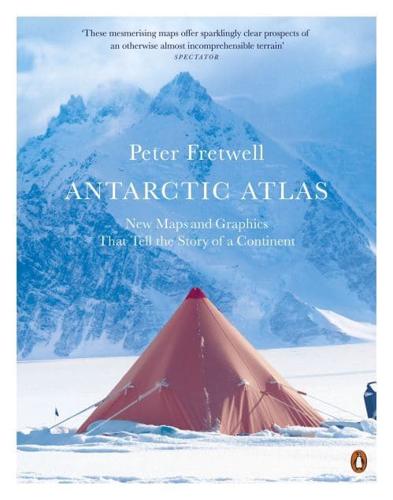
Antarctic Atlas: New Maps and Graphics That Tell the Story of A Continent by Peter Fretwell
British Antarctic Survey cartographer Peter Fretwell uses maps and data to show the continent above and below its ice. The atlas charts ice thickness and flows, volcanic lakes, buried mountain ranges and gorges, penguin colonies, seal journeys, research stations and evidence from ancient ice cores. Its geographical visuals and information about living and working in one of Earth’s least accessible environments show how mapping and satellite data reveal a hidden landscape.
Shackleton’s Boat Journey by Frank A. Worsley
Frank A. Worsley’s account concentrates on the open-boat voyage of the James Caird from Elephant Island to South Georgia after Endurance was lost. As captain of Endurance, Worsley writes from direct experience of the six-man party’s attempt to reach help across the Southern Ocean. The narrative details navigation, weather and the decisions that carried them towards South Georgia, offering a close account of one stage of the wider expedition.
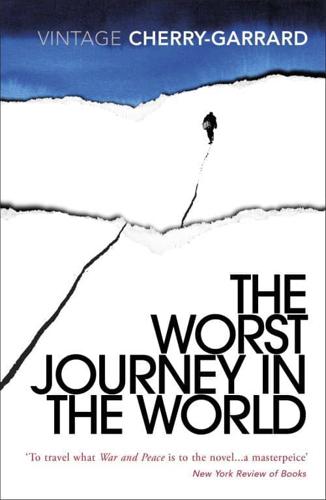
The Worst Journey in the World by Apsley Cherry-Garrard
Apsley Cherry-Garrard’s first-hand account draws on his time with Scott’s Terra Nova expedition. It records the winter journey to collect emperor penguin eggs as well as the wider expedition, bringing together details of scientific work, difficult travel and the Antarctic landscape. Cherry-Garrard’s narrative gives readers a participant’s view of exploration and its human costs.
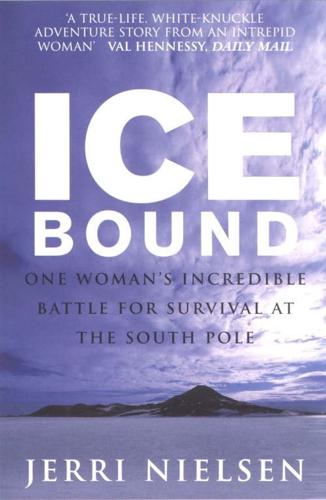
Ice Bound: One Woman’s Incredible Battle for Survival at the South Pole by Jerri Nielsen
Jerri Nielsen’s memoir recounts her year as physician to 41 researchers and support staff at the remote Amundsen-Scott South Pole Station. During the Antarctic winter, Nielsen discovers a lump in her breast and, unable to leave the station, performs a biopsy and begins chemotherapy with help from colleagues and doctors advising remotely. Alongside her battle with cancer, she describes everyday life in an isolated research community, the challenges of providing medical care in extreme conditions and the friendships that sustain her through a remarkable struggle for survival.
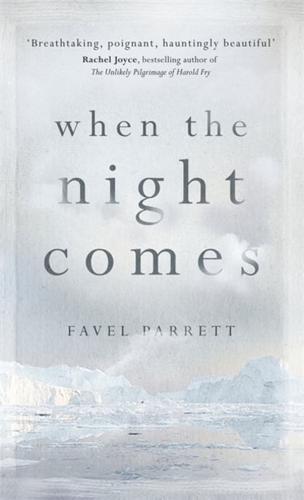
When the Night Comes by Favel Parrett
Set in Tasmania and Antarctica, Favel Parrett’s novel brings together a young girl and a crewman aboard the Antarctic supply ship Nella Dan. He tells her about watching birds and sailing south through the ice; she helps him reconsider his past and his place in the world. Their meeting shapes the girl’s path towards the sea and gives the story two connected perspectives on travel, belonging and the pull of Antarctica.
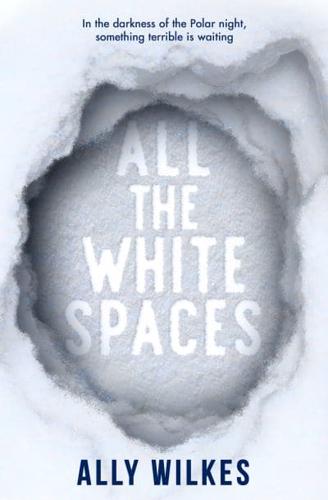
All the White Spaces by Ally Wilkes
This gripping historical horror novel begins in the aftermath of the First World War, when Jonathan Morgan stows away on an Antarctic expedition. Jonathan is a trans man seeking room to live as himself, and the ship offers a chance to leave ordinary expectations behind. After disaster in the Weddell Sea, the expedition overwinters on an unmapped shore, isolated in the polar darkness as a supernatural danger closes in.
Click the buttons below to purchase all of the books in this Antarctica books for children and teens list, as well as class sets of any of these books and many more, from Bookshop.org UK. Or buy all 19 titles from this list from Amazon – ideal for gifts or your classroom library.
Buy from UK.Bookshop.Org Buy from Amazon.co.ukDisclosure: If you buy books using the buttons above: we may earn a commission from Bookshop.org, whose fees support independent bookshops; as an Amazon Associate schoolreadinglist.co.uk earns from qualifying purchases.
Schools & teachers: please respect copyright and don’t copy our Antarctica books for children and teens list. If you find our book recommendations useful, please consider sharing on social media or linking to this page instead. Thanks.
Antarctica resources for teachers
- The British Antarctic Survey provides curriculum-linked teaching resources for Key Stages 2, 3 and 4, including worksheets, videos, Antarctic wildlife factsheets and recorded lessons featuring scientists and engineers working in Antarctica. Topics include climate change, polar research, ecosystems and life at Antarctic research stations.
- The Royal Geographical Society’s Discovering Antarctica website offers interactive geography activities, downloadable worksheets, teacher notes and videos for secondary schools. Subjects covered include glaciers, weather and climate, Antarctic food webs, tourism, scientific exploration, the Antarctic Treaty and the impact of global warming.
- 2041 School features free Antarctic teaching resources for primary children aged 5 to 11, including specially produced films, lesson plans, interactive activities and downloadable learning materials. The Champions of Antarctica programme encourages pupils to explore the continent’s wildlife, environment and conservation through engaging classroom investigations.
- The British Antarctic Survey’s Ticket to Antarctica project offers free curriculum-linked resources for Key Stages 2, 3 and 4. Activities investigate polar biomes, animal adaptations, climate change, Antarctic tourism and conservation. Teachers can also use expedition travel journals and recorded lessons to show pupils what life and scientific research in Antarctica involve.
- Cambridge University’s Polar Museum provides free primary teaching packs, short films and creative activities based on objects from Antarctic expeditions. Pupils can investigate polar clothing, food, navigation, transport and science, as well as complete expedition diaries, creative writing challenges, penguin crafts and museum-themed projects.
- The Royal Geographical Society’s Exploring Shackleton’s Antarctica is a Key Stage 2 teaching unit based on Ernest Shackleton’s Endurance expedition. It includes downloadable lesson plans, maps, historical photographs, timelines, presentations and assessment activities covering geographical skills, polar exploration, survival and life in Antarctica.
- STEM Learning’s Polar Explorer collection brings together science, engineering, mathematics and design activities inspired by polar research and the construction of the RRS Sir David Attenborough. Resources for primary and secondary pupils explore buoyancy, aerodynamics, environmental adaptations, Antarctic ecosystems and the technology used to investigate polar environments.
- Better Planet Education offers a downloadable Antarctica teaching pack for Key Stages 2 and 3, including lesson plans, worksheets, suggested activities, a glossary and an illustrated PowerPoint presentation. Lessons cover Antarctica’s geography, extreme climate, wildlife adaptations, food chains, human activity and the effects of climate change.
- The Royal Geographical Society’s Discovering the Weddell Sea project contains interactive resources, posters and educational materials examining Antarctic marine conservation. Activities investigate ocean circulation, the Weddell Sea Gyre, plastic pollution, marine protected areas, climate change and the Antarctic Treaty, making them particularly useful for secondary geography and science.
- The UK Antarctic Heritage Trust provides educational talks, films, podcasts and Antarctic heritage resources. Its British Science Week 2026 secondary activity challenges pupils to investigate the Antarctic Treaty, thermal insulation and the design of a research station capable of operating in extreme polar conditions. The site also features virtual visits and material about historic Antarctic bases.
- The Royal Geographical Society’s Antarctica: Extreme Wilderness resources include downloadable teaching notes and activities for Key Stages 2 and 3. Pupils can explore Antarctic landscapes, tourism, whaling, scientific research, environmental pressures and international governance through maps, diaries, investigations and decision-making exercises.
- The Australian Antarctic Program provides free teaching materials, Antarctic webcams, educational videos, printable games and wildlife activities. Particularly useful classroom resources include Southern Ocean food web diagrams, krill investigations, Antarctic environmental games and information about scientific research, icebreakers and daily life at Antarctic stations.
- National Geographic Education features a detailed Antarctica reference resource suitable for older secondary students. It examines the continent’s physical geography, geology, climate, wildlife, research stations and scientific importance, with information that supports investigations into ice sheets, ocean circulation, biodiversity and the human impact on polar environments.
BISAC HIS046000, JNF025000, JUV016050. | Thema NHQ, RG, RGB.