Where the Wild Things Are by Maurice Sendak – at a glance
The School Reading Lists’ five word review: mischief monsters imagination rumpus home.
Children’s book title: Where the Wild Things Are.
Children’s author: Maurice Sendak.
Genre: Children’s classic picture book.
Published by: Red Fox.
ISBN: 9780099408390.
Recommended for children aged: 3+.
First published: 1963, this edition 2000.
This children’s book is ideal for: children who enjoy imaginative adventures, unusual monsters, lively illustrations and stories about big feelings and the comfort of home.
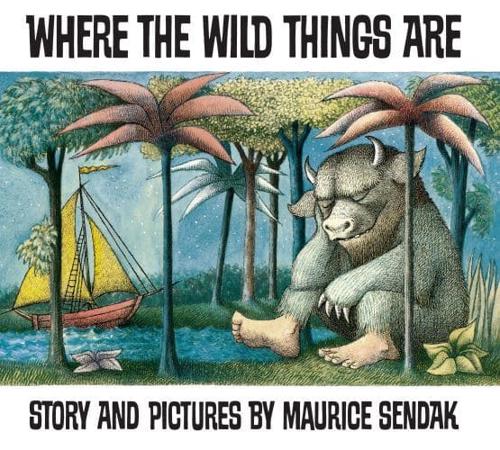
To see the latest price or order, click on the book cover image. As an Amazon Associate, schoolreadinglist.co.uk earns from qualifying purchases.
Our review:
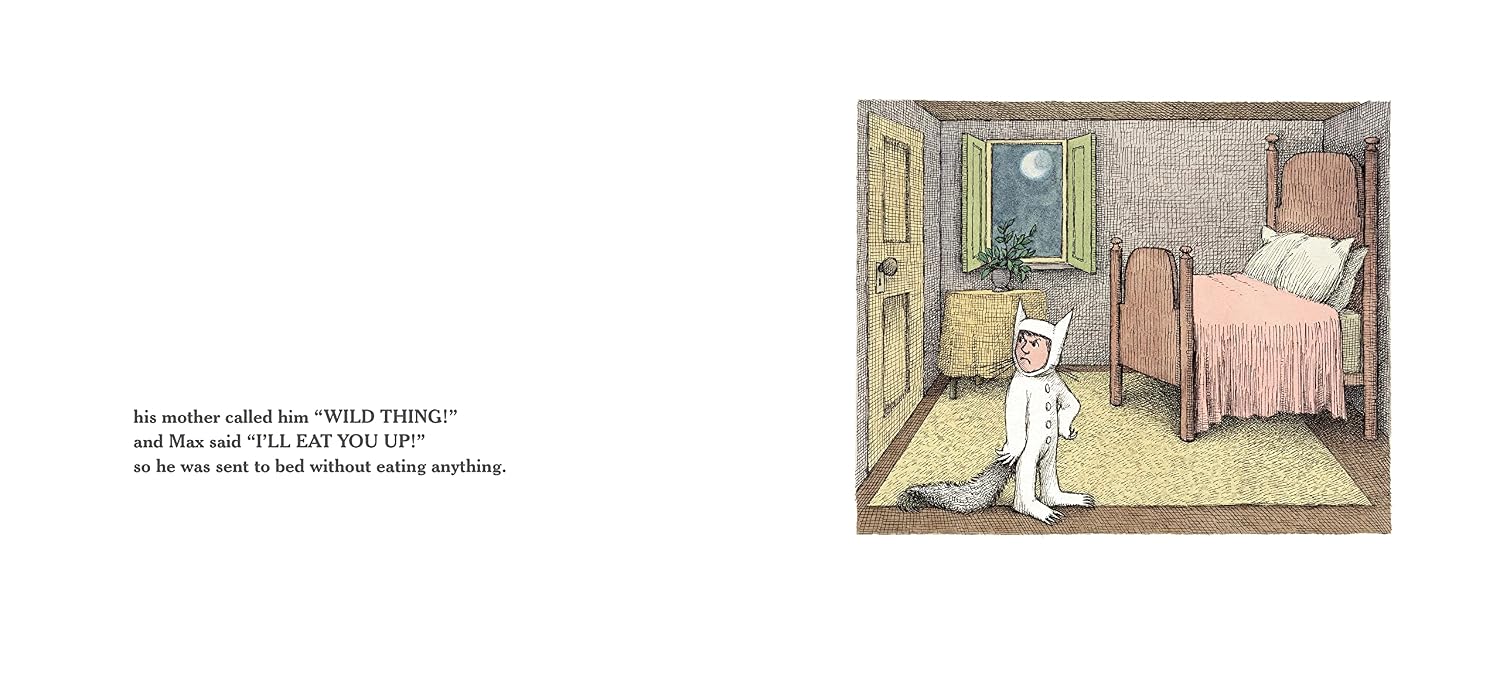
Max is in his wolf suit and determined to cause trouble. He chases the dog with a fork, makes mischief around the house and answers back when his mother calls him a wild thing. She sends him to bed without supper. In most stories, that would bring the excitement to a halt. In Maurice Sendak’s picture book, it’s just the beginning.
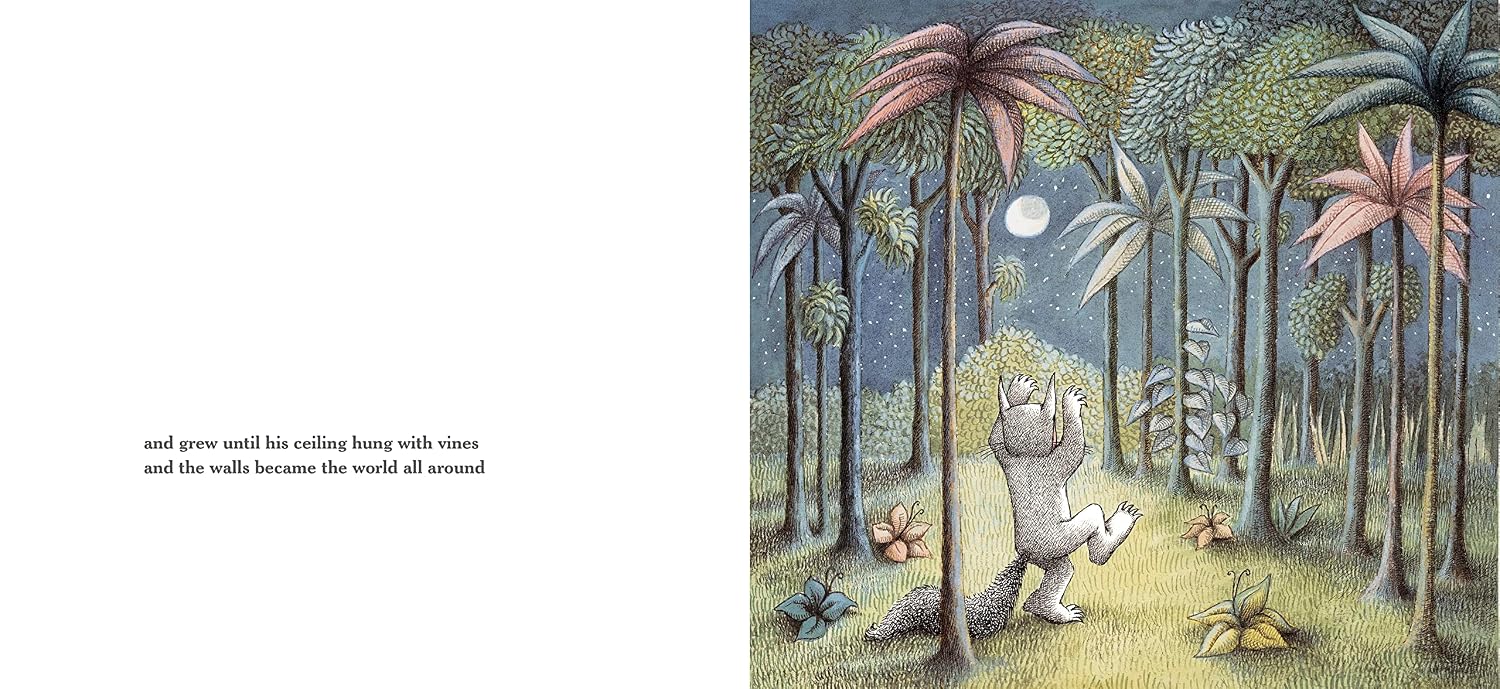
Before long, a forest is growing in Max’s bedroom. The familiar walls give way to trees, an ocean appears, and a boat carries him off to the place where the wild things live. Sendak doesn’t interrupt to explain how any of this is possible. Max’s room has become an adventure, and off he goes.
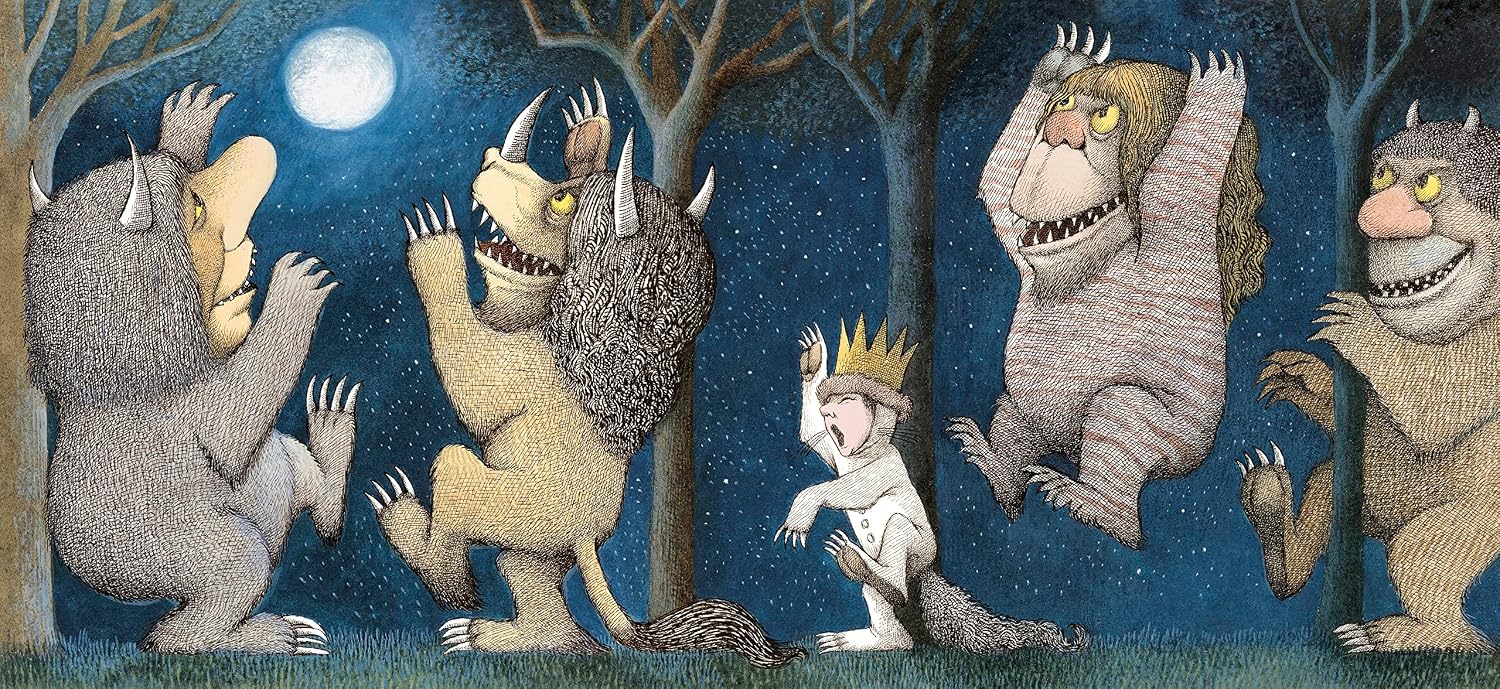
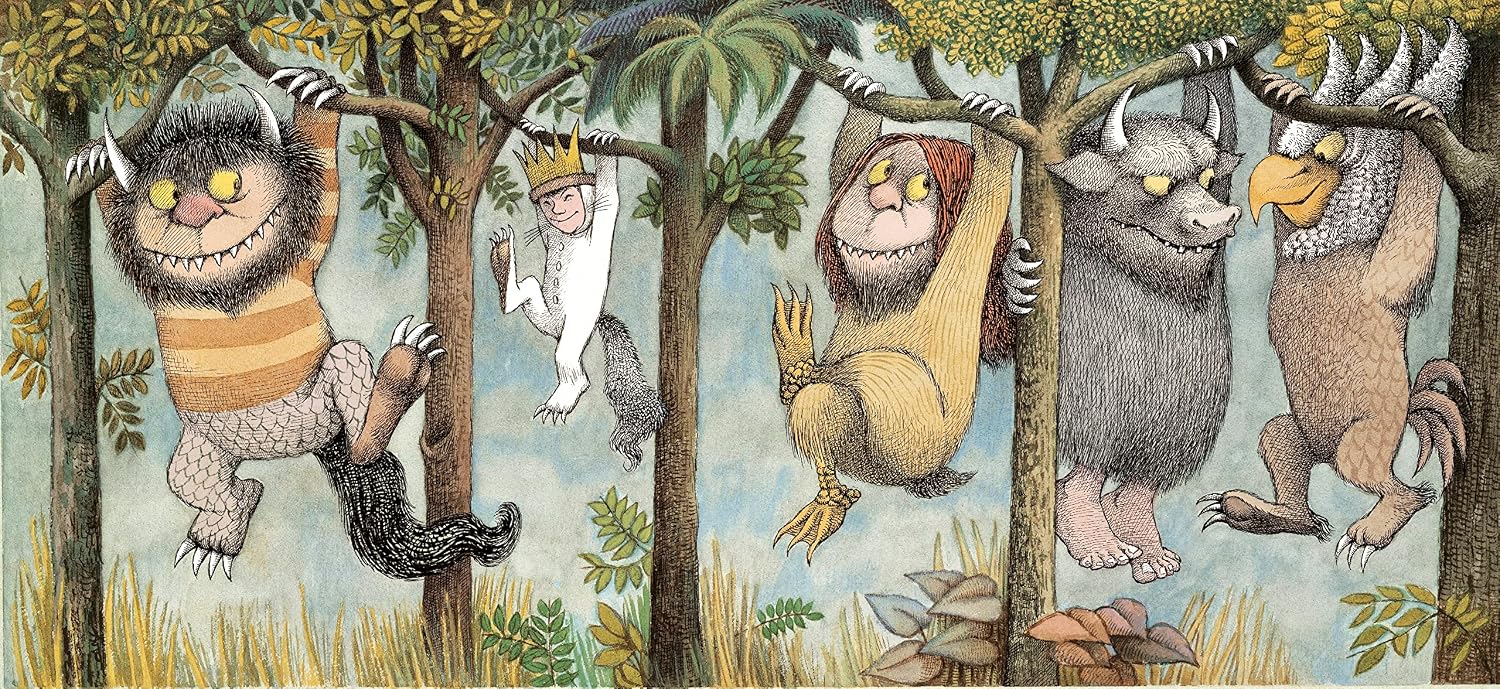
The wild things are enormous, with sharp teeth, claws and extraordinary faces. They look quite capable of being frightening, yet Max isn’t frightened of them. He faces the creatures down, becomes their king and calls for a wild rumpus. Soon everyone is dancing under the moon and hanging from the trees, free to make as much noise as they please.
The rumpus is the part many readers remember best, and it is easy to see why. Words give way to big, busy pictures, so there is no need for a running account of the fun. The monsters are gloriously odd: huge bodies, strange features and an almost comic enthusiasm for joining in. The pictures have the scale of a grand adventure, even though it all began in one boy’s bedroom.
Max has things his own way for a while. He makes the rules, and the wild things follow them. Then the mood changes. After sending the creatures to bed without supper, Max finds that being king of the monsters is no substitute for being somewhere he is loved. He wants to go home. The wild things would rather he stayed, but Max takes the boat back and finds his supper waiting in his room, still hot.
There is something wonderfully straightforward about that last detail. The meal he was denied at the beginning is there after all. Sendak doesn’t need a speech from Max’s mother or a long explanation of what has happened. An ordinary supper is enough to bring the whole adventure back down to earth.
Where the Wild Things Are also treats Max’s anger rather differently from the way adults often handle bad behaviour in stories. He is cross, full of mischief and not especially interested in being sensible. Instead of hurrying him towards an apology or an obvious lesson, Sendak lets him be wild for a while. His feelings change in their own time. The excitement of having no rules is there, as is the relief of deciding when to leave.
The illustrations make that freedom especially vivid. Thick green surroundings replace his everyday bedroom; hulking monsters fill the pages; and Max, small in his wolf suit, looks remarkably confident among them. Sendak’s creatures aren’t tidy or conventionally pretty. Their peculiar faces and outsized features are a large part of the fun, and they leave plenty for children to inspect when the book is shared aloud.
First published in 1963, Where the Wild Things Are was unusual in giving such free rein to a child’s unruly feelings. It won the 1964 Caldecott Medal, and BBC Culture later placed it first in a poll of children’s books. Those honours are part of its history, but the reason to read it is much simpler: a little boy gets to roar with the monsters, and then decides for himself when he’s ready for home.
Our verdict:
Maurice Sendak packs an extraordinary amount into a short picture book. The journey from an ordinary bedroom to a forest full of monsters in Where the Wild Things Are is exciting enough, but the wild rumpus is what gives the story its character. Those classic wordless scenes ask to be looked at slowly or acted out noisily.
For a shared read, there is plenty of room for different voices, observations and questions. The ending is particularly pleasing because it says so much with so little. After all that roaring and ruling, Max returns to a quiet room and a supper that is still warm.
Teaching points and book club discussion ideas:
- Look at what Max does before he is sent to his room. How does he seem to be feeling? Which details in the words and pictures help you decide?
- Compare Max’s bedroom at the beginning with the forest that grows there. What has changed, and how might the pictures look if this happened in your own room?
- Discuss how Max behaves when he first meets the wild things. Why might these enormous creatures agree to let a boy be their king?
- Draw a new monster with unusual features, then write a short description of its appearance and the sort of noise it makes. Use Sendak’s creatures as inspiration without copying them.
- Study the pictures of the dancing and tree-climbing. Choose one spread and describe the sounds, movements and conversations you imagine could be happening there.
- In small groups, make a short, wordless version of the wild rumpus. Decide how to show excitement and how to signal when the party comes to an end.
- Why does Max decide to leave when he has become king? Find the moment when his feelings begin to change and talk about what might be different if he stayed.
- Discuss the final picture and the waiting meal. What do you think it tells us about home? Would the ending feel the same if the supper were not there?

Where the Wild Things Are teaching resources
- Teaching Ideas offers an extensive collection of free cross-curricular activities based on Where the Wild Things Are. Ideas include writing a sequel to Max’s adventure, creating character profiles, investigating imaginary habitats, designing monsters, composing music for the wild rumpus and exploring emotions and consequences through PSHE.
- Hamilton Brookes provides a Year 1/2 English teaching sequence featuring Maurice Sendak’s book. The planning includes reading and discussing picture books, exploring grammar and conjunctions, and a five-day composition unit in which children write their own imaginative adventure stories.
- BookTrust offers a free professional development module for primary teaching assistants exploring role play, reading and empathy in EYFS and KS1. Where the Wild Things Are is used as a practical example, with video demonstrations and guidance on hot seating, improvisation and helping children explore Max’s feelings and motivations.
- King’s Court First School has assembled a useful collection of downloadable classroom resources, including story maps, sequencing worksheets, Year 1 and Year 2 vocabulary mats, role-play masks and writing frames. Cross-curricular activities cover floating and sinking, designing a boat for Max, rainforest habitats, artwork and map-making.
- Teachwire features three practical early years activities inspired by Where the Wild Things Are. Children can explore paintings of bedrooms before creating mixed-media artwork, experiment with movement and percussion to perform their own wild rumpus, and design monster masks using paper plates and craft materials.
- Early Learning HQ provides a substantial collection of free, unofficial printable resources for EYFS and KS1. Materials include story cut-outs, stick puppets, small-world play backdrops, word mats, vocabulary flashcards, editable writing paper, display posters and activity ideas covering art, drama and personal, social and emotional development.
- SparkleBox has created printable Where the Wild Things Are classroom resources, including colour and black-and-white role-play masks, story cut-outs for retelling, display banners, editable page borders, alphabet cards and monster-themed number cards from 0 to 50. These are particularly useful for story sacks, classroom displays and early literacy activities.
- Literacy Tree offers a structured Reception and KS1 writing unit based on Where the Wild Things Are. The ten-session sequence uses mysterious footprints, storytelling, songs, role play and monster character creation to develop oral language, labels, captions and children’s own versions of the story. This is a paid teaching resource.
- Twinkl provides a dedicated collection of Where the Wild Things Are teaching materials for KS1, including story-related vocabulary and classroom activities. The resources can support reading, speaking and listening, story sequencing and creative work. Some downloads require a Twinkl account or subscription.
- Tes Resources hosts a downloadable art and literacy lesson pack based on Maurice Sendak’s illustrations. It includes a PowerPoint, lesson planning and a Wild Things drawing template, providing a starting point for children to invent and illustrate their own imaginative creatures.
- ReadWriteThink offers a free five-session teaching sequence on narrative structure, using Where the Wild Things Are alongside other picture books. Activities include identifying characters and settings, discussing problems and solutions, sequencing the beginning, middle and end of Max’s adventure, and creating illustrated story maps. The US-designed material can be adapted for UK primary literacy lessons.
To order a class set of this book, please click below to order via uk.bookshop.org, an organisation that supports local bookshops, or Amazon.co.uk.
Buy from UK.Bookshop.Org Buy from Amazon.co.uk
Disclosure: If you buy books using the buttons above, we may earn a commission from Bookshop.org, whose fees support independent bookshops; as an Amazon Associate, schoolreadinglist.co.uk earns from qualifying purchases.
Browse our adventure stories for children.