Duckling – at a glance
The School Reading Lists’ five word review: Difference, belonging, trust, choice, community.
Children’s book title: Duckling: A Fairy Tale Revolution.
Children’s author: Kamila Shamsie.
Children’s illustrator: Laura Barrett.
Genre: Children’s fiction – fairy tale retelling, picture book.
Published by: Vintage Children’s Classics.
ISBN: 9781784876319.
Recommended for children aged: 5+.
First published: Hardback October 2020.
This children’s book is ideal for: : Children who are exploring identity, fairness, and how groups include others in KS1 and lower KS2 classes.
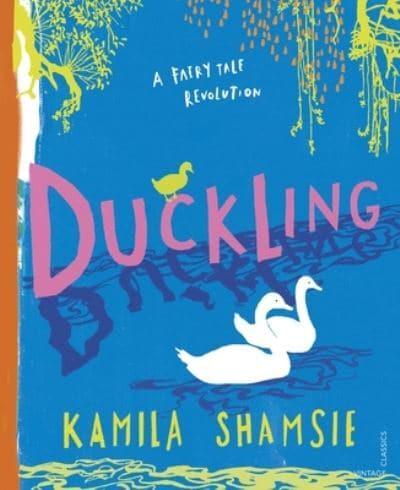
To see the latest price or order, click on the book cover image. As an Amazon Associate, schoolreadinglist.co.uk earns from qualifying purchases.
Our review:
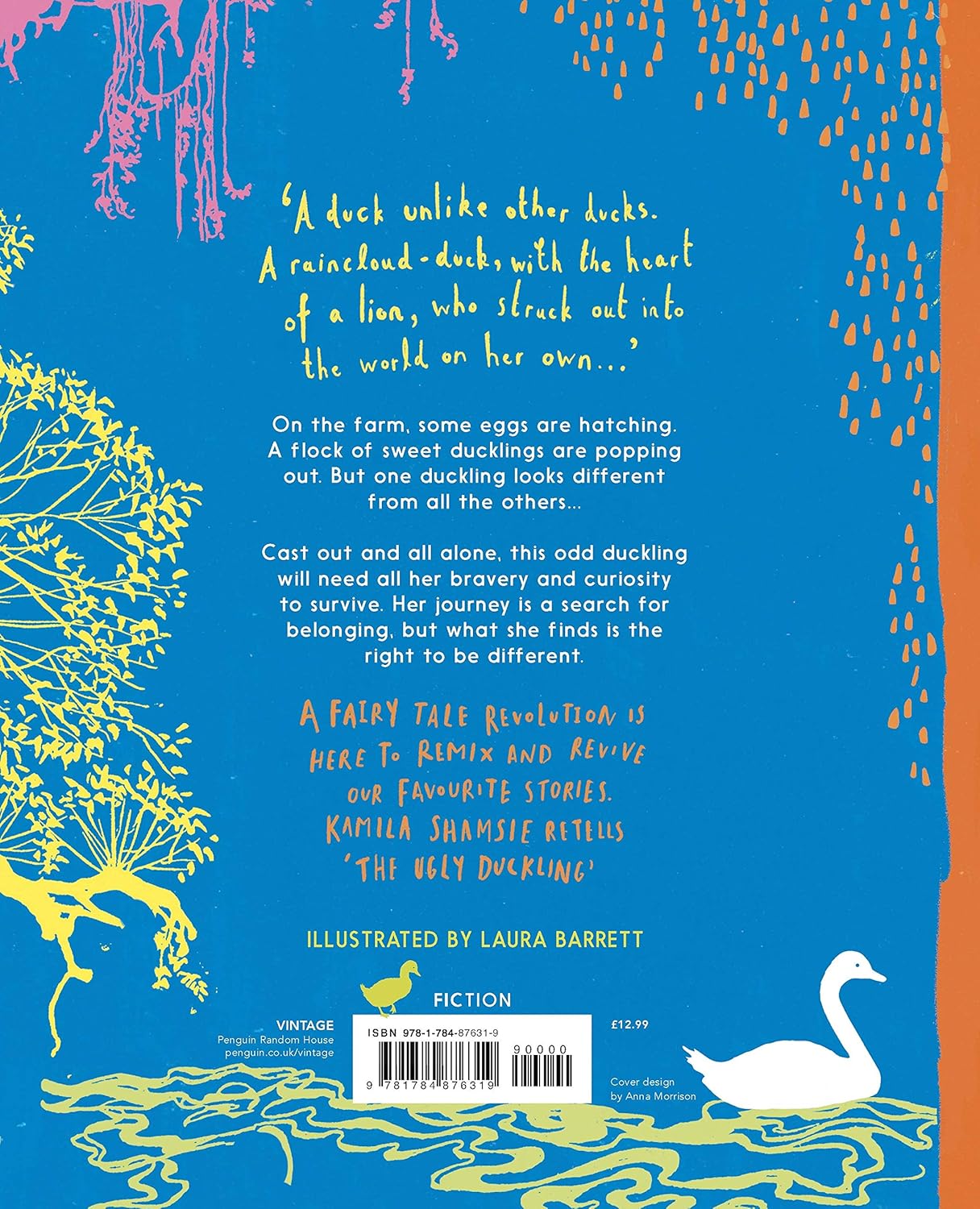
Kamila Shamsie revisits Hans Christian Andersen’s tale in the Fairy Tale Revolution series and keeps the heart of it while enlivening the ending. A duckling who does not fit the brood is pushed out and goes looking for a place that feels safe. The early farm scenes make the rejection plain, so the choice to leave feels sadly inevitable. Meetings with geese, a farmer, hunters, and swans carry the duckling through fields, ponds, winter, and spring. Each stop asks the same question in a new way: who can be trusted, and why?
Shamsie then moves past the point where Andersen would have ended. The swans offer an easy welcome based on looks and status. The duckling does not just accept it. She tests the offer and decides that belonging rests on conduct and care, not rank or appearance. That idea comes through in spare dialogue and a firm final choice. The book names prejudice without wagging a finger, shows how groups can mock outsiders, and makes clear that joining a new flock is not a licence to repeat old unkindness. It also shows how survival can turn into agency, with the duckling shifting from keeping her head down to choosing her path.
Laura Barrett’s black-and-white silhouettes frame the pages and open out at key moments. The images do quiet, clever work to guide pace and mood, marking threat, shelter, and the turn of the seasons. For classrooms, Duckling is a gift. The text is short and linear, with motifs you can trace and compare. It links neatly to traditional tales, viewpoint, and PSHE on diversity, respect, and safe relationships. The last pages invite thoughtful talk about leadership, consent, and trust, with plenty of evidence in both text and art. There is enough here to map feelings, actions, and outcomes without drifting into moralising.
Our verdict:
Duckling is a picture book that maintains a familiar journey and adds a fresh finish that sparks discussion about what acceptance really means. The duckling turns down status that rests on appearance and sets her own terms for belonging, which is a quietly powerful note to end on. It works well for guided reading, assemblies on inclusion, and small group work on friendship rules.
It also gives a calm route into conversations about bystanders, peer pressure, and repairing harm. The language reads aloud smoothly for Years 2-4 with natural pauses for questions at page turns. For independent reading, the core age is 5-7, and older pupils can use it to study theme and structure. If you are after a fairytale retelling that respects the classic but pushes children to think a little deeper, this is a great choice.
Teaching points and book club discussion ideas:
- Compare key scenes with Andersen’s text. Identify what changes and why the change matters for meaning.
- Track the duckling’s choices. List options, the choice taken, and the result.
- Map who holds power in each setting: farm, field, water, winter, and swan lake. Note how power shifts.
- Use three headings on a board: appearance, action and trust. Sort character statements under each.
- Identify lines that show group approval. Test if those lines equal real safety.
- Create a class definition of belonging using verbs only. Link each verb to a moment in the book.
- Storyboard a missing scene that shows repair after unkindness. Keep dialogue to one sentence per character.
- Write a short monologue from the stork. Explain what the stork needs from friends.
- Build a feelings timeline with evidence from text and art. Keep evidence to words or images on the page.
- Debate: Should the duckling join the swans or lead a mixed group? Use only evidence from the book.
Many thanks to Vintage Children’s Classics for the review copy.
To order a class set of this book, please click below to order via uk.bookshop.org, an organisation that supports local bookshops, or Amazon.co.uk.
Buy from UK.Bookshop.Org Buy from Amazon.co.uk
Disclosure: If you buy books using the buttons above, we may earn a commission from Bookshop.org, whose fees support independent bookshops; as an Amazon Associate, schoolreadinglist.co.uk earns from qualifying purchases.
Browse our Year 1 reading list.

