Episode 43
Episode 43 show notes
To view or buy the books featured in this episode, please see the links below.
- Recommended children’s and YA books released in July 2026 – buy from UK Bookshop Org.
- June 2026 school book club recommendations.
Affiliate Statement
As an Amazon Associate, the School Reading List earns from qualifying purchases. Disclosure: If you buy books linked to our site, we may earn a commission from uk.bookshop.org.
This podcast is supported by its listeners. If you choose to purchase something using links on our website or podcast notes, we may earn a commission. No books were warped, dog-eared, underlined with purple pen, eaten, cursed, cancelled, burned, or otherwise harmed in the making of this podcast.
Listen and subscribe
To listen to all the episodes in this podcast and to subscribe, see the School Reading List podcast page.
Episode 43 transcript
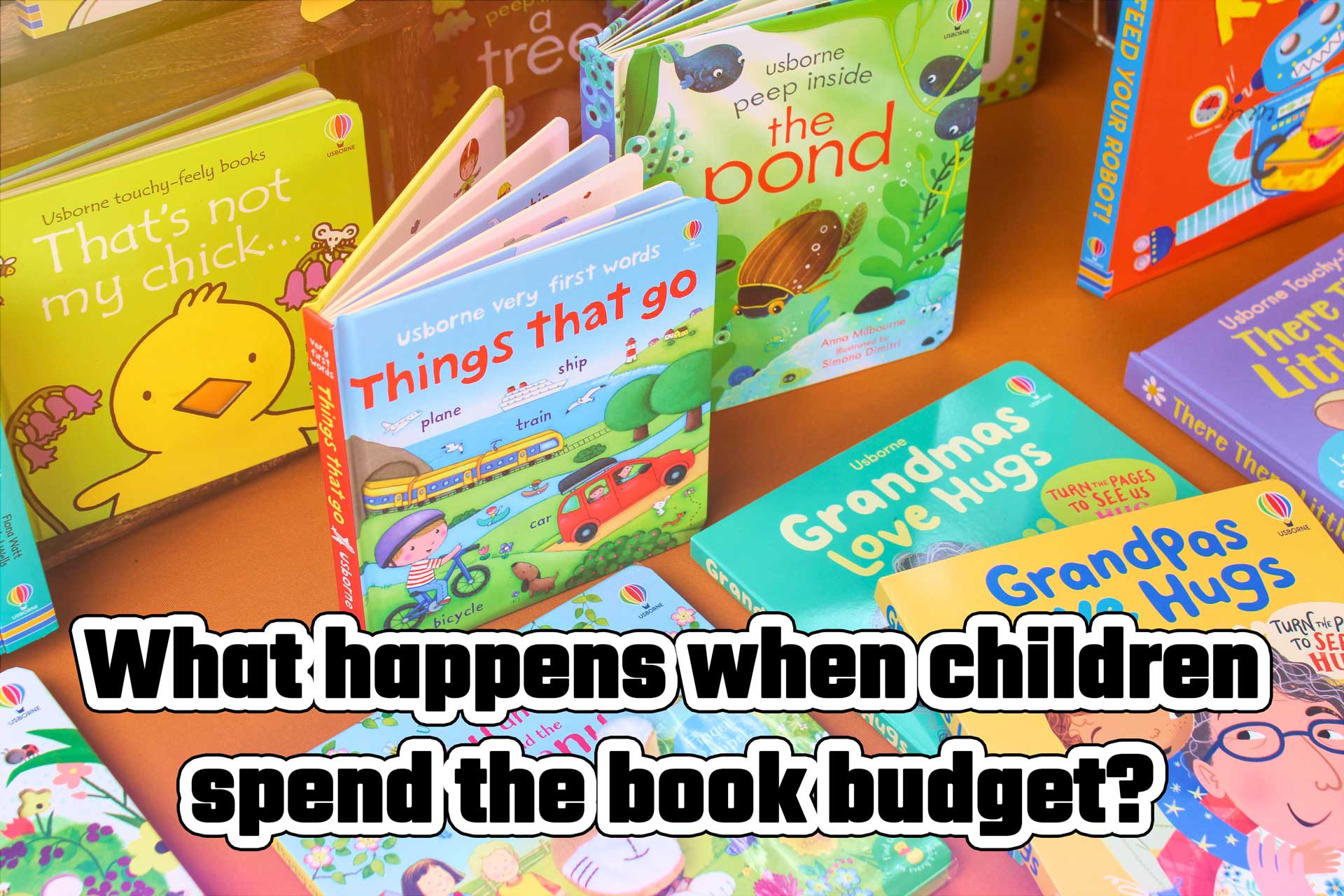
The pupil librarian takeover: what happens when children spend the book budget?
The most useful thing about the National Year of Reading 2026 may not be that it tells children to read more. Schools have been saying that for years, often with impressive patience. Its real value is that it begins somewhere more honest: with the things children and teenagers already care about.
Go All In, led by the National Literacy Trust with the Department for Education, is built around the line “If you’re into it, read into it.” It treats reading as a way into football, gaming, music, fashion, food, film, family life, hobbies and the other interests already tugging at a child’s attention. That sounds straightforward enough, but in schools it leads to a much sharper question. If reading is supposed to start with children’s interests, how often do pupils get a real say in the books schools buy?
Imagine handing a group of pupils a genuine slice of the school library budget. This would not be pretend money, a token vote or a World Book Day wish list that vanishes once the display comes down. It would be a real order, with real limits, real prices and real decisions. What would they choose? More interestingly, what would adults think they would choose, and how different would the two lists be?
That gap is where things start to get useful. Teachers, librarians, parents, publishers and booksellers all have views about what children should read. Those views matter. Adults bring knowledge, judgement and care, and a school library would be poorer without that. Children, though, notice things adults often miss. They know which covers get laughed at in corridors. They know which series are passed around. They know which books feel too young for Year 8, even when the reading level looks right. They know when a title has gone cold, when a film or song has revived interest, and when a whole friendship group is suddenly talking about manga, horror, football, baking, Formula 1, K-pop, gaming, animals, romance or fashion.
That is not a soft extra. It is reading data, just with fewer spreadsheets and more honesty.
The latest National Literacy Trust figures offer a small reason for optimism, but not a reason to relax. In 2026, 36.1% of children and young people aged 8 to 18 said they enjoyed reading in their free time, up from 32.7% in 2025. Daily reading also rose slightly, with 20.3% saying they read every day in their free time, compared with 18.7% the year before. That is movement in the right direction, but it is still fragile. Most children are not reading daily for pleasure, and many still do not see reading as something that properly belongs to them.
A pupil-led book budget will not solve that by itself. It could, however, help schools stop guessing.
Many school book-buying systems remain largely adult-led. Some of that is necessary. A library collection has to be balanced, age-appropriate, inclusive, durable and affordable. It has to support less confident readers, keen readers, curriculum needs, intervention work, quiet comfort reading and genuine challenge. It also has to avoid being swallowed up by the same five series every year, however beloved they may be.
The trouble starts when adult judgement slides into adult assumption. Schools may over-buy classics and under-buy graphic novels. They may stock plenty of curriculum-linked non-fiction while missing books about sport, gaming, music, fashion, food, survival, animals, practical hobbies and online life. They may buy titles that look worthy in a catalogue while overlooking the books pupils are already waiting for. They may treat fandom, tie-ins and celebrity books as shallow, when for some pupils those books are the bridge into reading.
This is not a case for letting children buy everything. That would be a quick route to ten copies of the same thing and one very tired librarian. It is a case for taking pupil choice seriously and then curating it properly. Pupils bring appetite, honesty and peer credibility. Librarians bring stock knowledge, safeguarding, progression, diversity, supplier knowledge and budget discipline. Teachers bring insight into pupils who are not already library users. Parents understand home reading habits. Booksellers and publishers know what is available, affordable and likely to survive heavy use.
The best school libraries probably draw on all of that knowledge at once.
A pupil librarian takeover could work as a simple five-day experiment. On Monday, adults predict the top 20 pupil requests. On Tuesday, pupils vote, pitch and request books. On Wednesday, pupil librarians turn those ideas into a shortlist, with support from a librarian or reading lead. On Thursday, the group spends a real slice of the budget: £100, £250, £500 or 25% of the next order. On Friday, the school shares the result through a “we asked, you bought” display.
The display is not just decoration. It tells pupils that the library has listened. It also makes the process visible. Children can see that choice does not mean getting everything they ask for. A pupil request still has to be weighed against age range, price, stock balance, representation, condition, format and whether the book adds something worthwhile to the shelves.
That structure matters because pupil choice can repeat the same inequalities found elsewhere in school life. Confident readers may ask for more. Less confident readers may say nothing. Popular pupils may dominate. Quieter interests may disappear completely. A good pupil-led process needs several ways in: anonymous forms, tutor-group discussions, request slips, loans data, pupil panels, teacher observations and direct questions for pupils who rarely visit the library.
Pupil librarians should not be limited to stamping books and tidying shelves. They can become reading researchers. They can audit missing genres, ask which books feel embarrassing to carry, check which series have waiting lists, find out why some books never move, record 30-second book pitches, build “what comes next?” shelves and ask non-readers what they actually read outside school. That might include lyrics, subtitles, game guides, fan wikis, sports news, recipes, forums, reviews, manga scans and social posts.
That last question is worth asking because the route into reading may not look like a novel at first. A pupil who cares about football may start with match reports, biographies, club histories or graphic non-fiction. A pupil who likes Minecraft may move through game guides into design, coding, survival fiction or world-building. A pupil who wants BookTok romance but is 13 needs careful, age-aware help, not a shrug or a blanket ban. A pupil who loves horror needs more than battered old Goosebumps copies and a GCSE gothic extract.
The 2026 What Kids Are Reading discussion about boys and Diary of a Wimpy Kid is a useful warning. The point is not to sneer at what children love. A familiar series can give a pupil confidence, comfort and a reader identity. The better question is what comes next. If a boy in Year 8 still wants Wimpy Kid, which other funny, visual, fast-moving books might take him one step further? If pupils keep asking for the same thing, schools should not simply say yes or no. They should ask what the choice is doing for that reader, then build a pathway from it.
There is a practical budget argument too. If a school has £500, £1,000 or £1,500 to spend, pupils probably should not control all of it. They should control some of it. A sensible model might give half the budget to librarian or reading-lead core stock, a quarter to a pupil librarian takeover, a smaller section to curriculum and intervention support, and a rapid-response pot for sudden pupil interests.
That rapid-response fund could be one of the most useful parts of the whole idea. Children’s interests move faster than annual library orders. A new film, song, football tournament, game, viral author, TV adaptation, local issue or news story can create a reading opportunity that will not wait politely for the next catalogue meeting.
The Summer Reading Challenge 2026, Read to the Beat, gives schools a ready-made seasonal hook. A pupil librarian group could create music-linked displays, summer shelves, playlist booklists and September recommendations shaped by what pupils say they are already listening to, watching and talking about. That turns a national campaign into something concrete: a shelf, a request, a borrowed book and, ideally, a few good conversations.
School libraries are now part of a wider national discussion about reading for pleasure. Parliament’s Education Committee has been examining the issue, including the role of schools, libraries, homes and early years settings. The School Library Association has argued for stronger funding and proper library provision. If more attention or money does reach school libraries, the next question should not only be how much is spent. It should be who helps decide.
The answer should not be adults alone, and it should not be pupils alone. A library built entirely from adult intentions can become a museum of what grown-ups value. A library built only from pupil requests can become narrow, repetitive and too dependent on the loudest voices. The better version sits between the two.
Let pupils argue for the books. Let adults test, shape and balance the list. Then let the whole school see the result.
The National Year of Reading asks schools to connect reading with what children already love. A pupil librarian takeover makes that idea practical. It treats children’s choices seriously, but not uncritically. It respects librarianship, but does not allow adult assumptions to have the final word. It turns book buying into a conversation rather than a closed-door order form.
The best £500 a school spends on books might be the £500 pupils argue over, defend, refine and then persuade their friends to borrow.
Further reading and useful sources
- National Literacy Trust: Children and young people’s reading in 2026 – Current 2026 evidence on children’s reading enjoyment and daily reading, including the rise to 36.1% enjoying reading in their free time and 20.3% reading daily.
- National Literacy Trust: Reading for Pleasure – Overview of the 2026 reading-for-pleasure picture and the need to make reading relevant, meaningful and supported by adults around children.
- National Literacy Trust: National Year of Reading 2026 – Official overview of the National Year of Reading and Go All In campaign, including the campaign’s focus on passions and interests.
- National Literacy Trust: Go All In brand identity launch – Explains the campaign proposition “If you’re into it, read into it” and the move towards reading through appeal, relevance and existing interests.
- Go All In: Schools and early years settings – Campaign guidance for schools, including the idea that pupils’ passions such as football, music, gaming, nature and fashion can bring reading to life.
- UK Parliament Education Committee: Reading for Pleasure inquiry – Inquiry placing children’s reading for pleasure, school libraries, home reading and wider reading culture into the national policy discussion.
- School Library Association: Written evidence on school library funding – Evidence to the Education Committee arguing for stronger school library provision, including proper funding, staffing and book stock.
- National Literacy Trust: Libraries for Primaries, insights from 2024-25 – Evaluation of school library investment, including findings on improved reading enjoyment, reading frequency and school-wide reading culture.
- Renaissance Learning: What Kids Are Reading 2026 – Large-scale reading behaviour report based on UK and Ireland school data, useful for understanding pupil book choices, reading routes and patterns by age and gender.
- The Guardian: Teenage boys in UK ‘stuck’ reading primary-level books while girls’ tastes expand – Reports on the 2026 What Kids Are Reading findings and the continuing need to help pupils move from favourite series into broader reading pathways.
- The Reading Agency: Summer Reading Challenge 2026 – Official Read to the Beat campaign site, linking stories, songs, reading and music as routes into imagination and creativity.
- The Reading Agency: Read to the Beat 2026 book collection – Details of the 2026 Summer Reading Challenge collection, including music, sound science, rhythm, cultural traditions and creative expression.
- De Naeghel, Van Keer, Vansteenkiste and Rosseel: Reading motivation, frequency, engagement and comprehension – Academic study linking autonomous reading motivation with reading behaviour, engagement and comprehension.
- School Reading List: Genre booklists for children and teens – Interest-led booklists for teachers, librarians and parents, covering sport, hobbies, genres, identity, belief, non-fiction and teen reading interests.
Episode 43 chapter markers
Part 1
Part 2
Part 3
Episode 43 credits
To see full details of licensing information, Creative Commons, GNU license credits and other attributions that apply to every episode of this podcast, see our School Reading List podcast credits information page.
Credits specific to this episode
- Kevin MacLeod – Bummin on Tremelo – (purchased lifetime extended license registered to Tom Tolkien license ID FML-170359-11969).
- Listener submitted monologues from debut and self-published authors. For more details, see the podcast episode’s details page.
Ask us a question | Leave us a voicemail shout-out
Click the button below to leave us a voicemail via SpeakPipe, if you would like to ask a question for one of our listeners’ message slots, leave a shout-out or be featured in a future episode.
Buy me a coffee
If you found this free podcast useful and you would like to help, please consider a donation through the ‘Buy Me a Coffee’ service. Thanks.