Goodnight Mister Tom by Michelle Magorian – at a glance
The School Reading Lists’ five word review: Evacuation, friendship, loss, trust, recovery.
Children’s book title: Goodnight Mister Tom.
Children’s author: Michelle Magorian.
Genre: Children’s historical fiction.
Published by: Puffin.
ISBN: 9780141354804.
Recommended for children aged: 9-12.
First published: 1981, this edition 2021.
This children’s book is ideal for: children who enjoy character-focused historical fiction exploring wartime evacuation, friendship, family relationships, resilience and finding a place to belong.
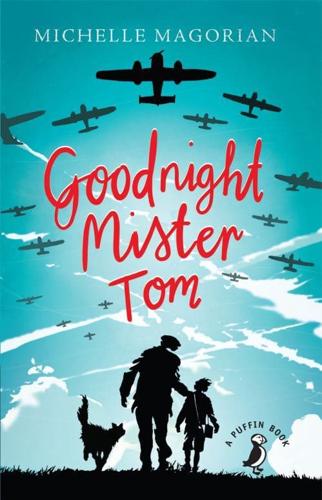
To see the latest price or order, click on the book cover image. As an Amazon Associate, schoolreadinglist.co.uk earns from qualifying purchases.
Our review:
In the opening stages of Goodnight Mister Tom, William Beech arrives in the village of Little Weirwold as an evacuee from London. Britain is preparing for war, and children are being sent away from cities to places considered safer. William, known as Willie, is assigned to Thomas Oakley, a widower who keeps largely to himself. Neither expects much from the arrangement. Willie is frightened of doing anything wrong, while Tom knows little about caring for a child.
The first signs of change come through small adjustments rather than declarations of affection. When Willie cannot reach a coat peg, Tom decides to fit another at the boy’s height. He deals patiently with Willie’s bed-wetting and begins to understand what lies behind his fear. The bruises on Willie’s body and his accounts of life with his mother reveal a childhood shaped by punishment and deprivation. Tom’s responses show Willie that an adult can set boundaries without frightening him.
Magorian develops their relationship through daily life in the village. Willie learns to read and write, finds an aptitude for drawing and begins to take part in school and community activities. He is no longer defined only by what he cannot do. The change becomes visible in his friendships, his willingness to try unfamiliar things and his involvement in a school production of A Christmas Carol. These developments matter because the novel has established how little independence or encouragement he has previously known.
Sammy, Tom’s dog, contributes to this growing sense of security. He is a companion to the man before Willie arrives and helps the boy feel at home. The animal also has a part to play when Willie later needs help. This is one example of how the novel gives practical details a place within its larger account of trust and recovery. The everyday world of the cottage is not simply a peaceful contrast with London. It is where William learns to live without constant fear.
Willie’s friendship with Zach, another evacuee, broadens the story beyond the relationship at its centre. Zach’s parents work in the theatre, and his confidence and talkative manner differ markedly from Willie’s reserve. He is also Jewish, something that challenges Willie’s limited understanding of other families and beliefs. Their friendship allows the novel to examine prejudice without making Zach’s identity the only thing that defines him. He belongs to the children’s group in Little Weirwold while retaining his individual personality.
Tom also changes as William settles in. The death of his wife and baby many years earlier has left him withdrawn from village life. His affection for Willie requires him to take an interest in other people again. The revelation that he reads widely, tells stories and once played the church organ complicates the villagers’ impression of him as merely a bad-tempered loner. When he returns to the organ after the regular player leaves for war, it marks a further connection with the community he has avoided.
The Second World War remains present even when the immediate action concerns school, drawing or friendships. News on the radio grows worse, men from the village are called up, and families receive word of deaths or disappearances. Children come to school affected by losses within their own households. Magorian places these public events alongside the private experiences of William and Tom, showing how the war unsettles families far beyond the bombing of cities. The countryside offers greater physical safety for evacuees, but it is not outside the conflict.
That safety is tested when Willie’s mother demands that he return to London. The contrast between his two homes, developed over the preceding chapters, gives the summons its force. When Tom receives no news from Willie, he travels to London to look for him. The resulting section confronts the consequences of abuse rather than treating removal to the country as a complete solution. The novel continues to address loss and grief as William faces further upheaval, without suggesting that affection can erase what has happened.
There is also a wider literary comparison available to older readers. Tom’s relationship with William recalls, in some respects, Silas’s relationship with Eppie in George Eliot’s Silas Marner: a solitary adult finds his life altered by responsibility for a child. The parallel is a useful way of examining how both characters benefit from care and companionship, rather than treating William as someone who simply receives Tom’s kindness.
Across these developments, the strongest feature of the narrative is its attention to gradual change. Willie’s progress is shown through specific experiences, while Tom’s history explains why companionship matters to him as well. The novel balances wartime danger and domestic violence with education, friendship, creative interests and the return of ordinary routines. That balance keeps its account of recovery tied to what the characters actually do for one another.
Our verdict:
Goodnight Mister Tom has a greater range than its premise of a London child finding shelter with a country widower might suggest. Evacuation creates the circumstances for the story, but the central subject is what happens when a child who expects cruelty encounters consistent care. Tom’s practical gestures carry as much weight as the more dramatic events, and the narrative gives William time to gain confidence in several parts of his life.
Its treatment of the Second World War is also wider than a sequence of historical incidents. The changing mood of the village, the separation of families and the arrival of news from the front run alongside the experiences of two people with losses of their own. William’s friendship with Zach and his developing interests in art and reading prevent the book from becoming a single account of suffering.
Teachers and reading groups should be aware that the story contains severe child abuse, bereavement, suicide and frightening events involving children. These are integral to the plot and deserve thoughtful preparation, particularly in shared reading. Within that context, Magorian presents recovery as a process supported by patience, friendship, education and belonging. It is the sustained attention to both William’s and Tom’s needs that gives their relationship its meaning.
Teaching points and book club discussion ideas:
- Trace the change in trust. Compare Tom’s decision to install a lower coat peg with a later example of William making a choice for himself. What does each moment suggest about the kind of care William is learning to expect?
- Consider two experiences of isolation. Explore how William’s childhood and Tom’s bereavement have affected their relationships with other people. How does their life together change each of them, and why is the effect not identical?
- Examine the role of the village. Create a character-and-community map showing how school, friendships, the church and the cottage contribute to William’s growing confidence. Which connections involve help from William as well as help given to him?
- Discuss Zach’s place in the story. How do his background, Jewish identity and confident manner expand William’s understanding of other people? What is the difference between noticing an important distinction and judging someone because of it?
- Investigate evacuation. Use reliable historical sources to research why children were sent away from British cities and how they were billeted. Then distinguish the documented wartime experience from the particular events of this fictional story.
- Study the use of contrasts. Find moments in which life with Tom differs from William’s descriptions of London. How do ordinary actions such as helping with clothes, reading together or responding to a mistake establish those differences?
- Explore wartime loss. Consider the reports on the radio, the men leaving the village and the news received by families. How does the author connect events beyond Little Weirwold with children’s everyday experiences?
- Try a paired reading for older groups. Compare Tom and William with Silas and Eppie in Silas Marner. How does responsibility for a child alter each isolated adult, and where do the similarities between the novels end?
- Write a short scene from another viewpoint. Retell the arrival of William from Tom’s perspective, using only the actions and information established by the text. How can description and dialogue suggest concern without stating it directly?
- Puffin’s Goodnight Mister Tom sample provides an official extract from the novel, including Michelle Magorian’s introduction and the opening chapters, suitable for close reading, character analysis and discussion of wartime evacuation.
- Scholastic’s Goodnight Mister Tom sample pages offer a downloadable three-page preview of the Read & Respond teaching resource, designed to support classroom literacy activities based on the novel.
- Scholastic’s Read & Respond: Goodnight Mister Tom teaching guide details a 48-page resource by Helen Lewis covering guided reading, comprehension, writing, grammar, speaking and listening, lesson planning and printable activities. The guide is currently listed as unavailable.
- Scholastic’s Goodnight Mister Tom KS3 curriculum chart provides a downloadable two-page document linking reading, writing, grammar, discussion, character analysis and assessment activities to Key Stage 3 English curriculum objectives.
- Pontefract Academies Trust provides a free 11-page Year 6 English teaching plan based on Goodnight Mister Tom, featuring a three-week narrative writing sequence, character and setting activities, wartime evacuation research and cross-curricular teaching ideas.
- Puffin’s interview with Michelle Magorian about Goodnight Mister Tom explores the author’s writing process, character development, research and inspiration, providing material for classroom discussion and creative writing activities.
To order a class set of this book, please click below to order via uk.bookshop.org, an organisation that supports local bookshops, or Amazon.co.uk.
Buy from UK.Bookshop.Org Buy from Amazon.co.uk
Disclosure: If you buy books using the buttons above, we may earn a commission from Bookshop.org, whose fees support independent bookshops; as an Amazon Associate, schoolreadinglist.co.uk earns from qualifying purchases.
Browse our Books for Year 7 list.