Episode 41
Episode 41 show notes
To view or buy the books featured in this episode, please see the links below.
- Recommended children’s and YA books released in May 2026 – buy from UK Bookshop Org.
- April 2026 school book club recommendations.
Affiliate Statement
As an Amazon Associate, the School Reading List earns from qualifying purchases. Disclosure: If you buy books linked to our site, we may earn a commission from uk.bookshop.org.
This podcast is supported by its listeners. If you choose to purchase something using links on our website or podcast notes, we may earn a commission. No books were warped, dog-eared, underlined with purple pen, eaten, cursed, cancelled, burned, or otherwise harmed in the making of this podcast.
Listen and subscribe
To listen to all the episodes in this podcast and to subscribe, see the School Reading List podcast page.
Episode 41 transcript
Will the government’s new reading assessments undermine the National Year of Reading?
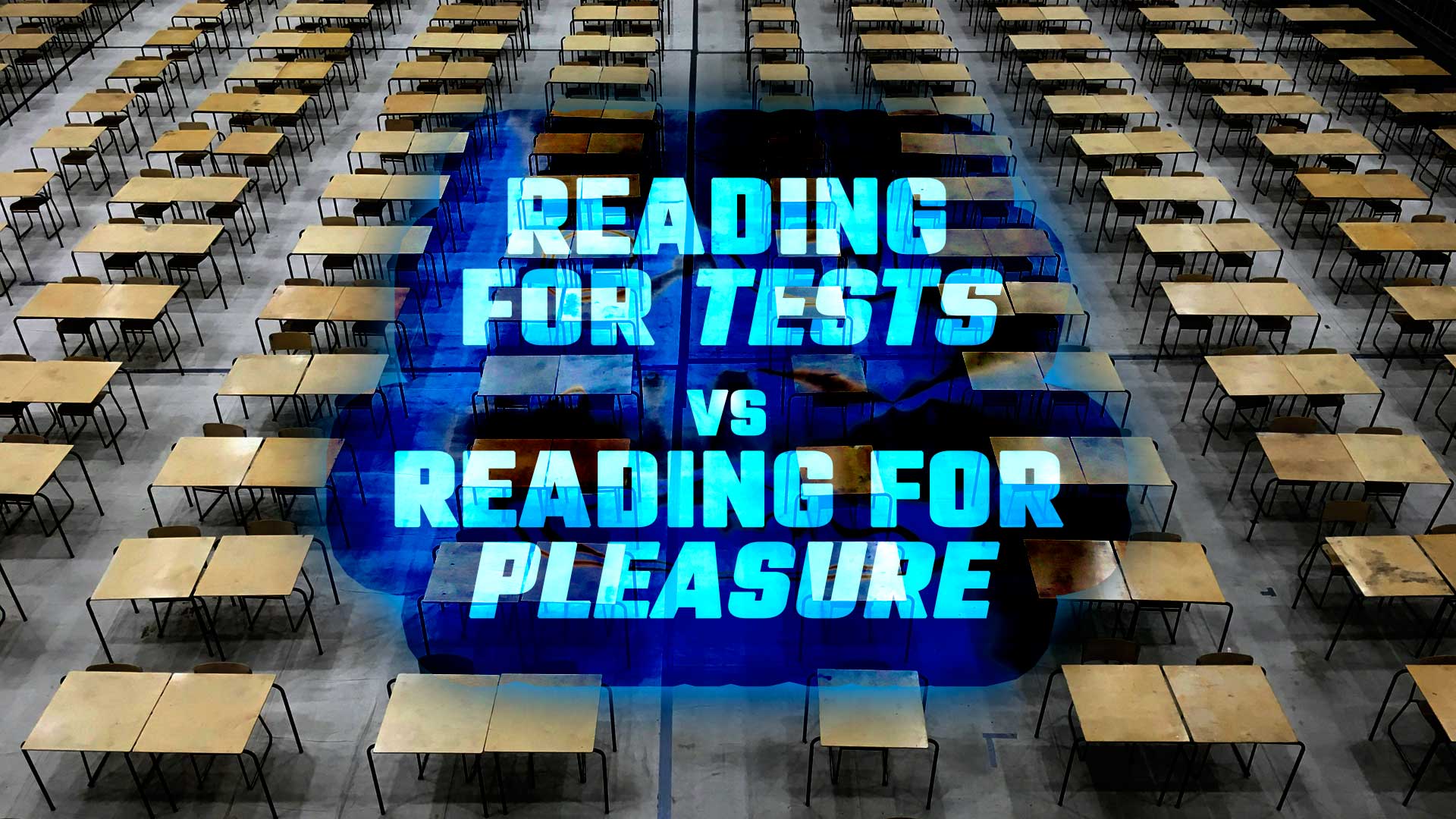
The government has set itself two aims that seem to contradict each other. It wants 2026 to be a National Year of Reading, with the “Go All In” campaign built around reading for pleasure. At the same time, it plans a new statutory Year 8 reading test, on top of the existing Key Stage 2 reading test and changes to Year 6 writing assessment. The risk is clear: one policy tells children that reading belongs to them; the other reminds them that reading is something done under pressure, against a clock, with a score attached.
The National Year of Reading exists because the figures are so poor. The National Literacy Trust’s 2025 survey of 114,970 children and young people found that only 32.7 per cent of 8 to 18-year-olds said they enjoyed reading in their free time. Fewer than one in five read daily. Among teenagers, the fall is steepest at the start of secondary school: 46.9 per cent of 8 to 11-year-olds enjoyed reading, compared with 29.5 per cent of 11 to 14-year-olds. By 14 to 16, only 18.8 per cent of boys said they enjoyed reading, compared with 37.7 per cent of girls.
That makes Year 8 an obvious point for concern. It is also a risky place to add a national test. The Department for Education says the new assessment will identify pupils who need help and stretch those ready to go further. That is a legitimate aim. But if that’s really the aim, why require all students to sit it? Around a quarter of children leave primary school below the expected reading standard, and weak reading in secondary school affects every subject. The question is not whether schools need better information about struggling readers. They do. The question is whether a statutory national test is the best way to get it.
Reading for pleasure is not an aspiration. It’s a necessity. Research submitted to Parliament by Professor Sarah McGeown and Dr Miriam McBreen argues that reading motivation and reading achievement need to be developed together, not treated as separate problems. Their evidence points to choice, access, time, connection, social reading and a sense of success as the conditions that help pupils become readers. It also identifies negative school-based reading experiences, pressure to read, exam texts, lack of time and books that do not match pupils’ interests as barriers for secondary pupils.
This is where the policy tension bites. A reading test may diagnose weakness, but it will not, on its own, make pupils want to read. It may also push schools towards more comprehension drills, more short extracts, more retrieval questions and more test preparation. Those activities can have a place when used carefully. They become damaging when they crowd out time with whole books, library browsing, teacher read-aloud, book talk, comics, magazines, audiobooks, non-fiction, fan fiction and the many other routes into reading that the National Year of Reading says it wants to validate. On the one hand, the National Year of Reading want reading for pleasure, on the other hand, the DfE seems to want reading for testing.
There is a well-established problem here. Reading for pleasure is, by definition, choice-led. Teresa Cremin and colleagues describe it as reading undertaken for personal satisfaction, in a reader’s own time. Their work warns that narrow, assessed notions of decoding and comprehension can obscure pupils’ identities as readers, their preferences and their wish to talk about texts they choose for themselves. The same paper notes that schools under assessment pressure often sideline reading for pleasure in favour of activities that promise short-term gains.
The National Association of Head Teachers made a similar point in evidence to Parliament. It said that an overemphasis on teaching and assessing reading skills, at the expense of the desire to read, has contributed to reduced engagement. It also warned that high-stakes assessment narrows what is taught and can damage pupils’ enjoyment of English, including reading.
This does not mean all testing is harmful. Teachers need assessment. Parents deserve honest information. Pupils with weak decoding, poor fluency or limited vocabulary need help early, not after a GCSE result. A lower-stakes, anxiety-free, failure and risk-free diagnostic tool, used in-house by schools and linked to funded support, could be useful. A statutory national test is different. Once results are collected centrally, shared, compared or inspected, schools will treat reading accordingly and differently. Students’ and parents’ perceptions of reading will change, and not necessarily for the better. That is not cynicism. It is how accountability works.
The timing matters too. The heaviest reading test preparation in primary school comes in late spring, just before the summer holidays. That is exactly when children might otherwise be nudged towards free, self-chosen reading through libraries, families and holiday schemes. The Summer Reading Challenge is built around that opening: children can read what they like, during the break, with public libraries making reading feel social and voluntary. Government case study material says the scheme has encouraged hundreds of thousands of children into libraries and supports summer reading habits. But as it stands, in not one, but two key groups, we run the risk of ruining children’s enjoyment of reading right before the prime holiday time for them to truly engage with books.
The strongest version of the government’s policy would join these pieces up. If Year 8 assessment is introduced, it should be clearly diagnostic, not a school performance measure by another name. It should not produce crude pass or fail labels, or in fact, any labels at all. It should come with funded intervention, school library support, secondary reading specialists and time in the timetable for pupils to read material they choose. The data should help teachers understand the need. It should not become a reason to further turn Key Stage 3 English into a rehearsal room for GCSE test technique.
The National Year of Reading will fail if it is treated as a political campaign badge while the school system sends a different and perceptually less pupil-positive message every day. Teenagers are already telling researchers that they lack time, energy and the right books. They are not rejecting reading completely. Many still value it for calm, escape, learning and identity. The task is to make reading easier to sustain, especially after the move to secondary school.
A new Year 8 reading test could help if it identifies need quietly and unlocks real support. But it could undermine the National Year of Reading if it becomes yet another reason for pupils to associate reading with failure, pressure and performance. The difference will lie in whether ministers value the will to read as much as the skill to read. At the moment, the public message says “Go All In”. The assessment system, however, tells too many pupils to ‘brace themselves’.
Further reading endnotes:
- National Year of Reading campaign announcement. Government announcement on the 2026 National Year of Reading and the “Go All In” campaign.
- Children and young people’s reading in 2025. National Literacy Trust report on reading enjoyment, daily reading and age-related trends among 8 to 18-year-olds.
- Focus on reading in secondary years to drive up standards. Department for Education announcement on plans for a Year 8 reading assessment and secondary literacy support.
- Evidence from Professor Sarah McGeown and Dr Miriam McBreen. Parliamentary written evidence on reading motivation, secondary school reading barriers and the conditions that support reading for pleasure.
- Reading for pleasure pedagogy. Research by Teresa Cremin and colleagues on reading for pleasure, reader identity and school practice.
- Evidence from the National Association of Head Teachers. Parliamentary written evidence on reading for pleasure, assessment pressure and the impact of high-stakes testing on English.
- Summer Reading Challenge case study. Government case study on the Summer Reading Challenge, public libraries and children’s summer reading habits.
- Teenage reading: reframing the challenge. National Literacy Trust report on how teenagers describe reading, the barriers they face, and the wider role reading plays in their lives.
Episode 41 chapter markers
Part 1
Part 2
Part 3
Episode 41 credits
To see full details of licensing information, Creative Commons, GNU license credits and other attributions that apply to every episode of this podcast, see our School Reading List podcast credits information page.
Credits specific to this episode
- Kevin MacLeod – Bummin on Tremelo – (purchased lifetime extended license registered to Tom Tolkien license ID FML-170359-11969).
- Listener submitted monologues from debut and self-published authors. For more details, see the podcast episode’s details page.
Ask us a question | Leave us a voicemail shout-out
Click the button below to leave us a voicemail via SpeakPipe, if you would like to ask a question for one of our listeners’ message slots, leave a shout-out or be featured in a future episode.
Buy me a coffee
If you found this free podcast useful and you would like to help, please consider a donation through the ‘Buy Me a Coffee’ service. Thanks.